
Climate “Emergency” Declared as World Meteorological Organization Reports Unprecedented Warming Trends
As 2026 continues its march towards a top-ten warmest year, a new report highlights Earth’s growing energy imbalance, with the oceans storing most of the excess heat, glaciers melting, sea ice shrinking, and 1.2 billion workers exposed to heat.

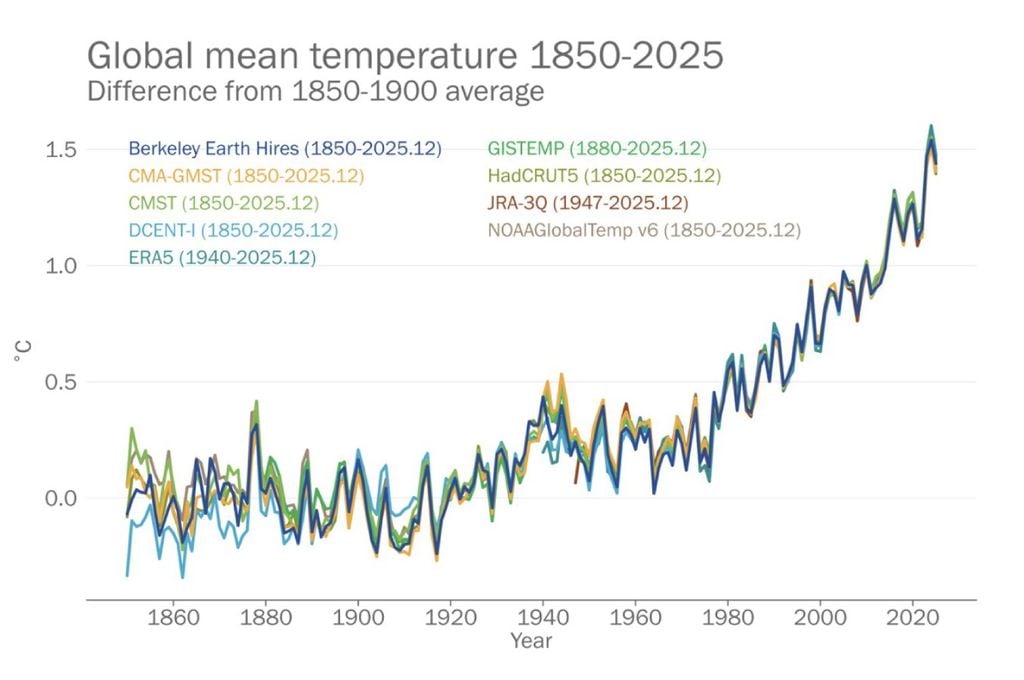
Dire reports on climate change are becoming commonplace. Global climate reports issued every month detail just how much our planet has warmed well beyond average. The latest report for February revealed 2026 is virtually guaranteed to rank among the top 10 warmest years in the 177-year record. That would mean the years 2015 through 2026 would be the hottest 12 years on record.
It seems it takes a lot today for climate news to truly grab attention after years of bad news have left many of us numb. The latest major report on Earth's climate, like prior such reports, has a long list of alarming statistics, but it also focuses on something important that offers another way to look at just how out of whack our world is.
Report Emphasizes Energy Imbalance
The World Meteorological Organization (WMO) released its State of the Climate 2025 report this week. It contains a litany of concerning facts about how our climate has changed. Depending on the dataset analyzed, last year was the second or third warmest year on record. About one in three workers worldwide, totaling 1.2 billion people, are exposed to heat risk each year, most notably in agriculture and construction.
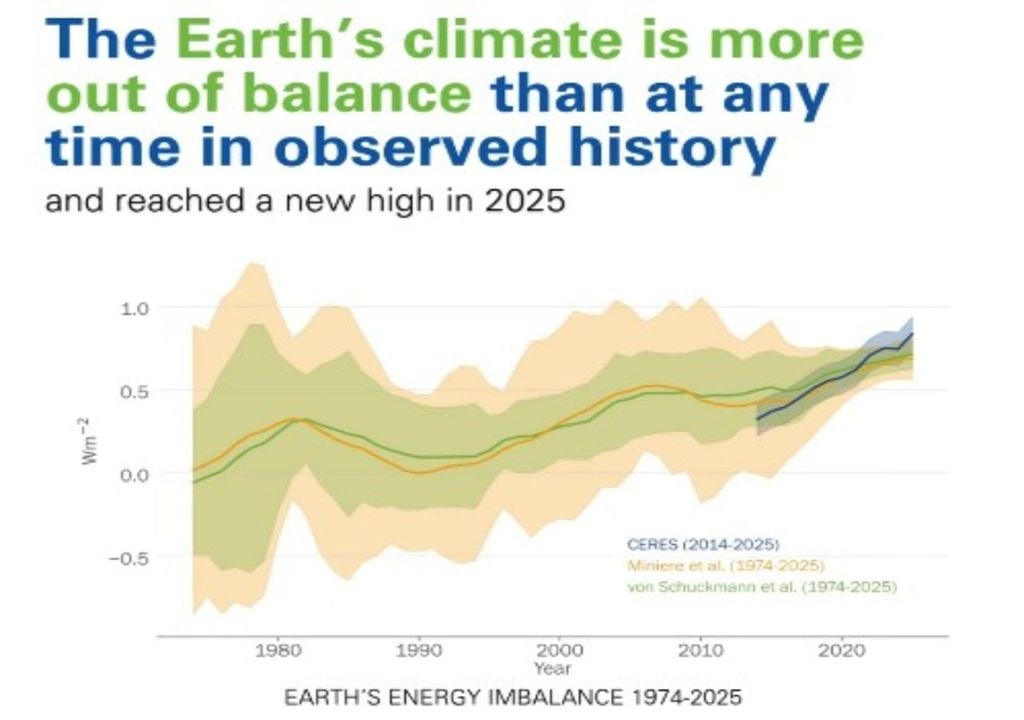
The WMO report also focused on how Earth's climate is drifting further out of balance. "The Earth’s climate is more out of balance than at any time in observed history, as greenhouse gas concentrations drive continued warming of the atmosphere and ocean and melting of ice," noted the WMO. For the past two decades, the ocean has absorbed roughly 18 times the amount of energy humans use each year.
“The State of the Global Climate is in a state of emergency," warned UN Secretary-General António Guterres. "Planet Earth is being pushed beyond its limits. Every key climate indicator is flashing red. Humanity has just endured the eleven hottest years on record. When history repeats itself eleven times, it is no longer a coincidence. It is a call to act."
Threat to Global Security
The ocean stores over 91% of the planet’s excess heat, acting as a buffer to help limit how hot it gets over land. About 3% of the surplus energy warms and melts our planet's ice. The WMO report identified the consequences of our oceans continuing to warm as they absorb carbon dioxide. Arctic sea ice remained at or near a record low level, Antarctic sea ice extent was the third-lowest on record, and glacier melt showed no signs of slowing, according to the report.
The report warns that the impacts from the strain of climate change go beyond Earth's cryosphere, the region of the planet's surface where water takes the form of ice or snow. “And in this age of war, climate stress is also exposing another truth: our addiction to fossil fuels is destabilizing both the climate and global security," added Guterres. " Today’s report should come with a warning label: climate chaos is accelerating and delay is deadly."