
Japan breaks historic record as number of people aged 100 and over exceeds 100,000 for the first time
Japan has surpassed 100,000 centenarians for the first time. There are 107,677 people aged 100 and over, in a country where the population is ageing while fewer and fewer children are being born.
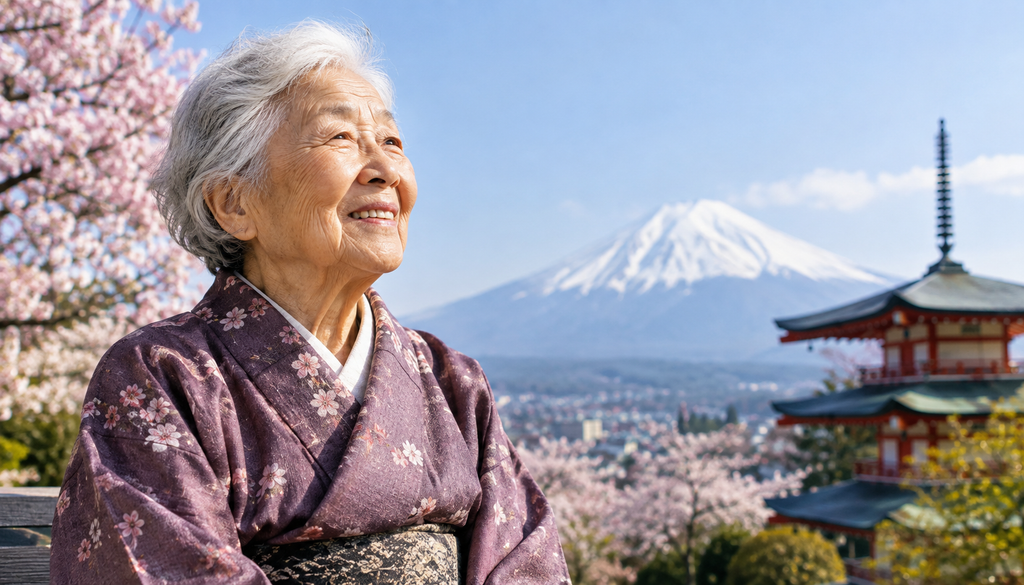
Japan has just reached a figure that, until a few decades ago, seemed extraordinary: 107,677 people are currently aged 100 or over. The figure, released by the Ministry of Health, Labour and Welfare, marks the first time that the number of centenarians has exceeded 100,000 in the country.
The figures are as of 1 September and represent an increase of 7,914 people compared with last year. They also constitute a new all-time high, extending a trend that has now continued for 56 consecutive years.
From 153 centenarians to more than 100,000
The evolution is particularly striking when viewed in perspective. Japan began compiling these statistics in 1963, when there were just 153 people aged 100 or over across the country.
The growth is linked to a combination of factors that have developed over decades. Japan's Ministry of Health, Labour and Welfare cites improvements in living conditions, food and nutrition, as well as advances in medicine and healthcare.
Japan is also among the countries with the highest life expectancy in the world. According to data cited by The Japan Times, life expectancy is 81.35 years for men and 87.33 years for women.
Almost nine in ten centenarians are women
Another striking aspect of the statistics is the huge difference between men and women.
Of the 107,677 people who have reached 100 years of age, 94,298 are women and 13,379 are men. This means women account for 87.6% of the total.
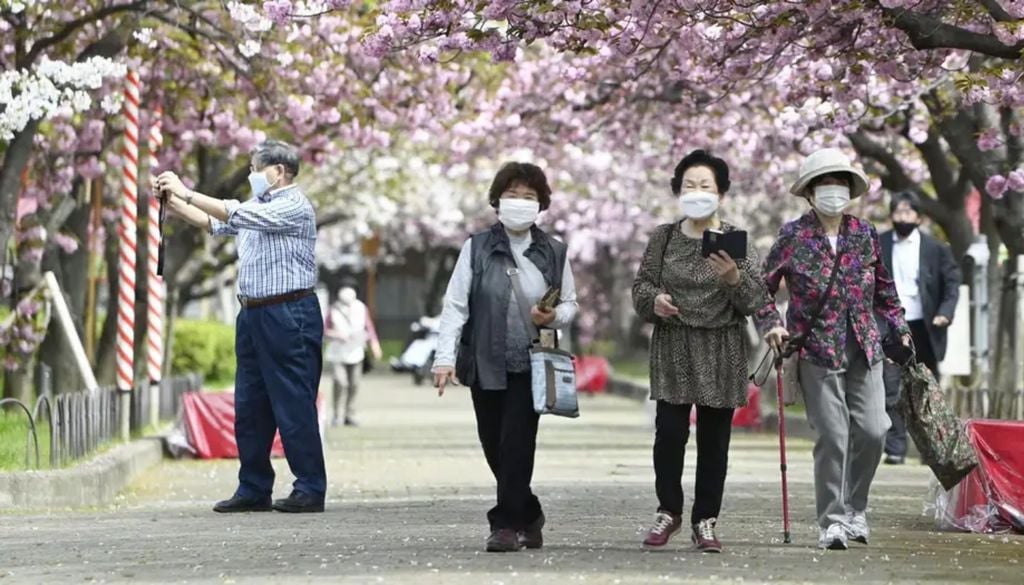
Japan's oldest person is currently Fuyo Kishimoto, a woman from Kyoto who is 114 years old. Among men, the record belongs to Hikaru Kato, a resident of Kumamoto, who is 112 years old.
The ministry also reported that 54,294 people turn or will turn 100 during the period considered for this year's official recognition. Of these, 45,769 are women.
An increasingly evident demographic paradox
The longevity record comes at the same time as Japan is undergoing a profound demographic transformation. The population is ageing while the number of births is falling and the working-age population is gradually shrinking.
For this reason, living longer is a health and social achievement, but it also poses new challenges. The growing number of people reaching very advanced ages increases demand for healthcare, care services and social benefits, while there are fewer workers to support these systems.
Japan's Health Minister, Kenichiro Ueno, stressed the importance of people not only reaching advanced ages but also remaining active and healthy for longer. The government considers extending healthy life expectancy one of its objectives in response to the ageing of society.
A phenomenon that extends far beyond Japan
Japan's experience offers an early glimpse of a process that is beginning to spread to other societies: more and more people are reaching very advanced ages, while younger generations are proportionally smaller.
The figure of 107,677 centenarians is not simply a new record. It reflects more than six decades of changes in medicine, nutrition, living conditions and the structure of Japan's population.
The challenge for the Asian country will now be to accompany this extraordinary longevity with conditions that allow those additional years to be lived in good health, with independence and an adequate care network.