
The loss of forests is turning humans into mosquitoes’ main food source
The loss of biodiversity in the Atlantic Forest is changing the behaviour of wild mosquitoes, which are beginning to feed on humans. A scientific study warns of health risks linked to deforestation and the breakdown of ecological barriers.
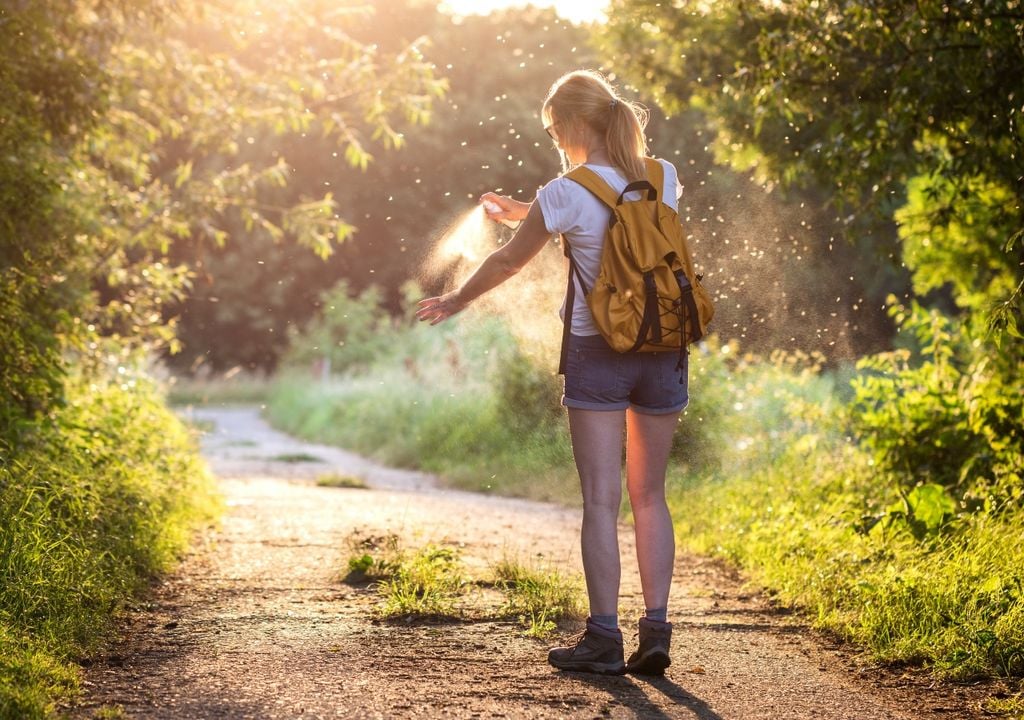
The Atlantic Forest, one of the richest and most degraded ecosystems on the planet, is undergoing a transformation that goes far beyond the loss of trees and species. According to a study published in the journal Frontiers in Ecology and Evolution, environmental degradation is altering the feeding habits of wild mosquitoes, pushing them to feed increasingly on humans as their natural hosts disappear.
Far from being a simple seasonal nuisance, this shift represents an epidemiological warning sign. Researchers warn that the erosion of ecological barriers that once kept certain viruses confined to forest environments could facilitate their spread into urban settings.
Mosquitoes outside their natural cycle
The study was carried out in two remnants of the Atlantic Forest in the state of Rio de Janeiro, the Guapiaçu Ecological Reserve and the Sítio Recanto reserve. These are forest fragments increasingly surrounded by human expansion, where researchers captured mosquitoes using light traps, especially at dusk, when many species are most active.
The results were striking. Of the identifiable sequences, a significant proportion corresponded to human blood. Specifically, 24 mosquitoes had fed on 18 people, in addition to a much smaller number of birds, amphibians, a dog and a rodent.
Biodiversity as a health buffer
In a functional ecosystem, wild mosquitoes usually feed on a wide variety of vertebrates, which helps to dilute the circulation of pathogens. However, deforestation and forest fragmentation reduce this diversity and concentrate risk.
“Biodiversity works as an ecological buffer,” explains Sergio Machado, co author of the study. When it disappears, pathogens stop dispersing among multiple hosts and tend to concentrate where contact is most frequent, humans.
The researchers compare this phenomenon to glacier melt. There is no immediate collapse, but the system becomes unstable and risks that were previously contained begin to surface.
They are not urban mosquitoes
One of the most unsettling aspects of the findings is that the study did not focus on urban species such as Aedes aegypti, known for transmitting dengue or Zika, but on wild mosquitoes historically associated with virus cycles inside the forest.
Some species even showed mixed feeding patterns, combining human blood with that of amphibians, birds or rodents. This indicates that mosquitoes are not developing a strict preference, but rather adapting opportunistically to the most available host.
“Mosquito behaviour is complex,” says Jerónimo Alencar, lead author of the study. “Proximity and availability of hosts influence feeding choices as much as, or more than, innate preferences.”
A pattern repeated throughout history
The link between environmental degradation and disease is not new. The Zika virus, for example, was initially identified in a forest cycle in Uganda before reaching humans as those environments began to be altered. Something similar occurred during the construction of the Panama Canal or the Trans Amazonian Highway, when thousands of workers fell ill after being exposed to pathogens previously confined to the forest.
The Atlantic Forest, which once covered more than 6,000 kilometres of the Brazilian coast, now retains only 12 to 15 percent of its original area, distributed in isolated fragments.
A warning for the future
Although scientists acknowledge that the samples analysed are limited and that further studies are needed, the message is clear. Monitoring mosquito behaviour helps anticipate health risks.
“Knowing that mosquitoes in a given area are feeding mainly on humans is a warning sign,” concludes Machado. In a context of ongoing human expansion into natural ecosystems, environmental health and public health once again appear closely intertwined.
References of the news:
D.Cássia. et al. Aspects of the blood meal of mosquitoes (Diptera: Culicidae) during the crepuscular period in Atlantic Forest remnants of the state of Rio de Janeiro, Brazil. Frontiers in Ecology and Evolution. 2025.