
How eclipse prediction works: How astronomers calculate the day, time, and how far the shadow will travel
Eclipse prediction makes it possible to determine with great precision when the Sun, Moon, and Earth will align and which areas will be able to observe the phenomenon.
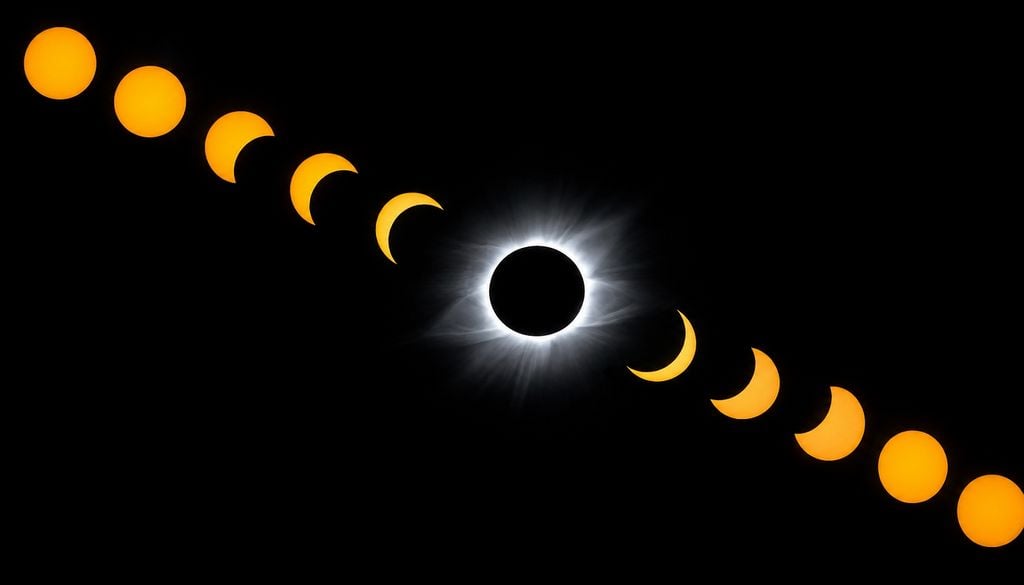
Eclipses do not happen by chance. Their occurrence depends on a specific combination of celestial motions that astronomers can study using mathematical models. The Moon orbits Earth every 27.3 days, but its orbit is tilted by about 5 degrees relative to the ecliptic plane. This is why a new moon or full moon does not automatically produce an eclipse. The necessary alignment can occur only when the Moon passes through certain points along its orbit.
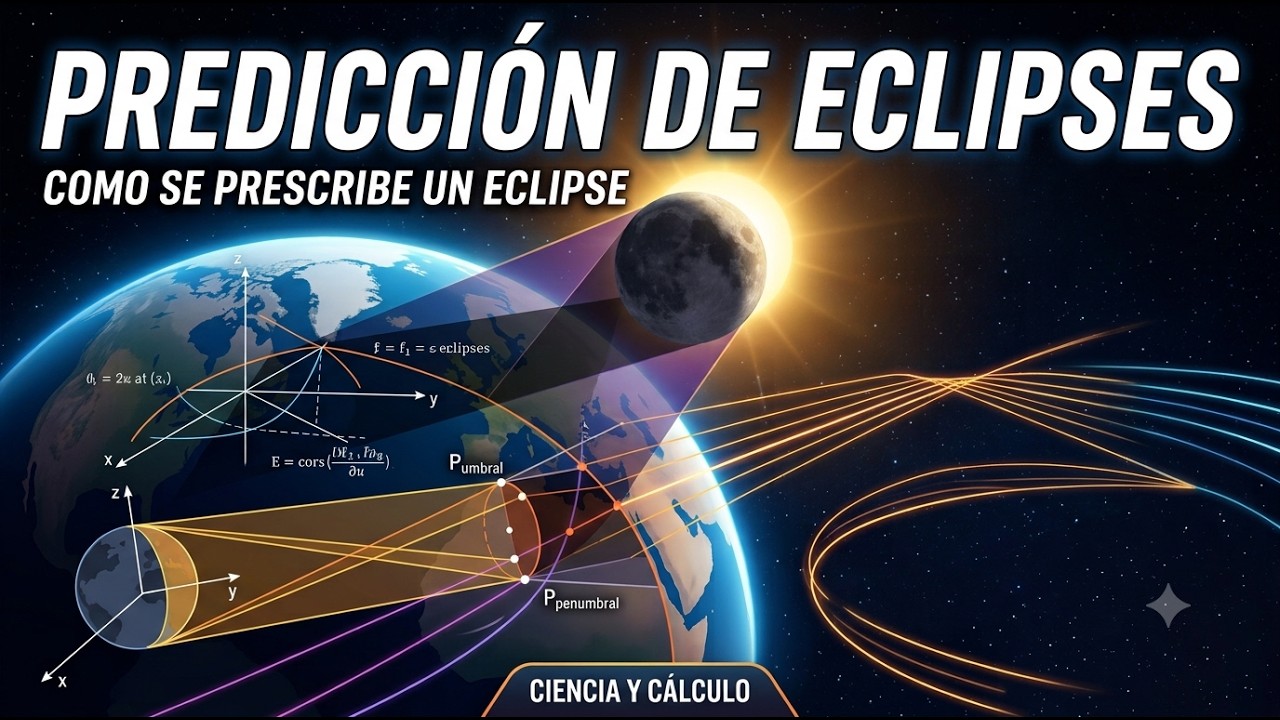
This also explains why scientists can predict both the timing of an eclipse and the areas of Earth from which it will be visible. To do this, they take into account the orbits, the distances between celestial bodies, the apparent sizes of the Sun and Moon, and the movement of the Moon's shadow. For total eclipses, it is also possible to calculate the specific path across the planet from which the Sun will be completely obscured.
Eclipse prediction: The Moon's orbital tilt determines when one can occur
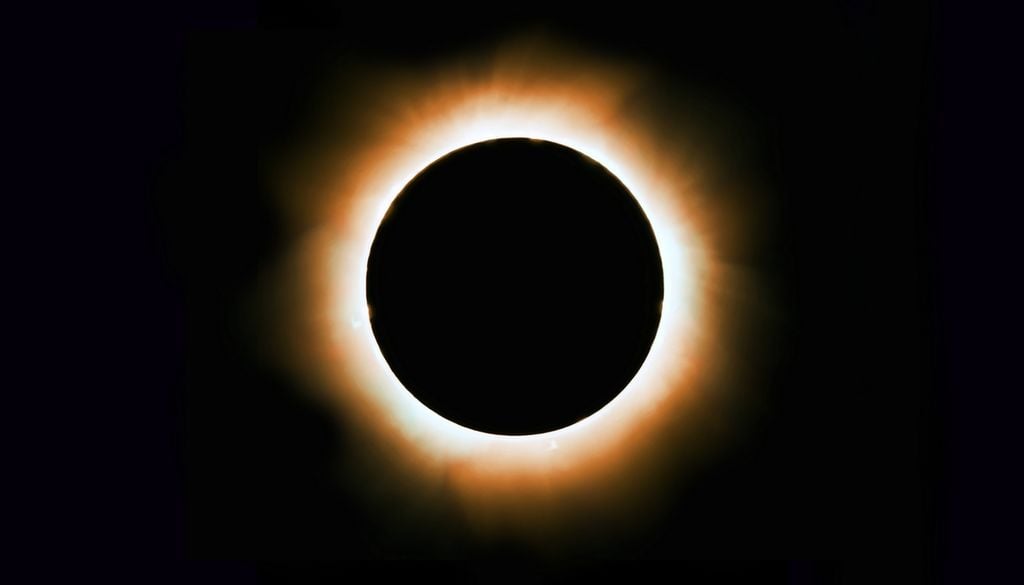
A solar eclipse occurs when the Moon moves between our planet and the Sun, blocking some or all of the Sun's light. Areas within the umbra can experience a total eclipse, while those within the penumbra see only part of the solar disk obscured. Each observer's exact position relative to the shadow determines the type of eclipse they will see.
In a lunar eclipse, the alignment is different: Earth moves between the Sun and the Moon and casts its shadow on the Moon. The Moon does not disappear completely but can instead take on a reddish hue. Earth's atmosphere bends and filters some of the sunlight, scattering blue light in particular and allowing a greater proportion of red light to reach the lunar surface.
The roughly 5-degree tilt of the Moon's orbit relative to the ecliptic explains why these events do not happen every month. Twice a year, conditions develop for the Moon's path to cross the plane of Earth's orbit at points known as lunar nodes. Around these points, a window of roughly 35 days opens during which one or even several eclipses can occur.
Eclipse prediction: Lunar nodes are separated by 173.3 days
This period is known as an "eclipse season" and lasts long enough for both a solar and a lunar eclipse to typically occur. Because 35 days is slightly longer than the 27.3 days it takes the Moon to complete one orbit around Earth, a third eclipse can occasionally occur during the same season.
The timing also follows a pattern related to the Moon's orbit. The interval between two nodes is approximately 173.3 days, while the so-called "eclipse year" lasts 346.6 days. This is shorter than the 365.25 days of a solar year. In addition, the Moon's orbit undergoes a slow rotation known as precession, causing eclipse seasons to occur two to three weeks earlier each year.
These figures can even be used to make a simple estimate without performing all the astronomical calculations. One approximate method is to count 173 days from an eclipse to locate the next period associated with the lunar nodes. However, knowing when an eclipse will occur does not guarantee that it will be visible from a particular location: visibility also depends on geographic position and weather conditions.
How astronomers calculate the path and exact time
Celestial mechanics provides the foundation for these calculations. Astronomers work with models that describe Earth's motion around the Sun and the Moon's motion around Earth, taking into account both the tilt of the Moon's orbit and the elliptical shape of both orbital paths. Using these data, they can determine when the alignment needed to produce the shadow will occur.
Another tool used to connect eclipses separated in time is the Saros cycle, which lasts approximately 18 years, 11 days and 8 hours. After this interval, the Sun, Earth and Moon return to very similar relative positions. Babylonian astronomers were already using this pattern thousands of years ago to anticipate eclipses.
Today's calculations can go much further. To determine the path of totality of a solar eclipse, astronomers must account for Earth's rotation, the distance between the Moon and Earth, and the speed at which the shadow moves across the surface. Data from satellites, space-based observatories, computer programs and mathematical models make it possible to determine the timing of an eclipse to within seconds and identify the areas of Earth that will fall within the Moon's total shadow.