
How To Recognize A Satellite In The Night Sky And Not Mistake It With A Plane Or A Shooting Star
Looking at the night sky can be a truly amazing spectacle, but identifying what we're seeing isn't always so easy.
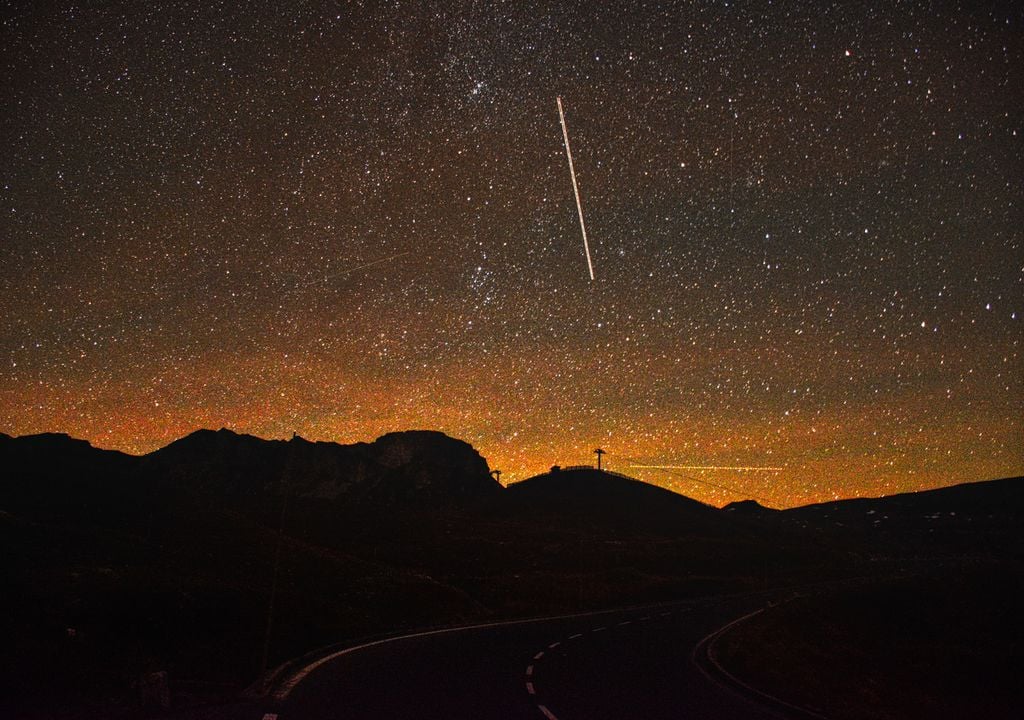
When the night is clear and light pollution isn't a problem, the sky becomes a celestial window full of details. Stars, planets, and even galaxies appear as luminous brushstrokes. However, along with these natural objects, other human-made creations also cross the celestial dome: planes, helicopters, and the increasingly numerous artificial satellites.
The reason we can observe these satellites is quite simple: they reflect sunlight off their metallic surfaces and solar panels. From Earth, that light appears as small dots slowly crossing from one side to the other. Interestingly, the brightness isn’t static: it increases when coming out of Earth’s shadow and fades again when going back into it. That transition creates a recognizable spectacle for those who know what to look for.
The Trick to Seeing Satellites Without a Telescope
No special equipment is needed to spot satellites. First, let your eyes adjust to the dark for about fifteen minutes, avoiding flashlights or screens that could ruin your night vision. With a bit of patience, you can spot dozens of satellite paths in just one night.
They’re not UFOs, even if they seem like it. If you see a strange row of lights in the sky these days, they’re probably the @SpaceXStarlink satellites, the @SpaceX project to create a satellite constellation for global internet service. pic.twitter.com/VK5BP2End0
— FECYT (@FECYT_Ciencia) April 22, 2020
Among all the orbiting objects, the International Space Station is the most popular. Although it's not technically a satellite, nor the brightest, it’s one of the most visible objects and sparks curiosity because it carries crew members. Its brightness can even surpass that of the planet Venus, making it hard to miss — unless you never look up at the sky.
Another spectacular phenomenon is the flares from the old Iridium satellites, known for producing genuine bursts of light that could shine dozens of times brighter than Venus. These flares occurred when their reflective antennas aligned with the Sun and Earth — a beam so intense it looked like a lighthouse in the middle of the sky.
How to Tell a Satellite from a Plane
At first glance, a satellite moves smoothly, at a constant speed, and without blinking. It may resemble a distant plane, but it lacks flashing lights. Its brightness remains steady, except when entering or exiting Earth's shadow.
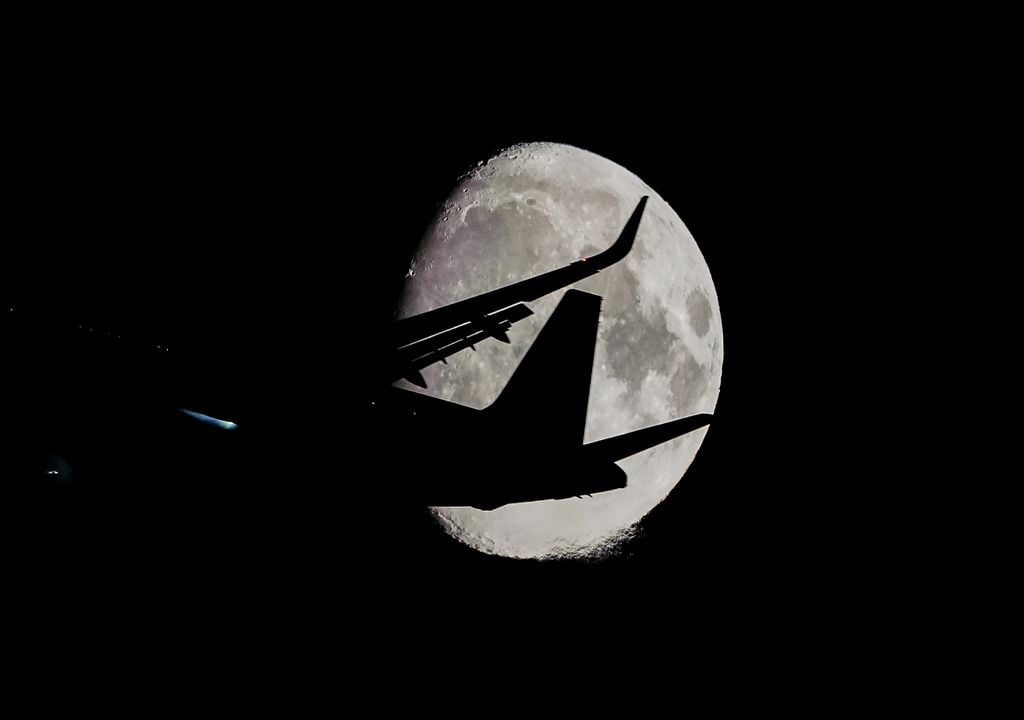
In contrast, a nighttime plane is easily recognized by its red and green lights blinking at regular intervals. Also, its movement isn't always straight or steady, as it frequently changes direction. In long-exposure photos, planes create lines with repeating dots, while satellites leave clean, continuous trails.
The key, then, is to observe the stability of the light. If it doesn't blink and maintains a straight path, it's a satellite. If it flashes and changes direction, you're looking at a plane.
Differences Between a Satellite and a Shooting Star
Shooting stars — really small bits of rock burning up in the atmosphere — are instantly recognizable. They’re quick, bright flashes, often with bluish, greenish, or orangey hues. They last only a second, leaving a trail that fades quickly.
These aren’t Starlink.
— Álvaro Ibáñez Pérez (@kokehtz) June 4, 2021
These are the satellites that are usually in the sky.
All of them showed up in my FOV during the 24 hours of exposure in this photo.
Without the rejection algorithm, astrophotography would literally be impossible today. pic.twitter.com/T72B528W66
Unlike a satellite, which takes several minutes to cross the sky, a meteor burns up instantly. Also, its speed is much higher, giving the impression of a fast spark. There's no time to follow it — it appears and disappears in a flash.
That’s why the rule is simple: if it’s a fleeting flash, it's a meteor; if it moves slowly and steadily, it’s a satellite; and if it blinks and changes course, it’s a plane. It’s that clear. Observing the night sky is more than a hobby — it’s an act of curiosity. Recognizing what you see makes the experience even more enjoyable.