
NASA photographs something inexplicable on Mars: strange balancing rocks puzzle scientists
The latest images from Mars reveal unusual rock formations, dust devils, and new details of Jezero Crater, one of the most scientifically significant regions on the Red Planet.
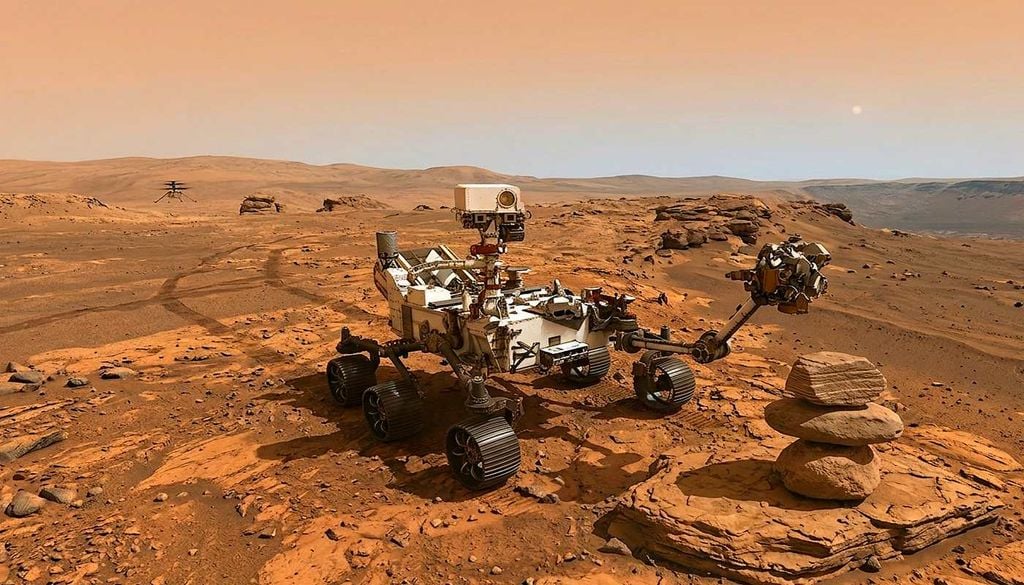
The latest photographs returned by NASA's missions offer a view of Mars in greater detail than ever before. The images come from orbiting spacecraft and the Perseverance rover, which continues exploring Jezero Crater to study the composition of the terrain. Among the dunes, mountains, and vast canyons, several rock formations have caught the attention of researchers.
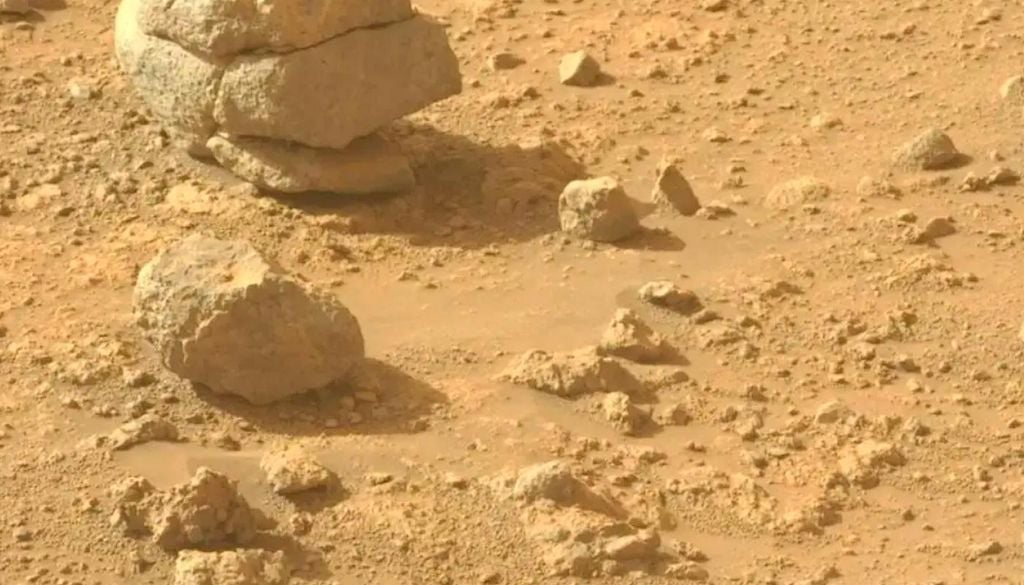
The most talked-about structures stand out because some rocks appear to be balanced on top of one another. Their appearance has sparked all kinds of speculation online, although scientific teams rule out explanations involving artificial activity or the presence of life. The most likely explanation still points to geological processes that unfolded over millions of years.
NASA's latest images of Mars
The photographs were taken on May 13 at several locations within Jezero Crater, a site chosen because of its geological history. Scientists believe this basin was once a lake billions of years ago, when the planet had very different conditions from today and liquid water existed on its surface.
🚨 NASA's Perseverance rover has made a groundbreaking discovery on Mars—and it's all about organic matter.
— Insights | Integration️ (@con_nectinder) June 29, 2026
What was found: Complex organic carbon (macromolecular carbon) within fine-grained mudstones
Where: Neretva Vallis channel, an ancient river valley in Jezero Crater pic.twitter.com/mHulbYAR5s
The observed formations do not fit easily into the standard models used to interpret the Martian landscape. On Earth, similar features can form through water erosion, volcanic activity, or temperature changes, but there is still no definitive explanation for how these configurations formed on Mars.
One possibility researchers are considering is that an original rock split into multiple layers due to the long-term action of wind or water. Even so, they stress that additional data will be needed before confirming this hypothesis, as the current images do not answer all the questions.
NASA's new images reveal a planet that is constantly changing
Data returned by NASA's missions support an idea that is becoming increasingly accepted among scientists. Far from being a static world, Mars still experiences atmospheric and geological processes that slowly reshape its surface over time.
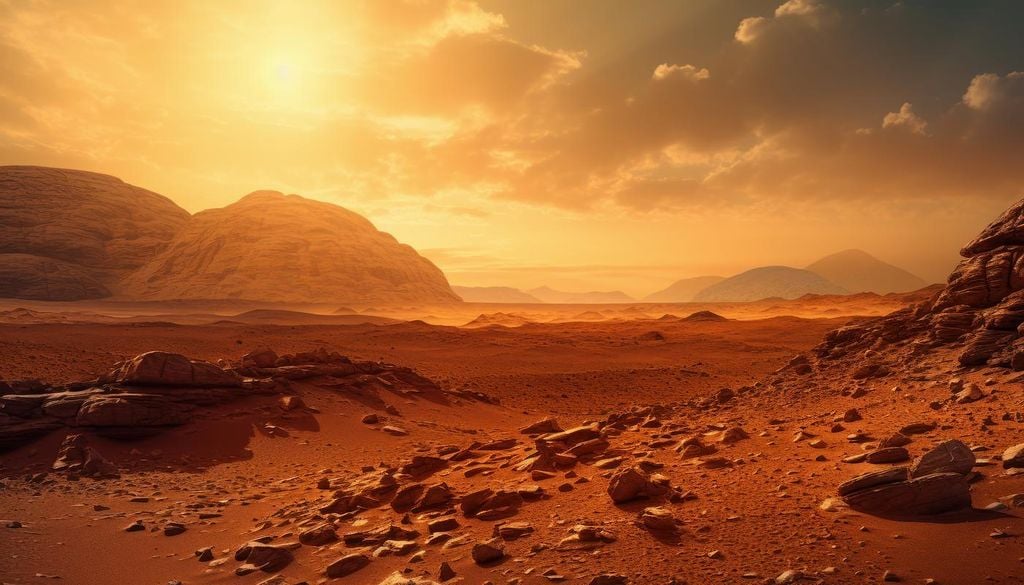
Among the most remarkable phenomena are the so-called dust devils, large columns of swirling dust created by temperature differences between the ground and the atmosphere. These whirlwinds can rise several kilometers into the air and travel long distances before dissipating.
The images allow scientists to study these dust devils in greater detail and better understand how airborne dust influences the Martian climate. This information is also extremely valuable for future crewed missions, since dust particles can affect both visibility and the performance of solar panels and scientific instruments.
Jezero Crater, a key to understanding Mars' history
Beyond the unusual rocks, the images also reveal some of the Solar System's largest geological features. Among them are Olympus Mons, which rises nearly 22 kilometers (13.7 miles) high, and Valles Marineris, a canyon system stretching approximately 4,500 kilometers (2,800 miles).
The goal of these observations goes far beyond capturing high-quality images. Scientists are trying to reconstruct the planet's evolution and determine whether Mars once had the conditions necessary to support habitable environments.
Studies conducted so far indicate that between 3.5 and 4 billion years ago, Mars had warmer temperatures and abundant water in the form of rivers, lakes, and even shallow seas. Although there is still no definitive evidence that life ever existed there, the sedimentary rocks in Jezero Crater may preserve organic compounds or chemical signatures left behind by ancient microorganisms.