
Saturn’s gravity deflects a mysterious dormant icy body, turning it into an active comet
Nearly 5 billion kilometers from Earth, the icy object 450P/LONEOS began releasing gas and dust. Scientists believe it could be undergoing a key stage in its transformation into a comet.
About 4.8 billion kilometers from Earth, a small icy body appears to have begun waking up after spending billions of years in the outer regions of the solar system.
The object is 450P/LONEOS, which is classified as a centaur, part of a population of small, icy bodies that typically travel between the orbits of Jupiter and Neptune. However, recent observations show behavior that is unusual for this class of objects: it is releasing gas and dust and developing a faint envelope around itself, characteristics much more commonly associated with comets.
To study the phenomenon, researchers used observations from NASA’s James Webb Space Telescope and the Gemini North telescope in Hawaii. The data allowed them to detect carbon dioxide, icy dust and signs of recent thermal activity around 450P/LONEOS.
The findings, published in The Planetary Science Journal, provide new clues about one of the still poorly understood processes involved in the evolution of these icy bodies.
The encounter with Saturn that may have changed everything
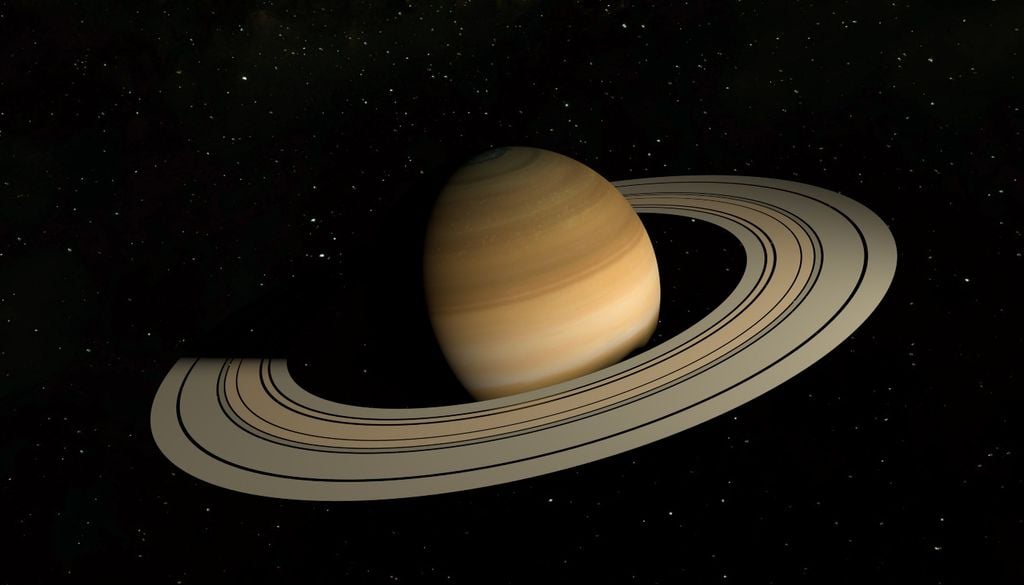
Scientists believe the process began to accelerate after a close gravitational encounter with Saturn in 1992. The interaction significantly altered 450P/LONEOS’s orbit, shifting it onto a trajectory closer to the Sun.
That change is crucial. As it moved closer to our star, the object began receiving more solar radiation. Observations made between 2019 and 2024 showed that as its distance from the Sun decreased, a faint coma — a cloud of gas and dust surrounding a comet’s nucleus — became increasingly visible.
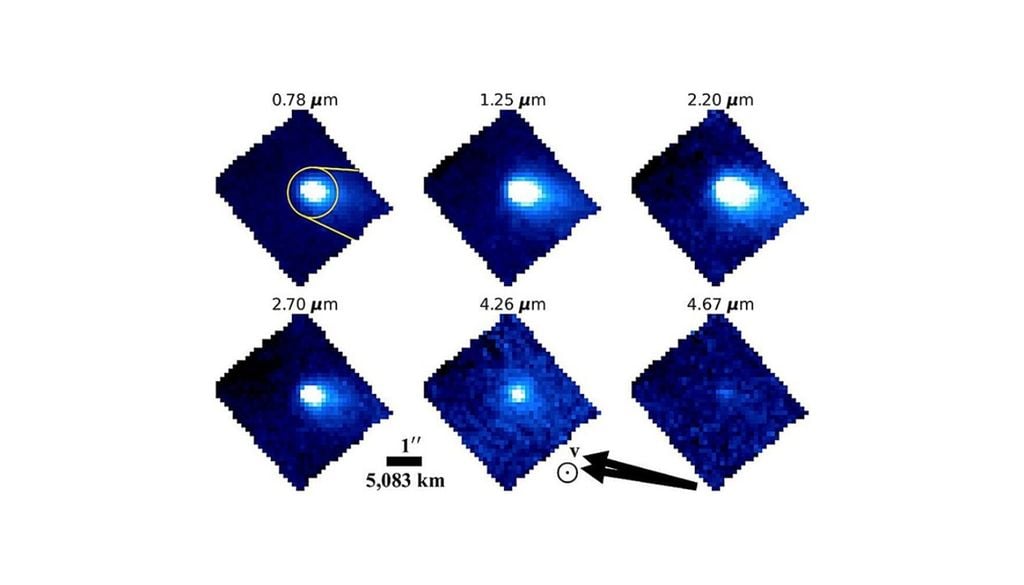
Solar heating can slowly penetrate the surface and subsurface layers of the nucleus. When this happens, volatile ices and gases trapped inside can be released. The escaping material carries dust particles with it, creating the distinctive envelope that signals cometary activity.
James Webb found a key clue
One of the most important findings came from the James Webb Space Telescope. Its instruments detected carbon dioxide (CO₂) around 450P/LONEOS at a distance from the Sun where water ice would not normally sublimate intensely enough to explain the observed activity on its own.
Researchers found clear evidence of carbon dioxide emissions but detected neither water vapor nor carbon monoxide. This suggests that CO₂ could be one of the main drivers of the centaur’s current activity.
The observations also revealed icy dust grains within the coma and possible signs of crystalline water ice. The latter finding is particularly interesting because it could indicate that some of the ice has undergone heating and transformation.
Scientists suggest that amorphous ice may exist beneath the surface, an irregular structure capable of trapping gases within its pores. As it warms, this material can transform into crystalline ice and release the trapped carbon dioxide. As the gas escapes through the porous nucleus, it could lift dust particles and help form the coma.
A window into the birth of comets
Only a small proportion of known centaurs display visible activity. That makes 450P/LONEOS an exceptional opportunity to study what happens when one of these ancient icy bodies begins moving into warmer regions of the solar system.
Following the evolution of 450P/LONEOS will allow researchers to observe how the ice, surface and composition of these bodies change as they receive increasing amounts of solar energy.
In other words, this small object may be offering a rare glimpse of one of the most important stages in the life of a comet: the moment when an icy, seemingly inactive body slowly begins to transform.