
Elegance and Shade in Your Garden: Discover the Tree That Grows up to 5 Meters in Just a Couple of Years
A tree capable of providing shade in record time does exist—and it’s not a myth. Getting to know it in depth can completely change the way we design our gardens.
Shade in a garden is a functional necessity that is becoming increasingly valuable as summers grow more intense, heat waves become more frequent, and urban spaces prioritize thermal comfort. A well-chosen tree can completely transform an exposed plot into a cool, pleasant refuge.
For years, it was believed that creating shade meant waiting decades for a tree to reach its adult size. However, modern agronomy and landscape design have shown that there are species capable of growing quickly without sacrificing stability, beauty, or structural safety.
Choosing a fast-growing tree should not be based on speed alone. Factors such as root type, climate adaptation, response to management, and interaction with the urban environment are just as important to avoid future problems.
Beyond shade, many gardeners look for trees that offer real ornamental value, whether through striking blooms, pleasant fragrances, or well-shaped canopies that complement the surrounding architecture.
Paulownia Imperial, the Tree That Challenges a Gardener’s Patience
Paulownia tomentosa, known as the empress tree or phoenix tree, is native to China and has been cultivated for centuries. Its current popularity is mainly due to its extremely rapid growth, capable of reaching between three and five meters in just two years under suitable conditions.
This growth is the result of well-understood plant physiology. Paulownia has a highly efficient metabolism, with a photosynthetic rate higher than that of many common ornamental species, allowing it to convert large amounts of sunlight into biomass in short periods.
Its root system is deep and taproot-based, meaning it explores deeper soil layers without producing aggressive surface roots. Unlike ficus or eucalyptus, it does not lift sidewalks or compromise foundations when planted with proper technical criteria.
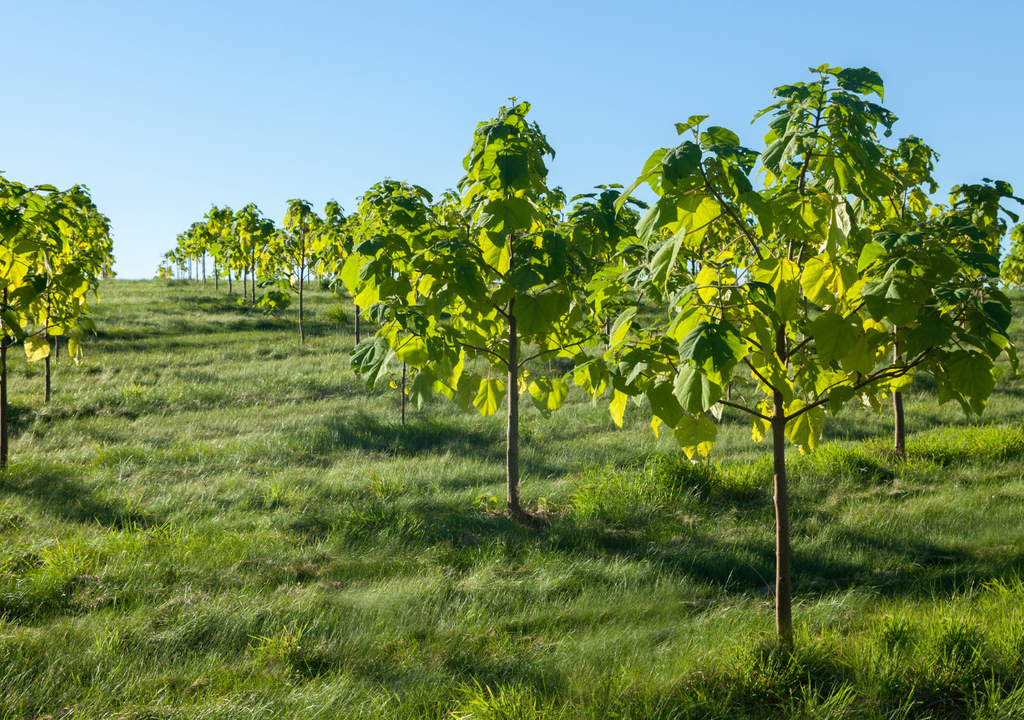
One of the most striking features of Paulownia is its very large leaves, which can exceed forty centimeters in diameter. This enormous leaf surface allows for exceptional light capture, increasing photosynthesis and accelerating trunk and branch growth.
These leaves not only serve a productive function; they also generate dense shade from early stages, something uncommon in young trees. In just two summers, the canopy already provides noticeable thermal relief in patios and gardens.
This leaf size requires well-nourished soils, rich in organic matter and with good drainage. Poor soil limits its potential and creates the false impression that it does not grow as much as promised.
Elegant Blooming Before the Leaves Appear
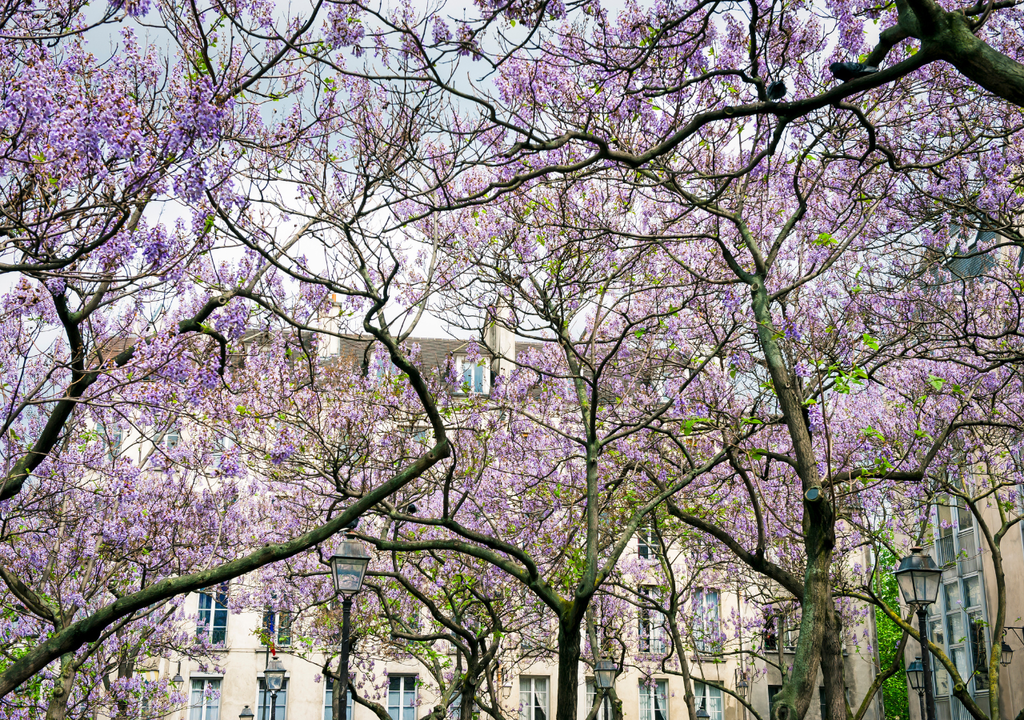
Unlike many ornamental trees, Paulownia blooms before producing its spring foliage, making its flower clusters even more visible. Its tubular flowers, in shades of blue-violet or lavender, release a soft, pleasant fragrance.
This early blooming serves an important ecological role, as it attracts pollinators such as bees and hummingbirds when few nectar sources are available in the landscape.
From a garden design perspective, this behavior offers a unique visual spectacle and reinforces the idea that a tree can be a focal point without flowering year-round.
One of the lesser-known but most valuable traits of Paulownia is its extraordinary regenerative capacity. Even after severe pruning or significant damage, the tree can vigorously resprout from its base.
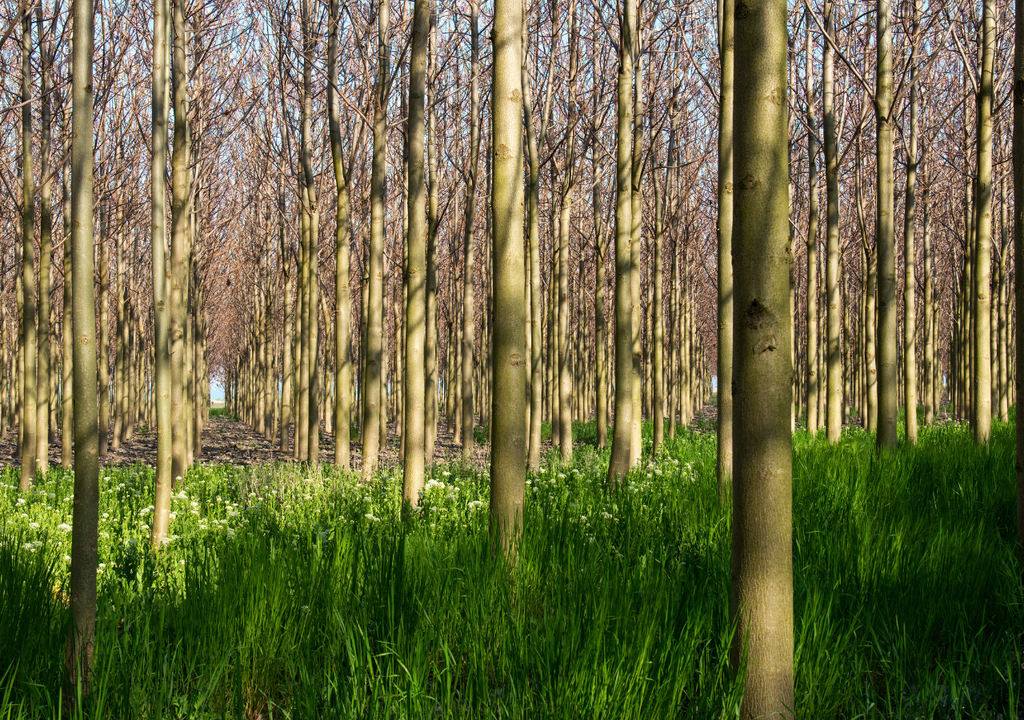
This characteristic makes it a species tolerant of management mistakes, which is especially useful for amateur gardeners. It also explains its use in degraded soil restoration projects, as it improves soil structure and adds biomass quickly.
That said, this strength requires responsible management. Without early formative pruning, growth can become disordered and affect its long-term aesthetics.
To reach its full potential, Paulownia requires full sun, temperate to warm temperatures, and regular watering during the first two years. Once established, it shows good tolerance to short periods of drought.
The soil should be deep, loose, and well aerated. In compacted or waterlogged soils, growth slows significantly. It is recommended to incorporate mature compost and organic matter before planting.
Are There Fast-Growing Alternatives in Latin American Climates?
In regions of Latin America, especially Mexico and South America, there are species that also offer rapid growth and ornamental value. The sibipiruna stands out for its broad canopy and yellow flowering, while the garden manacá surprises with flowers that change color.
The garden ipê offers almost continuous flowering with a more controlled size, making it ideal for small urban gardens. Each species responds to different conditions, so the right choice depends on the landscaping goal and the local climate.
Compared to Paulownia, these species grow somewhat more slowly but require less final space and less pruning control. Paulownia is not a miracle tree, but it is a powerful tool when properly understood and managed.
Its rapid growth, early shade, and natural elegance make it a real option for those seeking visible results in a short time. It is not a tree to plant blindly. It requires space, suitable soil, and a minimum level of technical judgment.