
This small Japanese tree transforms your terrace with red and yellow tones
Give life to your terrace or balcony with this elegant, compact tree and enjoy its range of colors: its thin, palmate leaves, capable of beautifying any corner, shift from spring green to intense yellows and reds in autumn.
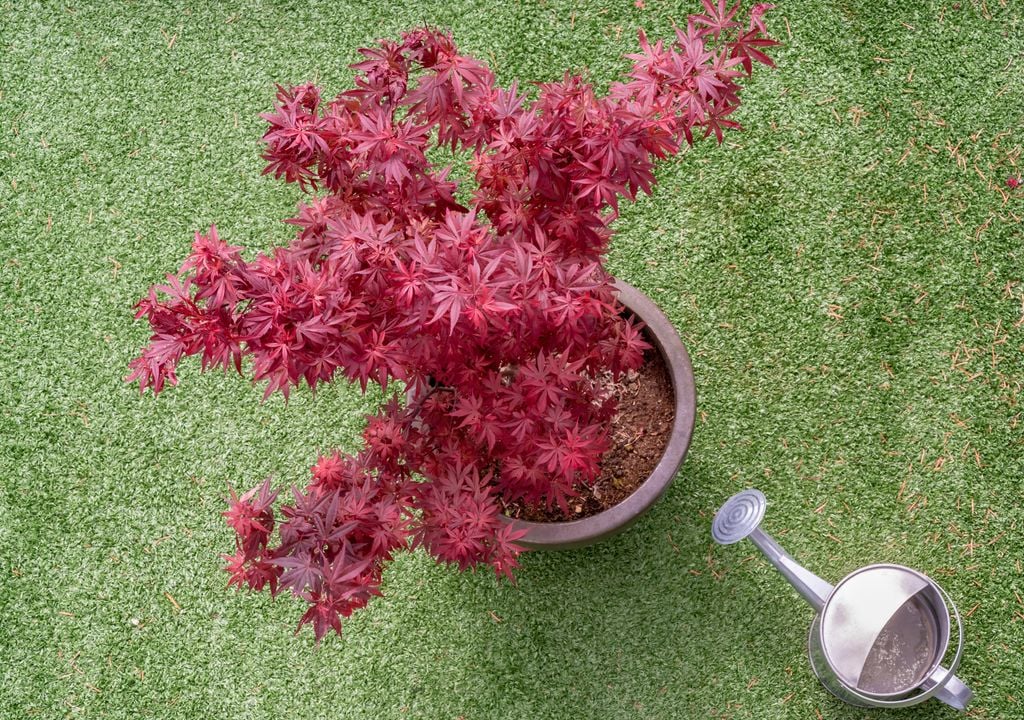
To enjoy a cozy, lively outdoor space, you don’t need to have a large garden. Sometimes, all it takes is adding a small natural touch to your balcony or terrace to completely transform that outdoor area you may have been overlooking.
And what better than this gorgeous and compact tree to accomplish that mission. Yes, we’re talking about the Japanese maple (Acer palmatum), which has become a favorite for terraces, patios, and balconies thanks to its elegant structure and, above all, its burst of color.
A small tree with a changing soul
The Japanese maple is a beautiful deciduous tree native to East Asia, particularly Japan, Korea, and parts of China.
Under normal conditions, it can reach between 6 and 10 meters in height, although when grown in pots or small spaces, it’s perfectly possible to control its growth.

The main appeal of this small tree lies in its leaves: palmate, delicate, with lobed edges, and displaying a very wide range of colors. During spring and summer, the leaves tend to show green hues — sometimes with reddish or purple tones — while in autumn they transform, offering a display of bright yellows, oranges, reds, and purples.
Ideal for terraces and balconies
Thanks to its compact size and slow growth, this tree is perfect for terraces, balconies, and urban patios. It grows well in large pots or planters, making it ideal even for those with just a few square meters.
Los maravillosos colores de mi patio. El Arce Palmatum (japonés) está glorioso. La hortensia caduca también. pic.twitter.com/1rnAvxoC1w
— Vicente Baos (@vbaosv) November 16, 2025
The Japanese maple provides light shade without blocking the view, and improves the thermal sensation and humidity of the surrounding area—an especially valuable advantage in high-rise apartments with little natural ground.
But above all, its range of colors, which changes with the seasons, transforms any space in a spectacular way.
How to properly care for your Japanese maple
For your Acer palmatum to stay healthy and maintain its vibrant colors, it’s important to follow a few key care tips.

- Light and location: it prefers partial shade or filtered light. Intense midday sun, especially in warm regions, can burn its leaves. Terraces facing east or north, or spots with partial shade, usually work best.
- Watering and soil: it needs well-drained, slightly acidic soil with good organic matter. Avoid waterlogging the substrate, but maintain regular moisture, especially in summer.
- Pot and repotting: if grown in a container, choose an appropriately sized pot with good drainage. Repotting every 2–3 years promotes better development.
- Pruning: it doesn’t require frequent pruning. Simply remove dead or damaged branches, preferably in winter or early spring, to preserve its natural shape.
Varieties especially recommended for small spaces
The Japanese maple proves that you don’t need a large garden to enjoy (and show off) the beauty of a tree with changing foliage. However, for small spaces like terraces and balconies, it’s best to choose one of these varieties:
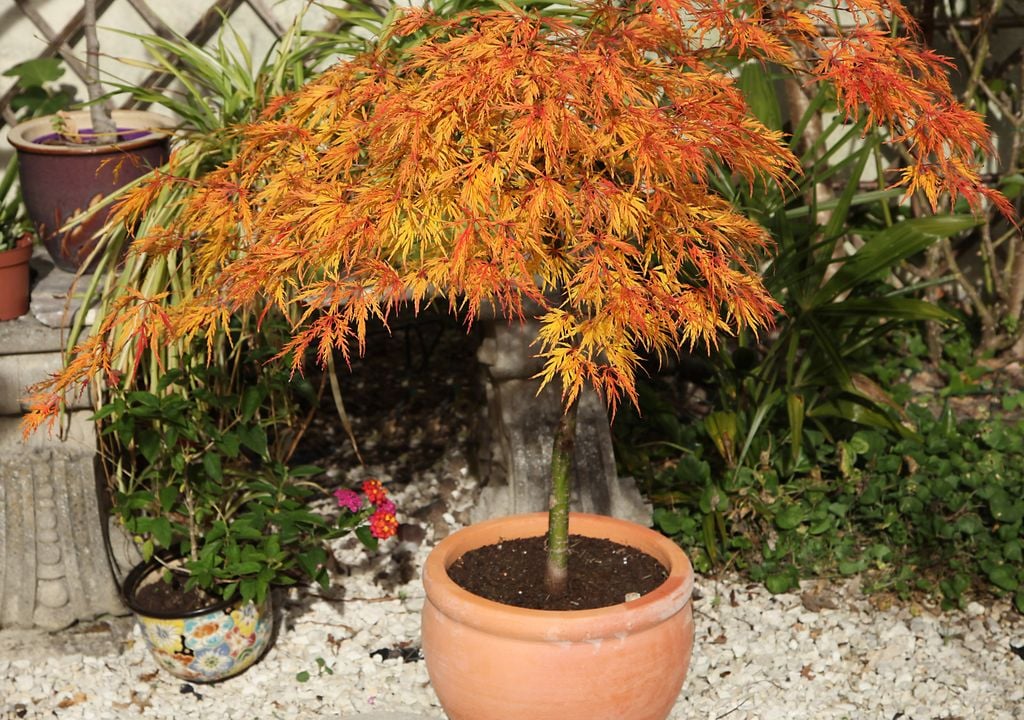
- ‘Butterfly’: compact, ideal for small spaces, with leaves that have creamy or yellow edges.
- ‘Sango-kaku’: also known as the coral maple, it stands out for its reddish bark and its yellow autumn foliage. Perfect as a focal specimen.
- ‘Orange Dream’: leaves that shift from spring yellow to summer green and then to intense orange and red tones. It stands out for its strong seasonal appeal.
Now you know: if you’re looking for a plant that brings elegance, color, and a lively presence all year round, this small Japanese tree may be exactly what your terrace needs.