
Will this year's Super El Niño impact your Christmas tree? Here's what you need to know
Millions of real Christmas trees are bought and decorated across the country, but the weather can impact them like any other crop.

Christmas is coming, and while many have already put up their trees ahead of Thanksgiving, millions will flock to farms and forests across the country over the coming weeks for a real fir, spruce, cypress or pine tree. According to the National Christmas Tree Association, around 25 to 30 million real trees are sold every year across the country.
These trees have to grow anywhere from 7 to 15 years to get to full height. And during that time, any number of weather events can impact their growth before they are harvested in late November or early December for sale.
Millions of trees growing across the US
According to the last Census of Agriculture, which was conducted in 2022, there are around 16,000 Christmas tree farms that sell millions of trees a year. Out of those, the most Christmas trees were grown in Oregon, North Carolina, Michigan, Pennsylvania, Washington and Wisconsin.
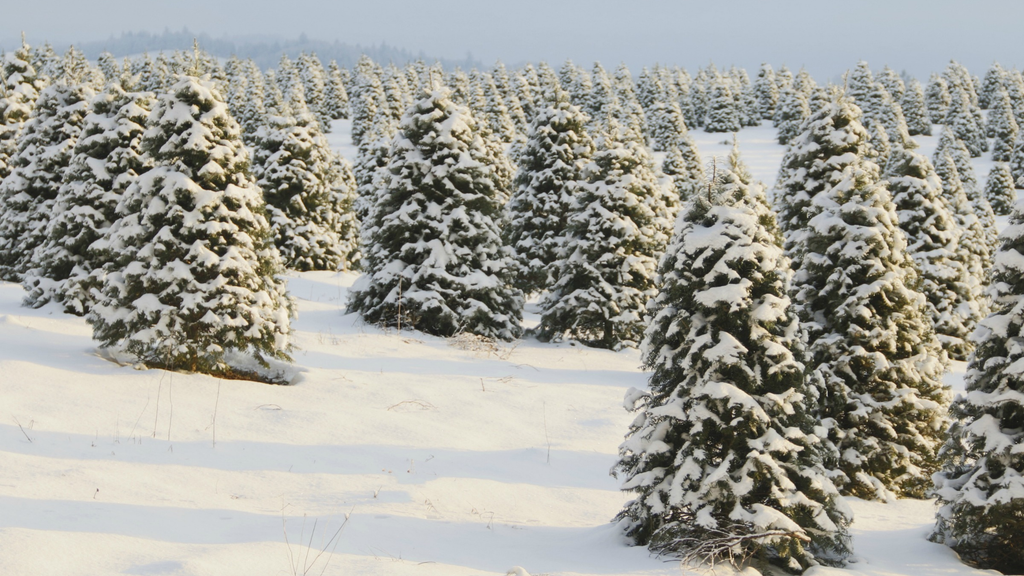
Half of those were grown in Oregon and North Carolina alone, where the growing conditions favor production of the most popular species of Christmas trees according to the USDA, including Noble, Douglas, and Fraser firs.
Now, Christmas trees are conifers. This means that they have needle-like leaves and have cones that drop with seeds inside. On tree farms, for each Christmas tree harvested, 1 to 3 seedlings are planted.
El Niño can and has impacted Christmas tree crops
Like any crop, Christmas trees are susceptible to any number of extreme weather events. Fraser Firs are by far the most harvested Christmas tree across the country. They like mild or cool summers and cold winters. Endemic to the southern Appalachians, they are also grown on numerous farms across the country that control the moisture. They like moist environments with heavy mountain fog and winter snow.
This is similar to the El Niño of 2015 to 2016, when fall temperatures failed to drop below freezing. This led to a delay in tree and bough harvests. During that year, boughs were ready later in the year. These are branches that are cut for things like wreaths and garlands. The dry summer and hot conditions also led to needle damage on trees, which farmers will be watching for this year as well.
Another consideration is the moisture. During past El Niño years, heavy rain has impacted deliveries of trees, as flooding from the Pacific left areas unable to get their trees. This was particularly true during the El Niño from 1997 to 1998, when excessive rain in California cut off their deliveries from Oregon and Washington.
Looking to next year, the wet winter that is expected across the Pacific Northwest due to El Niño could impact tree growth due to too much moisture. This can increase the risk of rot and pests, and could decrease the supply going forward. And this again would come after an extremely hot and dry summer and last winter.