
Could switching to greener cleaning products be doing more harm to the environment and our health? Researchers call for better regulation of the market.

Could switching to greener cleaning products be doing more harm to the environment and our health? Researchers call for better regulation of the market.
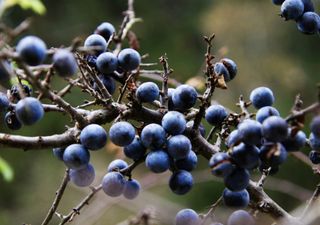
Ever wondered why a blueberry is blue even though their skin contains a dark red pigment? Their waxy exterior could be the key to artificially engineered materials.

We are getting used to experiencing such extreme atmospheric phenomena as hurricanes, floods, droughts and heat waves, but imagining a world without oxygen seems impossible. The consequences would be devastating.
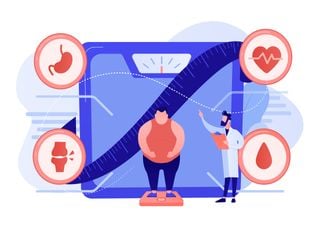
Researchers point towards a dysfunctional immune clean-up crew as a potential proponent of type 2 diabetes progression in cases of obesity.
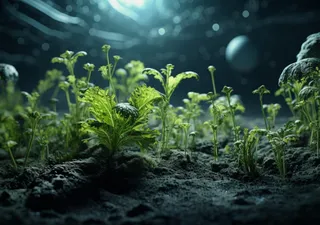
An experiment with chickpea seeds shows that plants can grow on the Moon despite the challenges. This finding suggests the possibility of extraterrestrial crops that would favor long-term space missions.

Although there is an evolutionary trend towards an increase in the size of animals, today we know that many animal species have decreased over time. Finally, science has begun to understand the mechanism behind this shrinkage.
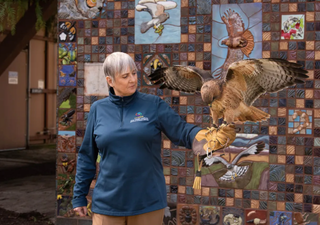
The University of California, Davis, receives $3 million from the U.S. Department of Defense to launch a new bird flight research center.
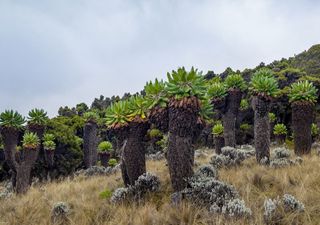
Since there are so few specimens of this tree left in the world, the cultivation of these plants abroad can help conserve the species, in the event of extinction in the natural environment.
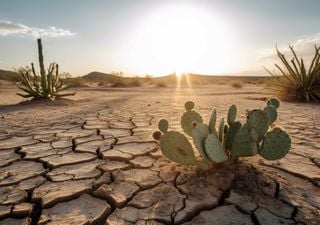
A new study finds the spacing of small islands of plants in a sea of bare soil could be an environmental warning sign.

Researchers have discovered a huge underwater canyon about 10 km wide, which formed at the bottom of the Mediterranean Sea about 6 million years ago.

In the first of two fly-bys this year, asteroid MD 2011 made its closest pass to Earth but fear not, it’s not close enough the present any danger.

According to a well-known Harvard biologist, there are 5 foods that should be avoided once you reach the biological age of 30. If we manage to eliminate them by replacing them with much healthier ones, the results will not be long in coming.