
Despite billions of years of evolution, researchers have found all living things appear to follow the exact same underlying temperature rule – with troubling implications for a warming planet

Despite billions of years of evolution, researchers have found all living things appear to follow the exact same underlying temperature rule – with troubling implications for a warming planet

A new study published in the journal The Innovation announces a new Archaeopteryx that has been added to the scientific record.

A big wave of aluminium from ageing cars is about to hit recycling yards, and researchers say they have found a way to turn that lower-value scrap into strong metal for new vehicles
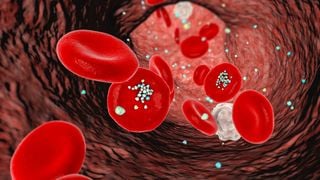
A new study finds that tiny plastic particles can accumulate inside immune cells, interfering with their ability to remove dying cells and maintain healthy tissues.

During the Big Bang, matter and antimatter were created in equal amounts. But the world around us is largely made up of matter. To understand why, scientists want to create antimatter and send it to labs where they can be studied in detail.

Satellite imagery has revealed vast green patches among the ice in the ocean surrounding Antarctica. Behind this phenomenon lies an explosion of microscopic life that scientists are closely monitoring.

Can you imagine an AI model so small that it could be sent across the world as an email attachment? That's the new AI model built by scientists in the US, heavily inspired by the human brain.

According to a new study, the Earth is warming at an unprecedented rate in more than a century of measurements. If this acceleration continues, the 1.5°C limit could be reached earlier than current projections suggest.

Oceans are becoming more acidic by the day, and this impacts their ability to absorb CO2 and keep it locked away. Will a human intervention to increase its alkalinity work out in the long run?

Hair salons are hubs of trust, community and conversation where climate action can take root and spread, new study finds.

A new study by University College London has analysed the use of nitrous oxide in dentistry in greater detail. Typically, nitrous oxide is used to sedate anxious patients before a dental procedure.

The 1.5°C threshold seems inevitable. The question is how long the planet can the planet tolerate this increase before glaciers or coral reefs are irreversibly destroyed. Models outline a possible, but demanding, trajectory.