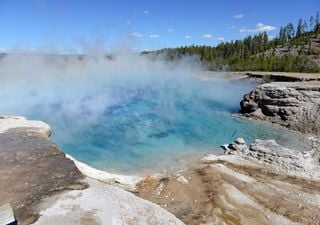
One of the greatest scientific mysteries is knowing where life on Earth began. There are more and more theories, but now another is emerging: hot springs. Find out more here!

One of the greatest scientific mysteries is knowing where life on Earth began. There are more and more theories, but now another is emerging: hot springs. Find out more here!
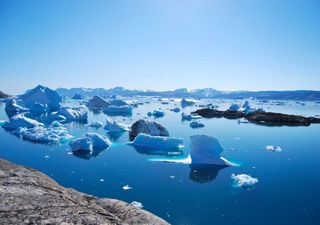
A key system within the Global Ocean Conveyor Belt appears to be weakening. Why is this happening and what does this mean for our oceans and climate?

Holidaymakers could reduce their carbon emissions by switching from air travel to rail, new research suggests.

Vegetarians and vegans consume more ultra-processed foods than people with diets based on meat and fish, according to a study by Imperial College London published in The Lancet.

A discovery of the largest worm lizard to date fascinates researchers and it's the extinct organism's diet that links the past to the present.

A team of scientists has taken inspiration from trees and their leaves to create “greener” electronic components.
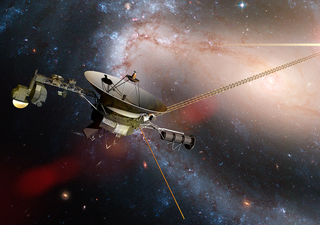
The Europa Clipper mission aims to reach Jupiter. However, before that, it will fly by Mars and Earth. Technological limitations mean that the best option is to take a long detour before reaching the destination.

The Northeast and Great Lakes have been blanketed by intense snowfall, bringing the familiar winter hardships. Yet, hidden within the flurry lies a rare and interesting phenomenon: thundersnow. Curious about this electrifying winter wonder? Let’s dive in!More information: The science of snow: How the Great Lakes creates wet, heavy snow?
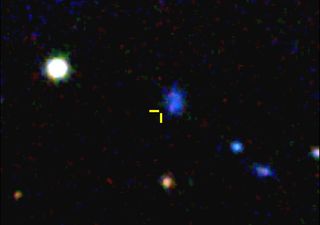
A new study published in the journal The Astrophysical Journal, led by an international team of researchers, has revealed new observations of an unusual supernova and the most metal-poor stellar explosion ever observed.

Social media sharing is key for content going viral. But a deeper look into this phenomenon shows that most users critical in achieving this actually have not read and understood the content.
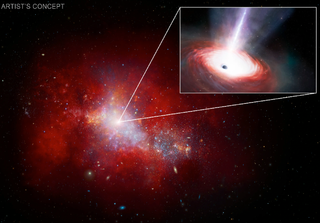
There are many known voracious black holes, but LID-568, recently observed by the James Webb telescope, seems to surpass them all. The rate at which it devours matter is a good 40 times greater than theoretically predicted limits.

Researchers at the University of California San Diego have used artificial intelligence to model Earth's climate more faster and more complex than previous models at similar timescales. It may be a key step towards more real-time and applicable analyses of our continuing-changing climate.