
Engineers in the USA used origami to make a soft robot "caterpillar". Through new innovations, will soft start to trump the rigid robots of the future?

Engineers in the USA used origami to make a soft robot "caterpillar". Through new innovations, will soft start to trump the rigid robots of the future?

The solar cycle is approaching its peak, expected by the end of this year, we therefore expect an increase in solar activity which could also have consequences on Earth.

NASA's Mars spacecraft gear up to probe solar flare impacts on missions, advancing our understanding of challenges for future exploration on the Red Planet.
Scientists unite from across the globe, aligning fossil evidence with extensive genetic data to piece together the flowering plant tree of life.
Astronomers think they may have solved a long-standing mystery around planetary orbital decay of hot Jupiters.
A large opening in Antarctic sea ice left scientists puzzled for many years. Now, they have finally figured out what caused it. This process is also a cause for a decrease in overall sea ice levels in Antarctica.

A study proposes a new explanation for giant exploding craters that seem to appear randomly in Siberian permafrost. These craters, first spotted in 2012, appeared in the permafrost of Siberia, leaving scientists perplexed.
Carbon dioxide may have had a critical role in super spreader events during the COVID pandemic says new research.
Climate change will overtake land-use change as the main cause of biodiversity loss by 2050, but choosing the right policy could mitigate losses.
They discover that not only heat can evaporate water. The photomolecular effect is the process by which light also evaporates water without the presence of heat. This finding is fundamental for meteorology and other branches of applied sciences.
Greenhouse gas emissions is one of the largest problems facing society today, but what is needed to reduce the impact of these emissions? Read here to find what new research has to say.
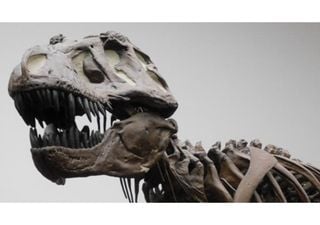
Re-examination of brain size suggests dinosaurs like the T. rex were likely no smarter than giant crocodiles.