
One million dollars to answer a major meteorological question: when does a supercell produce a tornado?
A team of scientists in the United States will study how turbulence in the lower layers of the atmosphere influences tornado formation. The aim is to identify which storms have the greatest potential to produce tornadoes and improve warnings.
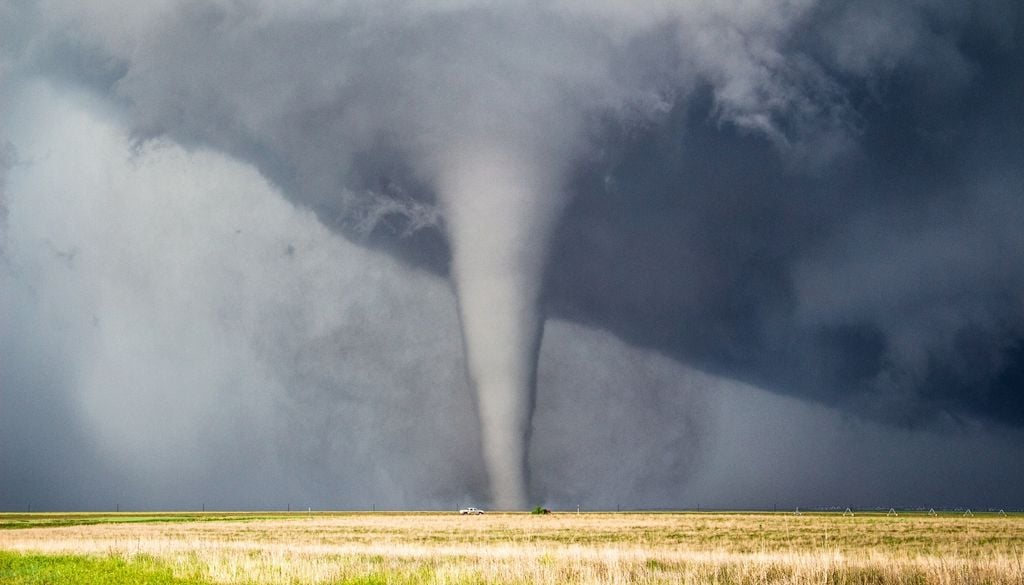
Anticipating a severe storm is not always enough to predict whether it will go on to produce a tornado. Although meteorologists have increasingly advanced tools at their disposal, determining which of these storms will produce one of nature’s most destructive phenomena remains a challenge.
To make progress in this area, researchers at Pennsylvania State University in the United States will study how atmospheric turbulence can influence tornado development.
The project has received nearly $1.1 million in funding from the US National Science Foundation (NSF) and will run for three years.
The research aims to improve understanding of the mechanisms that trigger these phenomena and, in the long term, help deliver more accurate and timely warnings, giving people more time to seek shelter.
Turbulence: a key factor in tornado formation
The project is led by Paul Markowski, a distinguished professor and head of the Department of Meteorology and Atmospheric Science at the university. His work builds on research published in 2024, in which he carried out numerical simulations of supercells: intense thunderstorms characterised by rotating updraughts.
Unlike other models that simplify atmospheric conditions, these simulations incorporated more realistic turbulent environments. The results suggested that tornadoes could form through mechanisms different from those identified in previous simulations, which used less complex atmospheric conditions.
More recently, researchers in Oklahoma observed similar turbulent structures during field studies of supercells, providing observational evidence consistent with Markowski’s findings.
However, one fundamental question remains unanswered: do these turbulent structures actually encourage tornado formation in the atmosphere? Scientists believe they could play an important role, although they still need to determine the circumstances in which this occurs and the extent of their influence.
What conditions could favour their development?
To answer this question, the team will combine numerical simulations, machine learning techniques and measurements collected during previous observational campaigns. The researchers will analyse different meteorological environments to establish whether turbulence is a significant factor in all of them or only under certain conditions.
One aspect they will investigate is the relationship between certain turbulent structures, wind and a reduction in the heating of the atmosphere from the Earth's surface.
According to Kevin Bowley, a professor of meteorology and member of the project team, these structures can develop when solar heating of the surface decreases, a situation that commonly occurs during the early hours of the night. They can also appear in windy conditions.
If it is confirmed that these characteristics help distinguish supercells with a greater potential to produce tornadoes, they could become additional indicators for forecasters. However, storms can develop under different combinations of atmospheric instability and changes in wind speed and direction with height, so it will be necessary to establish whether this mechanism works in a range of different scenarios.
Supercomputers and balloons to study the inside of storms
A central part of the research will involve high-resolution simulations carried out on Roar, Pennsylvania State University's supercomputer. These tools make it possible to represent the evolution of a storm with a level of detail that is difficult to achieve through direct observations.
In a real-world event, instruments cannot record every variable at every point in the atmosphere, and measurements contain errors. By contrast, computer models allow researchers to analyse large volumes of information and modify the initial conditions to study how the system responds.
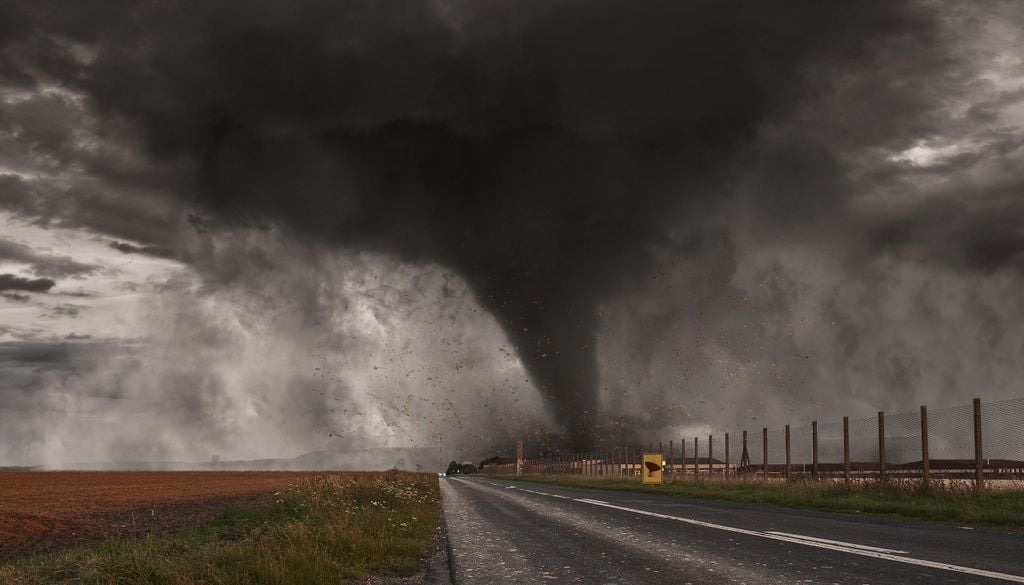
The team will also examine temperature and pressure measurements collected between 2017 and 2022 during NSF-funded field projects. To obtain these data, Markowski and Professor Yvette Richardson used small balloons equipped with sensors capable of recording conditions inside supercells.
Combining these observations with the new simulations will help reconstruct the distribution of wind, temperature and humidity at different altitudes.
The ultimate aim is to translate this knowledge into better short-term forecasts and more effective weather warnings. Although further work is needed to establish the extent of the findings, understanding why some storms produce tornadoes while others do not could represent a significant step forward in anticipating these phenomena and reducing their impact.