
Scientists opened 40-year-old cans of salmon to check on ocean health – and found something unexpected inside
Tracking how marine ecosystems have changed over decades is difficult when reliable historical samples are hard to come by. A team of researchers in the US found an unlikely solution sitting in a Seattle warehouse
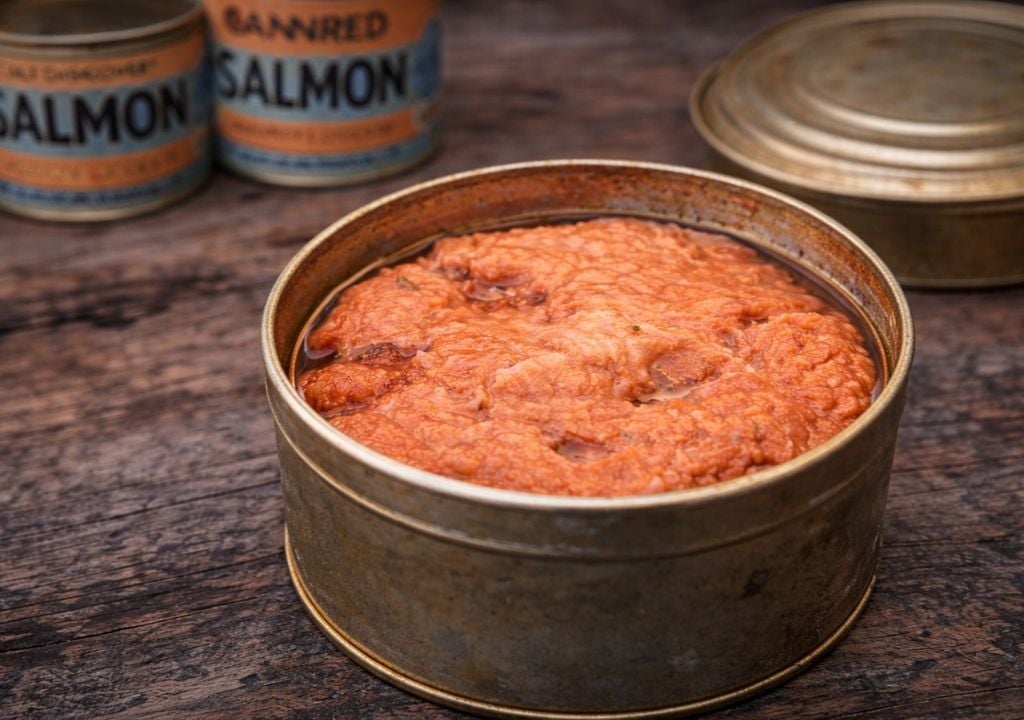
Scientists at the University of Washington have opened 178 cans of salmon spanning a massive 42 years of catches from the Gulf of Alaska and Bristol Bay.
The reason behind this perculiar activity wasn't just for fun. The researchers were looking to count the tiny parasitic worms found preserved inside the fillets, and see if they held any secrets of the ocean's history.
According to the scientists, the study is the first to use archived canned fish as a long-term ecological dataset, and the worm counts turned out to be more informative than they might sound.
What four decades of cans revealed
The parasites in question are anisakids, sometimes called sushi worms. They're about a centimetre long, already dead from the canning process, and completely harmless to eat. But their presence in fish flesh carries information about the broader food web – because anisakids can only complete their life cycle if the right combination of hosts is available, from krill and small fish all the way up to marine mammals.
"Everyone assumes that worms in your salmon is a sign that things have gone awry," said Chelsea Wood, associate professor of aquatic and fishery sciences at UW and senior author on the paper. "But the anisakid life cycle integrates many components of the food web. I see their presence as a signal that the fish on your plate came from a healthy ecosystem."
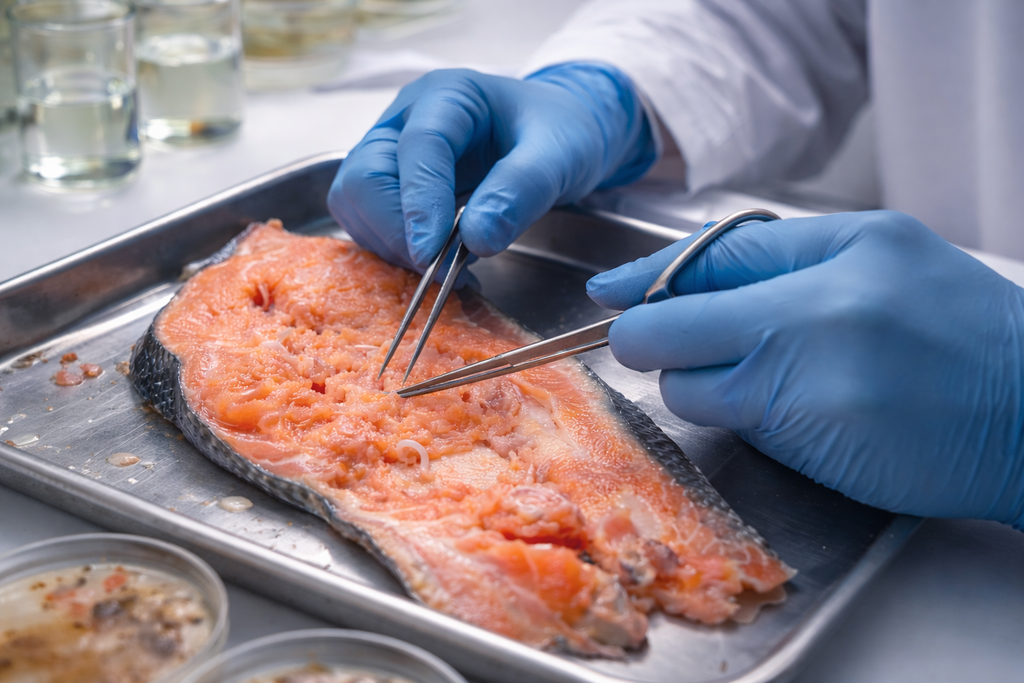
The cans came from the Seafood Products Association, a Seattle trade group that had been holding onto them for quality control purposes and no longer needed them. Researchers dissected the fillets using forceps and a dissecting microscope, carefully pulling the flesh apart to count the worms curled inside the muscle tissue.
The results showed anisakid levels increased in chum and pink salmon between 1979 and 2021. In coho and sockeye, numbers stayed roughly flat – though that's harder to interpret, partly because the canning process destroyed the internal features needed to identify which specific worm species were present.
Lead author Natalie Mastick, now a postdoctoral researcher at Yale's Peabody Museum, said the rise in some species was an encouraging sign.
"Seeing their numbers rise over time, as we did with pink and chum salmon, indicates that these parasites were able to find all the right hosts and reproduce. That could indicate a stable or recovering ecosystem, with enough of the right hosts for anisakids."
Why marine mammal recovery may be behind it
One of the more plausible explanations for the increase involves the Marine Mammal Protection Act of 1972. Seals, sea lions and orcas all recovered significantly over the study period – and since anisakids can only reproduce in the intestines of a marine mammal, more marine mammals in the water means more opportunities for the parasite to complete its cycle.
Warming ocean temperatures and improvements linked to the Clean Water Act may also be contributing factors, though the researchers haven't been able to separate those effects cleanly.
The team says the approach could work with other archived seafood too – canned sardines being an obvious next candidate. Getting there, though, depends on the kind of informal networking that led to this study in the first place.
"We can only get these insights into ecosystems of the past by networking and making the connections to discover untapped sources of historical data," said Wood.
News reference:
Scientists open 40-year-old salmon and find a surprising sign of ocean recovery, published by Washignton Unviersity, April 2026.