
The secret signals rocks send before catastrophic collapse
Scientists have discovered that stressed rocks emit subtle chemical signals before breaking, and developed a model to track these changes—offering a potential new way to warn of earthquakes, landslides and other hazards.
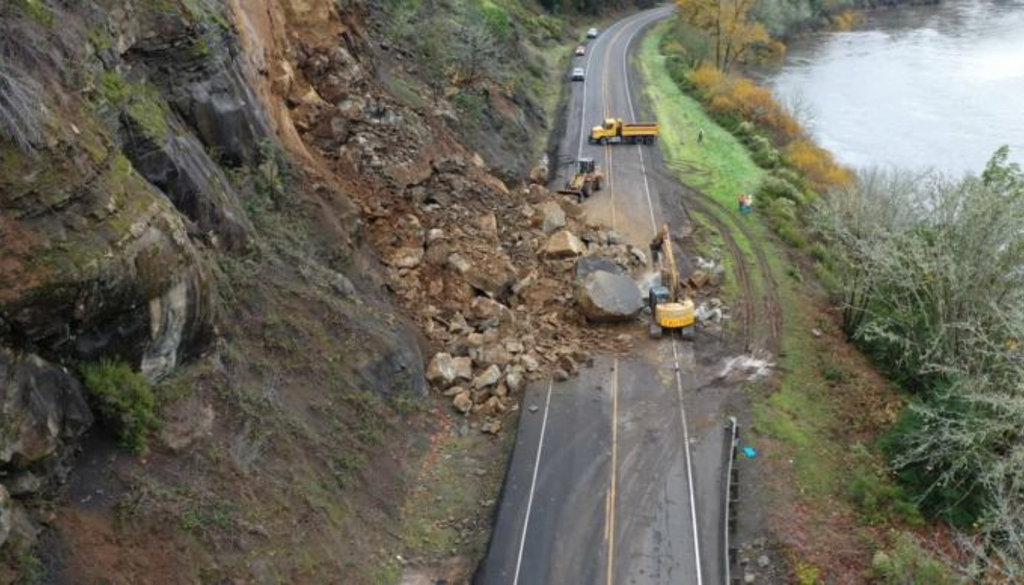
Too much stress can cause rocks to crack, but before they hit that point, they ‘sigh’ a chemical warning by releasing nuclides. This type of atom is defined by the number of neutrons and protons in the nucleus, and scientists have studied these geochemical emissions for over 50 years, but have struggled to link nuclide release to rock breakages.
In a new study published in the journal Proceedings of the National Academy of Sciences, an international team of scientists from universities in China and the United States has solved the mystery by using models to connect nuclide signal fluctuations to changes in rock structures, which lead to critical failure.
When rocks break or deform, they trigger avalanches and landslides and intensify damage caused by volcanic activity and earthquakes. The study's findings could help scientists prepare for geohazards caused by stressed rocks.
"We explicitly link these structural changes to measurable features of nuclide signals," said Rong Mao, author of the study and postdoctoral research associate at New Jersey Institute of Technology's Center for Natural Resources. "To our knowledge, this is the first study to establish a quantitative theory for diagnosing rock rupture using naturally occurring nuclide signals," he says.
What happens when rocks weaken?
When rocks weaken, they release nuclides such as helium, radon, and thoron into the rock's pores and cracks. Fissures then widen, spread and connect to each other, and as this happens, nuclides are released and transmitted. Scientists can then measure these geochemical signals.
Previous research thought there was a connection between rock rupture and shifts in nuclide signals, and in laboratory-based experiments, other researchers "have consistently demonstrated that rock cracking and deformation can trigger measurable changes in nuclide emissions," Mao said.
Observations in nature have also linked environmental changes to the release of nuclides, which weaken rocks. In 2995, scientists in Kobe, Japan, observed an increase in radon emissions from rocks 9 days before a magnitude 7.2 earthquake.
Nuclide signals usually originate in buried rocks but can be detected at the surface. They can provide early warning of geohazards, but despite decades of observations, scientists have not linked nuclide anomalies to changes in rock properties, limiting the ability to monitor nuclide emissions.
"Our work addresses this gap by providing a theoretical foundation for interpreting these signals, paving the way toward nuclide-based prediction and improved early warning of geohazards and rock engineering management," Mao said.
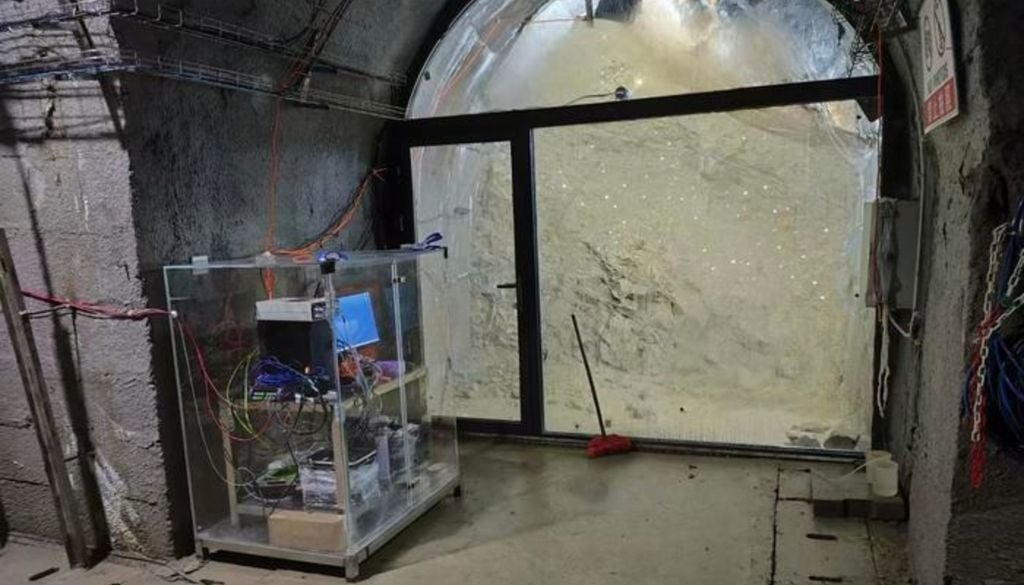
The team analysed two previous long-term observations of nuclide release from stressed rocks. One was a report from an experiment which monitored radon emissions in a granite cylinder over a month as it weakened and then broke. The other report was an experiment spanning three years that tracked radon emissions from a bedrock hillside near a reservoir in the French Alps. For the new study, the team reviewed the observation data, built a model to analyse changes in the signals over time, and matched them to progressive structural changes in rocks.
"Our model shows how nuclide signals evolve as rock rupture progresses through four stages: crack initiation, crack opening, crack dilation, and crack propagation," said Mao. "These stages correspond to distinct signal characteristics that can be quantitatively interpreted."
Model can be used in both the lab and nature
The model reproduced radon signals across all rock stages, weakening and breaking in laboratory experiments. In field applications, which involve natural systems that are more complex than controlled laboratory experiments, the model explained signals captured by monitoring bedrock.
The work offers applications for predicting geohazards such as earthquakes, and could help scientists monitor landscapes near reservoirs, where water levels can affect rock stability.
"In such settings, nuclide signals provide a sensitive and potentially real-time indicator of subsurface structural changes, offering valuable information for early warning and risk management." Said Mao.
However, the field results also displayed the impact of external factors which can affect nuclide signals in natural settings.
"For example, deep fluids, such as thermal waters or brines, often have higher salinity or temperature, which can enhance nuclide release and transmission, leading to amplified signals," Mao explained. "When rock rupture connects to these deep fluid pathways, the observed signals may reflect both structural changes and fluid mixing processes. Incorporating these effects into the model will be an important direction for future work."
After fine-tuning the model, it could possibly improve how quickly it can interpret changing nuclide signals to predict when rocks are about to fail.
"While our model begins to quantify the timescales of signal genesis and transmission, this aspect has not yet been fully validated in field conditions," Mao said. "Addressing this gap will be critical for translating our framework into practical geohazard early warning systems."
The team has already placed radon observation stations at three sites in China: the Huangtupo landslide in the Three Gorges Reservoir area, the reservoir-bank landslide near Xiluodu Hydropower Station, and the Po Shan Road slope in Hong Kong, said Jia-Qing Zhou, an associate professor at Wuhan University in China.
"These facilities are deployed to capture hydrogeochemical precursors of potential geohazards, to further validate and refine our theory," Zhou said. "Our research journey is far from over."
News reference:
Probing rock rupture with naturally occurring nuclide signals | PNAS. Zhou, J.-Q., Mao, R., Luo, X., Cardenas, M.B., Chen, Y.-F., Gan, F.-S., Zhou, C.-B., Li, C., Tang, H., Hu, R., Yang, Z. and Manga, M. 9th April 2026.