
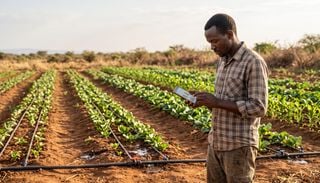
In Kenya's Rift Valley, predicting rainfall means deciding whether a family will have food for the winter or face hunger. In these areas, AI can be a huge help.

Massimiliano Santini is a WMO-certified meteorologist and trained engineer. A registered (publicist) journalist in Italy, he serves on the board of AMPRO, the Italian Association of Professional Meteorologists. At Rai Meteo, he delivers daily weather forecasts across RAI television and radio, with a particular focus on regional programming for Umbria. He has produced climate-focused science podcasts for RAI and contributes articles to the network’s social channels. His interests span classical physics, quantum mechanics, astronomy, and space exploration.
As a science communicator, he regularly speaks at conferences and round tables on meteorology, climate, and risk management. He is committed to translating complex concepts—especially in meteorology, climate, and physics—into clear, accessible insights for the public.
In Kenya's Rift Valley, predicting rainfall means deciding whether a family will have food for the winter or face hunger. In these areas, AI can be a huge help.
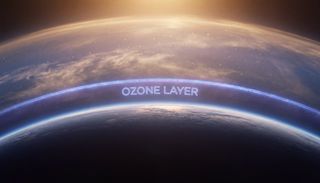
Encouraging data from the atmosphere's ozone layer: the Antarctic ozone hole continues to shrink, showing a progressive recovery of Earth's protective layer globally. Here are the latest official measurements, along with some data that remain concerning.
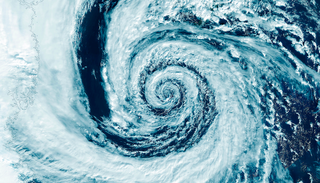
OpenAI announces it has solved one of the Millennium Prize Problems: the Navier–Stokes equations, which are closely tied to weather forecasting. However, the claim is raising doubts and controversy in the academic community.
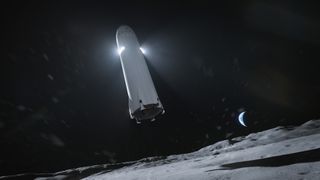
NASA’s Artemis programme is defining the path forward. With Artemis III and IV now scheduled between 2027 and 2028, lunar exploration faces new deadlines and complex technological challenges, including the development of commercial landers by SpaceX and Blue Origin and the introduction of new spacesuits.
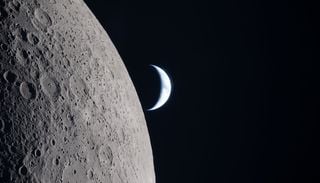
With Artemis II, the world has once again ventured closer to space and the Moon. From the 12,000 previously unseen photographs released by NASA, a breathtaking beauty of the Moon and Earth emerges, so captivating that it crashed the agency's website.
The universe is an ocean of silence. Despite billions of galaxies, the Stern-Gerya study suggests that intelligent life is a remarkably rare “geological accident.” Without active plate tectonics and the Moon, intelligence as we know it might never have arisen. We are not the culmination of biology, but an exception.

Copernicus experts say that December 1, 2025, marks a turning point for global atmospheric monitoring with the premature closure of the Antarctic ozone hole.