
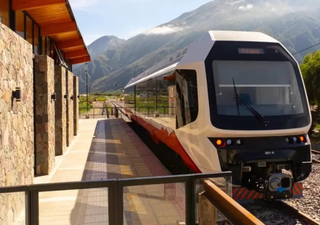
The Solar Train of the Quebrada combines sustainable tourism, history, and breathtaking landscapes in Jujuy. It travels through ancestral towns, operates daily, and is a pioneer in Latin America.

Ignacio de la Rosa was born in Mendoza, Argentina, in 1984. He studied Social Communication at Juan Agustín Maza University and began working in media in 2004.
He has always focused on newspapers and print media, though he has also made constant forays into radio programs (as a columnist and host) and streaming.
He has worked in the Society, Police, and Judicial sections of the newspapers El Sol, MDZ, Vía Pais, and Los Andes. He has also participated in radio programs on Radio Nacional, Aconcagua Radio, and the streaming program #MVQN.
In 2019, he was the journalistic producer for the documentary "Víctimas del Próvolo," which premiered on YouTube and the Los Andes website. The documentary was recognized that year at the Digital Media Latam Awards by Wan-Ifra.
He is a correspondent for CNN Argentina in Mendoza and has been a collaborator for Infobae.
He is a member of FOPEA, and some of his short stories and chronicles have been published in the books "Mariandina," "Mariandina 2," "Que lo cuenten como quieran," and "Los monstruos bicéfalos." He is also the author of the book "Próvolo, el instituto del terror," which won the Vendimia 2025 Literary Contest.
The Solar Train of the Quebrada combines sustainable tourism, history, and breathtaking landscapes in Jujuy. It travels through ancestral towns, operates daily, and is a pioneer in Latin America.

Francys Arsentiev's story has moved the world for nearly three decades. She reached the summit of Everest without supplemental oxygen, but a tragedy turned her achievement into legend.
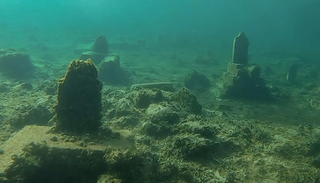
The fall in the water level of a dam in Turkey revealed an ancient city that is almost intact, with homes, tombs and religious sites that have astonished archaeologists.
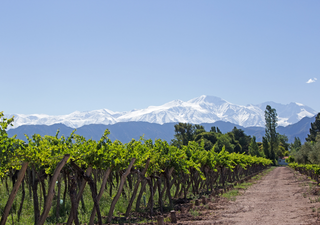
Just half an hour from Mendoza City, this paradise that combines mountains, rivers, and vineyards recalls the iconic Italian Tuscany, though it is located in Argentine territory.

An experiment with a mouse showed that genetic mutations affect future generations until reproduction stops, raising the question of why cloning should never reach humans.

Satellite imagery has revealed vast green patches among the ice in the ocean surrounding Antarctica. Behind this phenomenon lies an explosion of microscopic life that scientists are closely monitoring.
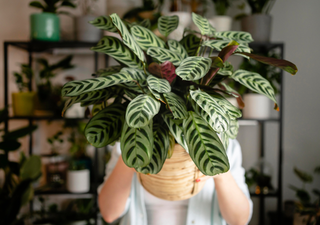
The dryness of indoor environments affects and damages houseplants and their leaves. It is not always the watering that is to blame. If you notice that the tips of your plants’ leaves are brown and dry indoors, improving watering is not the solution. Take note.
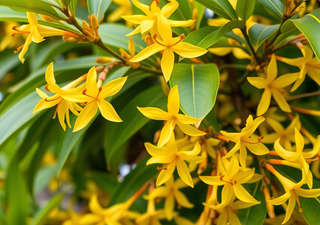
This tree is ideal for beautifying your garden, providing shade, and filling your home with the fragrance of its aromatic flowers.

For plant lovers who are short on time, or for those looking to decorate indoor spaces, these three plants are ideal and highly recommended, as they are easy to care for, resilient, and perfect for adding greenery without demanding constant attention.
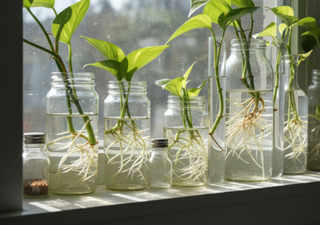
Pothos is one of the plants that requires the least care and is among the easiest to propagate in water. Even so, it has its secrets.
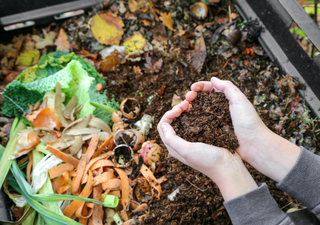
Using organic leftovers that would normally end up in the bin, it is possible to make homemade compost and significantly improve plant health. What materials to use, how long it takes and why this natural fertiliser is essential are explained below.