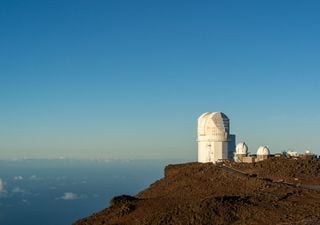
'Dancing' magnetic waves revealed for the first time by the world's most powerful telescope show what astronomers suspected in the Sun but could never find.

'Dancing' magnetic waves revealed for the first time by the world's most powerful telescope show what astronomers suspected in the Sun but could never find.
The universe could end frozen, torn apart, or stopped forever. Behind these apocalyptic scenarios lies the mysterious and elusive dark energy, responsible for accelerating cosmic expansion.
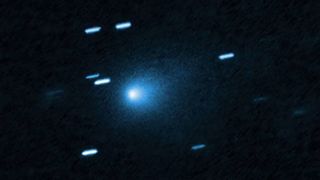
The interstellar object 3I/ATLAS is rarely visible at this time of year, but we can still see it from Earth with high-resolution astronomical systems providing illuminating data. What is it?
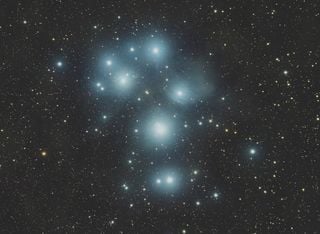
The Pleiades cluster heralds winter with its blue glow. Discover how to find it, when to observe it, and why it has fascinated people for thousands of years.
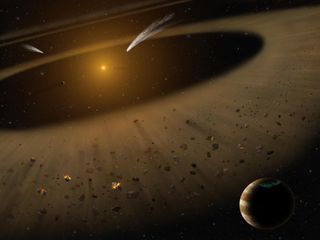
The Kuiper Belt, beyond Neptune, is filled with small bodies. These primitive objects are a fossil record of the early Solar System and the main source of short-period comets.
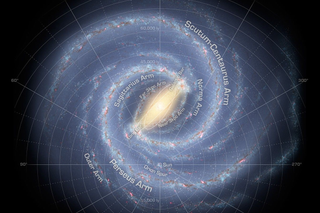
A NASA researcher argues in a new paper that the Milky Way likely hosts multiple civilisations, but we haven’t found them for a very simple reason.
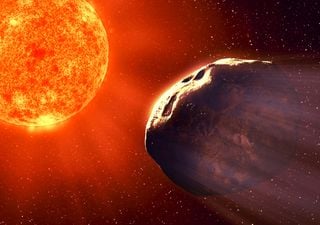
Scientists have discovered a fast-moving rocky body orbiting close to the Sun, hidden within its glare. Is it a threat or a cosmic treasure that will help us understand our solar system?
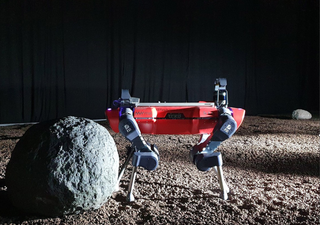
Robot dogs are being tested out in caverns on Earth. Find out why as we explore whether robot dogs could become the trusted companions of future lunar settlers.
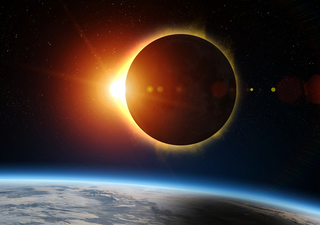
The greatest solar eclipse of the century will take place in 2027 and last more than 6 minutes. We’ll tell you when, where, and how this spectacular phenomenon can be observed.

We commonly refer to meteors as "shooting stars," the bright lights that streak across the sky. Scientifically, the distinction is crucial. A meteorite is a rock that survives the atmosphere, unlike a meteor, which disintegrates.
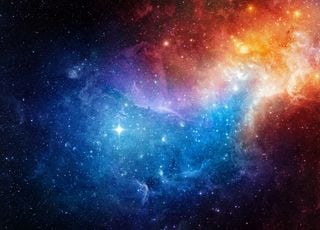
What would happen if the cosmological constant, which is currently positive, became negative? Based on this theory, a team of researchers has managed to model the end of our Universe.
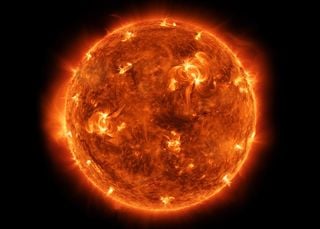
A new study reveals why it rains on the Sun, solving a decades-old mystery. Researchers show rapidly changing elements in the Sun’s atmosphere trigger plasma “rain” during solar flares.