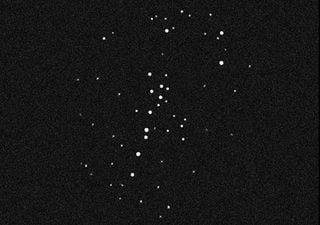
For a long time, Ursa Major III was thought to be an extremely faint dwarf galaxy. But recent studies point to a special core, with black holes and neutron stars.

For a long time, Ursa Major III was thought to be an extremely faint dwarf galaxy. But recent studies point to a special core, with black holes and neutron stars.
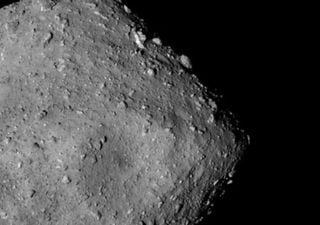
The study of fragments brought back by the Japanese Hayabusa2 mission allowed international scientists to precisely analyze the composition of the asteroid Ryugu. The findings provide clues about how water and organic molecules arrived on early Earth.
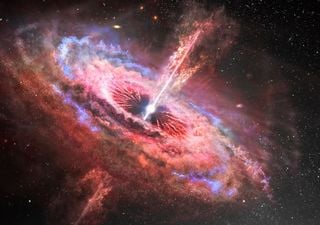
A groundbreaking study reveals the awakening of an AGN and intense star formation in a merging galaxy cluster, offering a unique glimpse into cosmic evolution.
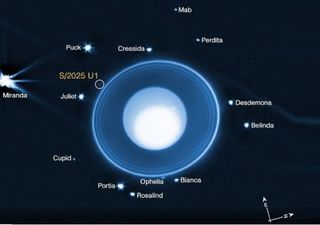
The incredible James Webb Space Telescope surprises us every day. This powerful tool has just detected Uranus’ 29th moon, expanding the family in the solar system.
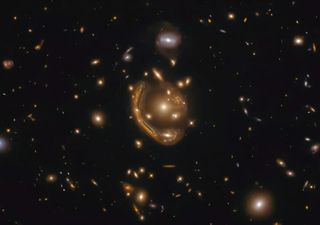
These formidable “cosmic magnifying glasses” created by gravity allow us to observe distant galaxies, study dark matter, and look back to the very first moments after the Big Bang. A new generation of telescopes promises to multiply these discoveries.
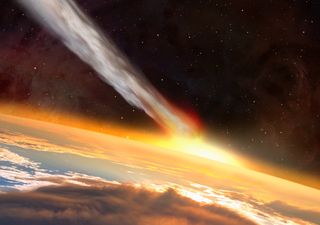
An explosive fireball streaked across the night sky over the Japanese town, startling residents and leaving behind a blinding flash and a bone-shaking roar that transformed the night into an unforgettable cosmic spectacle.
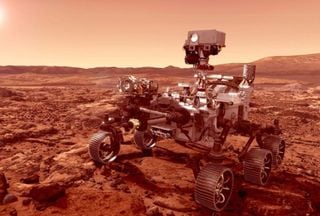
A 360-degree image from Perseverance reveals Mars in unprecedented detail, showing a surprisingly blue sky, intriguing rock formations, and valuable clues about the red planet's geological history.
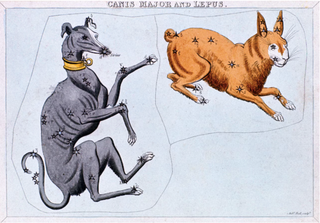
In the midst of summer, with the sweltering heat, it's common to hear that it's a "dog day." Its origin, however, lies not in animals, but in a well-known star that fascinated the ancient Greeks.
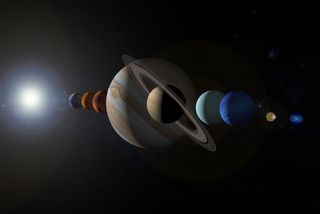
Following the conjunction of Venus and Jupiter on August 12, the morning sky offers an even more complete parade on the 19th, with Saturn, the crescent Moon, and Mercury.
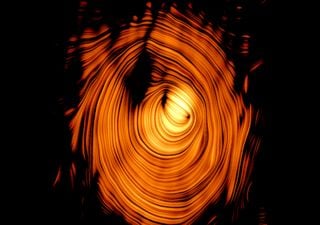
Space scientists have captured what appears to be the famous "Eye of Sauron" in the distant universe. With this recent discovery, they believe they have solved a decade-long cosmic mystery.
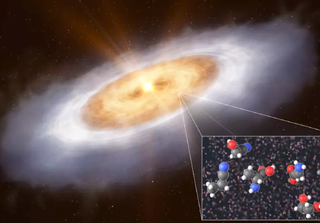
Seventeen complex organic molecules have been discovered around the star V883 Ori, two of which have never been observed before. This indicates that interplanetary space could be the place where life originated, before it migrated to planetary surfaces.
Astronomers have detected a powerful, mysterious object called 'Punctum' in the nearby galaxy NGC 4945. Its intense energy and puzzling properties are challenging what scientists know about the universe.More information: Unusual Plasma Structure Discovered in Distant Galaxy: Astronomers Take Amazing Shot of OJ 287