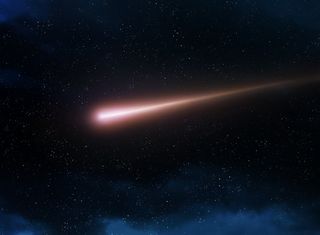
The third interstellar object detected, comet 3I/ATLAS, is hurtling through the solar system. Although its origin remains a mystery, data from the Gaia mission allow us to reconstruct its path and possible stellar encounters.

The third interstellar object detected, comet 3I/ATLAS, is hurtling through the solar system. Although its origin remains a mystery, data from the Gaia mission allow us to reconstruct its path and possible stellar encounters.
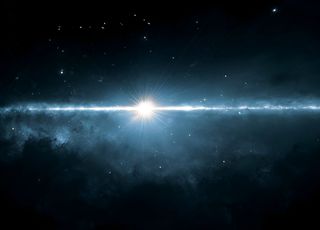
In early July, several astronomers detected successive, particularly virulent gamma-ray bursts. This phenomenon surprised scientists.
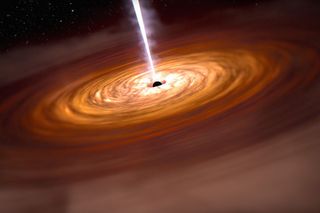
Black holes are regions of space-time where gravity is so intense that nothing escapes. From their anatomy to their cosmic impact, we explore how they form, classify, and detect.
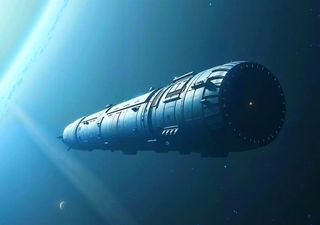
Chrysalis is a project that defies human imagination: a 58 km space habitat, designed for entire generations, with the goal of reaching the nearest star system.
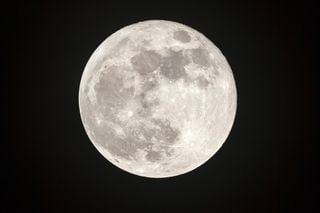
The Moon doesn't shine on its own: what we see are reflections of the Sun on its surface. In this article, we explain, in a clear and simple way, how the eight lunar phases are formed and why they repeat in a cycle.
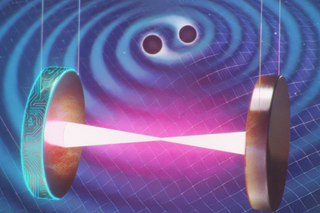
Google this week unveiled Deep Loop Shaping, which aims to facilitate and improve gravitational wave observations.
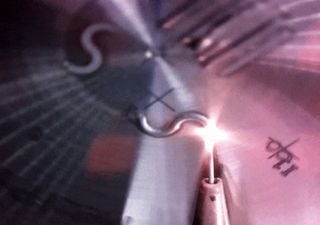
The first 3D printing of a metal “S” on the International Space Station is the starting point for a change in the future of space exploration.
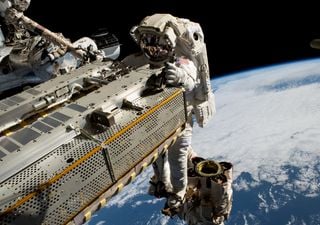
After months in space, astronauts must readjust to Earth's gravity. NASA studies how the human body transforms and seeks strategies to ensure health for future missions to the Moon and Mars.
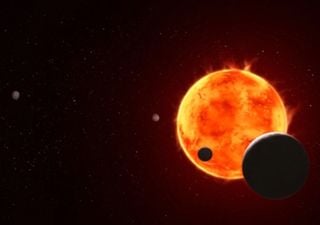
JWSP can observe distant worlds and stars and probe the mysterious structures of our universe; has it found an atmosphere on a distant exoplanet?
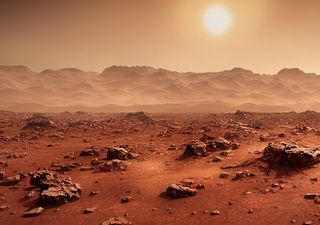
Perseverance finds key signals in Mars' Jezero Crater that represent the strongest indication yet of possible past microbial life on the Red Planet.
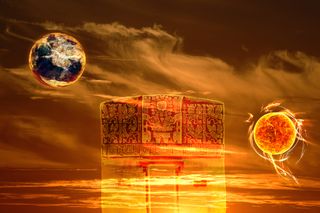
The ancient Mayan civilization, famous for its complex calendar, hid an astonishing astronomical code, and recent discoveries reveal how they tracked the planets, demonstrating their profound connection to the Universe.
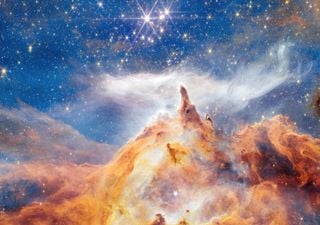
The James Webb Space Telescope captured a majestic scene in Pismis 24, a young star cluster in the Lobster Nebula. The image shows how stellar radiation and winds sculpt cosmic dust and give rise to new stars.