
A farmer discovered that his doorstop had fallen from the sky: it turned out to be a meteorite worth $100,000
A 10-kilogram rock remained beside a barn in Michigan for decades until a meteorite fell in 2018, prompting an investigation into its origins.
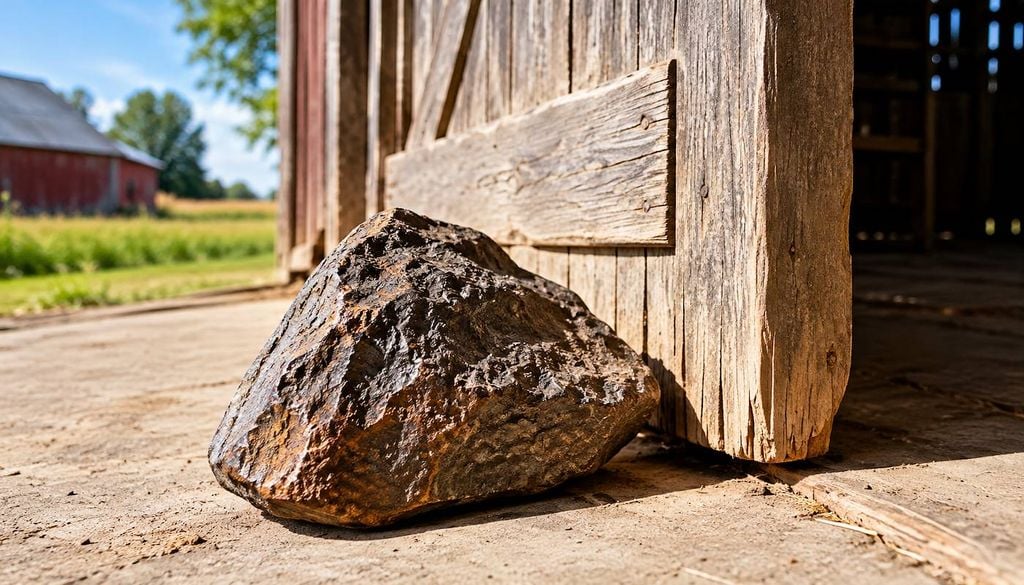
This unusual story began in 1939, when a large rock appeared on land near a farm in Edmore, Michigan. The owner maintained from the outset that it had fallen from the sky, but for decades there was no scientific analysis to support this claim. The object eventually became part of an ordinary, unremarkable daily task: keeping a barn door open. Its appearance may have been unusual, but that was not enough to identify it as material originating from space.
Interest in the rock arose in January 2018, when another meteorite fell in Hamburg, Michigan. The event prompted the farm's new owners to remember the rock they had also been using as a doorstop for decades. The new owner had used it for this purpose for around 30 years. Faced with the possibility that it really was a meteorite, he decided to take it to the University of Michigan for examination.
Iron meteorite: a 10-kilogram specimen
The sample eventually came into the hands of Mona Sirbescu, a professor of geology at the University of Michigan. The specialist had analysed numerous rocks over the previous two decades, but none had turned out to be a meteorite. This time, she found a very different specimen: it weighed 10 kilograms, had a triangular shape and measured 17 × 20 × 23 centimetres. The initial examination revealed characteristics consistent with a rock that had passed through the Earth's atmosphere.
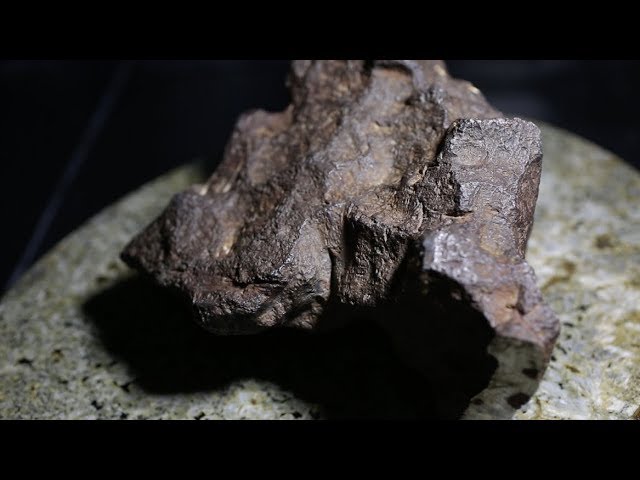
The surface had large indentations and a light brown fusion crust. This layer had formed as the object travelled through the atmosphere at high speed. An examination of the interior provided the evidence needed to confirm the nature of the sample. The rock was classified as an iron meteorite belonging to the IIIAB group, a classification related to its composition and structure.
The data obtained made it possible to establish its characteristics in even greater detail. The specimen was composed of 88.5% iron and 11.5% nickel. It also contained three minerals: kamacite, taenite and schreibersite. The research also identified an internal structure known as the Widmanstätten pattern, which is associated with iron meteorites that cool slowly over long periods inside their parent bodies.
The iron meteorite that nobody identified
The analysis also placed the specimen among the largest meteorite finds recorded in Michigan. According to the data provided, it ranked sixth in size within the state. Its potential value was estimated at $100,000, equivalent to around €89,423, a figure far removed from the practical use it had served on the farm for decades. For its owners, the rock had simply been used to stop a door from closing.
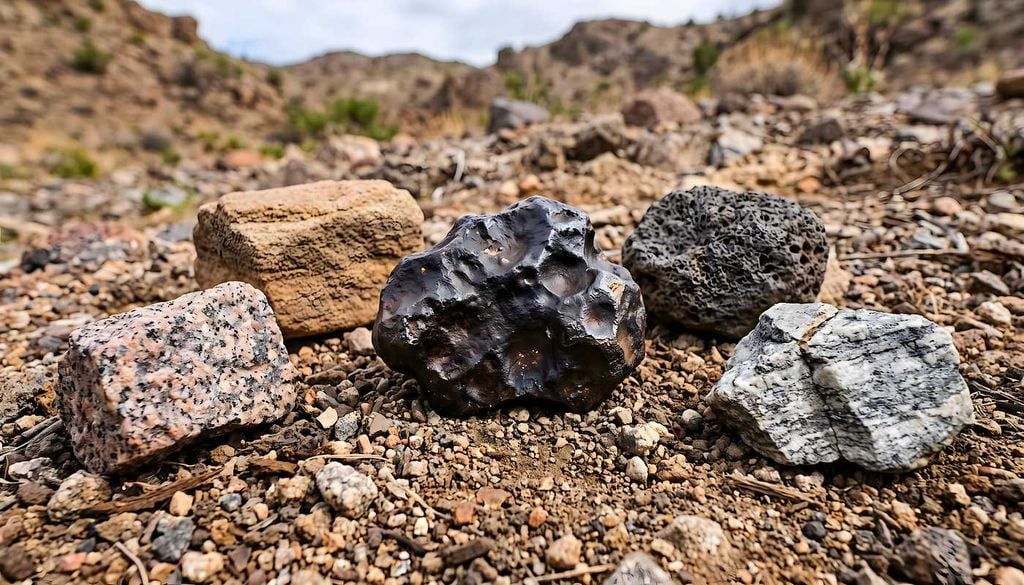
The case attracted particular interest because of the time that elapsed between the rock's discovery and its identification. The rock had been found in 1939 and remained unexamined for decades. In 2018, the Hamburg event prompted its owners to reconsider the object's possible origins. The decision to take it to the University of Michigan finally provided a scientific answer about a rock whose provenance had remained unconfirmed.
The specimen's official name was established as Edmore, Michigan, in 2019. The analysis described it as a medium octahedrite, within the IIIAB group of iron meteorites. Its composition, the minerals detected and the Widmanstätten pattern provided the information needed to distinguish it from an ordinary terrestrial rock.
From barn doorstop to Michigan meteorite
The Edmore case demonstrates how an object of extraterrestrial origin can remain part of an everyday activity for decades without prompting anyone to carry out a scientific investigation. The original owner said it had fallen from the sky, but this account had never been verified. The rock remained beside the barn until an event elsewhere in Michigan led its new owners to question whether the story could be true.
Confirmation came after examining its dimensions, surface, composition and internal structure. The combination of iron, nickel, kamacite, taenite and schreibersite, together with the Widmanstätten pattern, made it possible to classify the specimen as an IIIAB iron meteorite. The figures of 88.5% iron and 11.5% nickel completed the chemical profile recorded in the analysis.
For decades, the rock served a domestic purpose and remained outside any scientific catalogue. Following its examination, it came to be listed among the largest meteorites found in Michigan, with an estimated potential value of $100,000. The object that had helped keep a door open was ultimately identified as a piece that had arrived from space.