
One of the most curious reactions of the human body is to shiver when it's very cold. What is the reason? Why can't we control these tremors?

One of the most curious reactions of the human body is to shiver when it's very cold. What is the reason? Why can't we control these tremors?

On a geological time scale, nothing is permanent. Now, a study proves that the oceans, blue today, were green in the planet's earliest eras. And in the future, they may return to colors like red or purple.
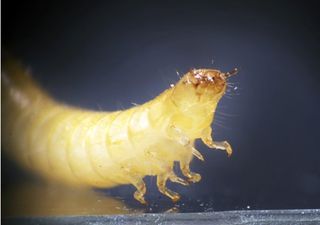
Researchers have observed the wiggling mechanism of the red flour beetle, a pest that burrows into important food crops like flour and grain; their findings could prevent infestations.

Is the time we have left in our hands? A little-known fact links nail growth to the passage of time on the body.
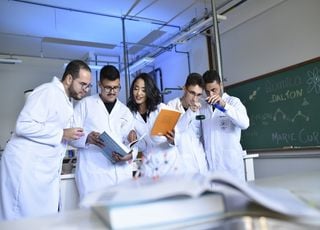
American researchers have created an implant that uses artificial intelligence to restore the ability to speak to those who no longer have it. A true scientific breakthrough, still experimental, but which could see the light of day within five to ten years.

The Mediterranean is a semi-enclosed basin surrounded by significant mountain ranges (Alps, Apennines, Atlas, Pyrenees), which play a crucial role in the development of these cyclones.

If scientists are more concerned with whether they can rather than whether they should, resurrecting extinct species could be a problem for them—and for us humans, too.

There are plants that seem to come straight out of a science fiction story: they dry up, wrinkle, and look dead, but when they touch water, they revive in a matter of hours.

Backed by several scientific studies, we tell you whether the phases of the moon influence human health, sleep quality, and the menstrual cycle. Take note, because you'll be surprised by the results.

Believe it or not, the history of science is full of unexpected discoveries. From penicillin to the microwave, to the pacemaker. We'll tell you about eight discoveries that have emerged from accidents or errors in the laboratory.

We could soon move away from the notion that PFAS are ‘forever chemicals’ after new research reveals a way to break down these persistent, synthetic chemicals.

The latest temperature data reflects a worsening situation, as 2024 was the first year in which the global average surface temperature exceeded 1.5ºC above pre-industrial levels.