
Our dogs bring us so much joy, and as responsible pet owners, it’s only natural to want the same for them. Thanks to advances in behavioral science, we now know more than ever about what makes dogs truly happy.

Our dogs bring us so much joy, and as responsible pet owners, it’s only natural to want the same for them. Thanks to advances in behavioral science, we now know more than ever about what makes dogs truly happy.

A new X-ray laser at the SLAC National Accelerator Laboratory in the USA is 10,000 times brighter than its predecessor and opens up completely new possibilities in research. From quantum materials to medicine - this laser takes science to a new level.

A new study suggests that primitive asteroids played a vital role in delivering essential volatiles, such as water, to Earth, forming the basis for life.
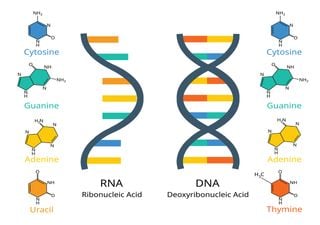
Scientists shed light on pathways impacted by TET2 mutations which may result in a ‘silver bullet’ treatment for killing cancer cells only.

Researchers have discovered a way to transform pineapple leaf waste into carboxymethylated microcellulose, a sustainable, water-soluble material with great potential for applications in the food, pharmaceutical and water treatment industries.

A new study led by an international team of researchers uncovers early Homo sapiens activity in Laos using Microstratigraphy.

Peanut allergies have become a significant problem in the US in the last 20 years or so, but were never really seen in earlier generations. The reason behind this has recently been found.

Theorists rejoice! A primordial galaxy whose gas shines brighter than its stars has been observed for the first time, in agreement with previous theoretical predictions. This is an important step in understanding the young Universe.
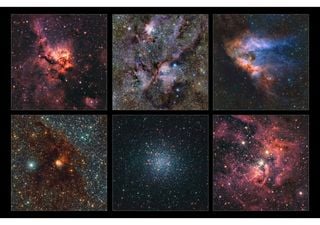
Thirteen years of research results in a map of billions of objects in the central regions of the galaxy.

Researchers realise the function of a specialised organ in geckos, responsible for picking up low-frequency vibrations for auditory processing.

The impact of one of the world’s most influential global climate patterns is much more far reaching than originally thought.

Wildfires are hastening carbon loss from ecosystems, reducing the volume of emissions that can be emitted while still avoiding the worst impacts of climate change.