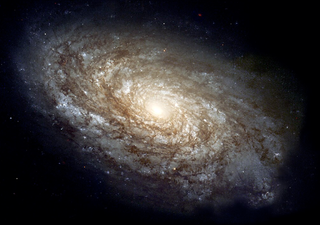
Using large datasets and a powerful camera telescope, researchers recently resolved a long standing debate about whether galaxies cluster around each other are smaller or bigger. Find the answer here!

Using large datasets and a powerful camera telescope, researchers recently resolved a long standing debate about whether galaxies cluster around each other are smaller or bigger. Find the answer here!

The key to reducing tick population and mitigating tick-transmitted diseases in humans and animals lies in their nutrient-supplying bacterial guests.

Scientists have the knowledge, influence and credibility needed to effectively guide climate action. A recent study published in the journal Nature Climate Change reveals that they must overcome intellectual and practical obstacles to maximise their impact.

A faint dot in the sky (as the galaxy SDSS1335+0728 appears) is growing brighter and brighter. The black hole that was sleeping inside it has been awakened and is very hungry.
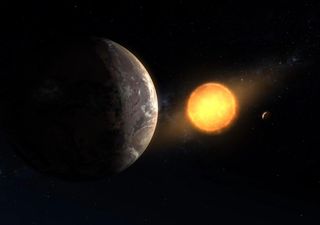
Astronomers have mined archival data to discover that stellar flares are a risk to planets that could host life. Find out why here!
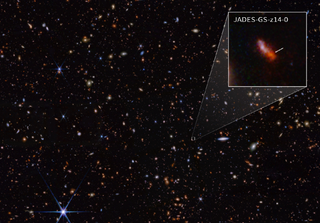
A galaxy has recently been observed by the James Webb telescope, the most distant, and therefore also the youngest after the Big Bang discovered so far. However, it presents unexpected characteristics that do not fit with our predictions.

A study reveals that some tree species, in certain urban contexts, could have the opposite effect and end up worsening air quality.

What is the key to foundational infant learning and development? Research suggests it is all down to timing vocalised responses and it doesn't matter who or what interacts with them, even a remote-controlled car that talks!
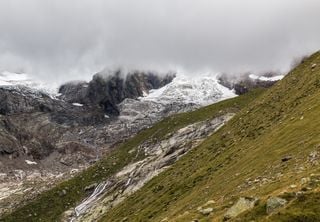
A study has revealed that new terrestrial ecosystems are emerging due to the melting of glaciers and ice sheets, drastically altering mountain landscapes at high latitudes.
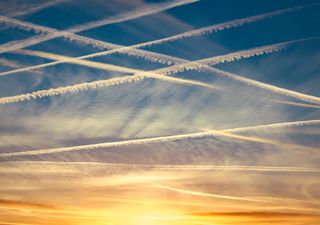
The move toward more efficient aircraft could have an unexpected effect: longer-lasting condensation trails that, by trapping more heat, could aggravate global warming, according to a new study.

The findings from the first-ever archaeological survey in space have been published in the journal PLOS ONE, by the research team behind the International Space Station Archaeological Project (ISSAP).
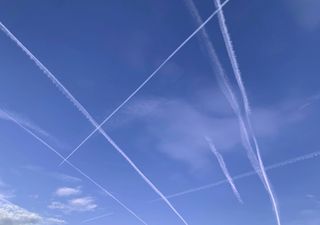
Modern commercial aircraft are delivering a 'double whammy' warming of the climate through their long-lived contrails, finds new research.