Human behaviour is removing a natural buffer and reducing the stability of ecosystems and diversity of birds; what long-term effect will this have?
New study shows reading a quantum clock can use a billion times more energy than running it.
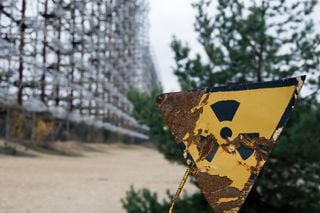
One of the most disturbing aspects of a nuclear war is not only the initial explosion, but the radioactive fallout that can contaminate distant territories, rendering them radioactive.
University of Utah mathematicians and a range of students took a trip to the Arctic to see how the physical environment affects life in and on sea ice using mathematical models.
New research highlights the diverse and sometimes harmful bacteria that grows on plastic in the environment, and how far it can spread through waterways.
New research provides first evidence of the widespread impact of light pollution on the carbon balance of global ecosystems.
What role could AI play in forecasting secondary quakes following an earthquake?
Scientists at Tsinghua University say their new optical engine processes data at 12.5 GHz, slashing AI delay and power in one go
An international collaboration leads to a new, accurate way to date fossil sites.
Swirling below the surface of the Thwaites glacier are vortexes of water that account for up to 20 percent of its ice melt, according to new research.
Researchers from the University of Washington have used tiny grains of space dust trapped by ancient ice to map Arctic Ocean shrinking
A new fossil from the Isle of Skye displays a curious mix of features from both snakes and lizards and is one of the oldest, nearly complete fossil lizards to date.