
Gulf Stream is strengthening - so what does this mean for fears of an AMOC collapse?
The Gulf Stream has been strengthening, according to new satellite observations, but does this challenge warnings about a weakening Atlantic circulation system - or are the two changes unrelated?
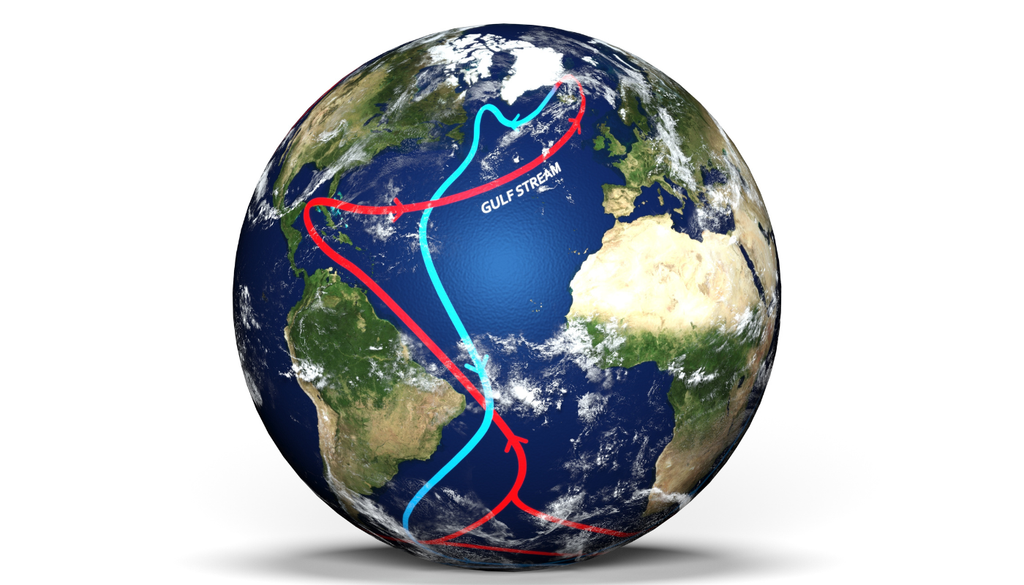
New satellite research has found that the Gulf Stream strengthened rapidly between 2014 and 2023, raising questions about what the finding means for concerns over the future of the Atlantic Meridional Overturning Circulation, or AMOC.
At first glance, the results may appear to contradict warnings that the AMOC could weaken as the climate warms. However, the Gulf Stream and the AMOC are not the same thing, and the latest research does not show that the wider circulation system is strengthening.
The Gulf Stream and AMOC are connected, but not the same
The Gulf Stream is a powerful ocean current that carries warm water northwards from the tropics, transporting heat across the Atlantic towards Europe.
It forms an important part of the much larger AMOC, which involves a vast system of ocean currents transporting warm surface water northwards and returning colder, denser water southwards at depth.
The Gulf Stream can therefore change without the entire AMOC responding in exactly the same way.
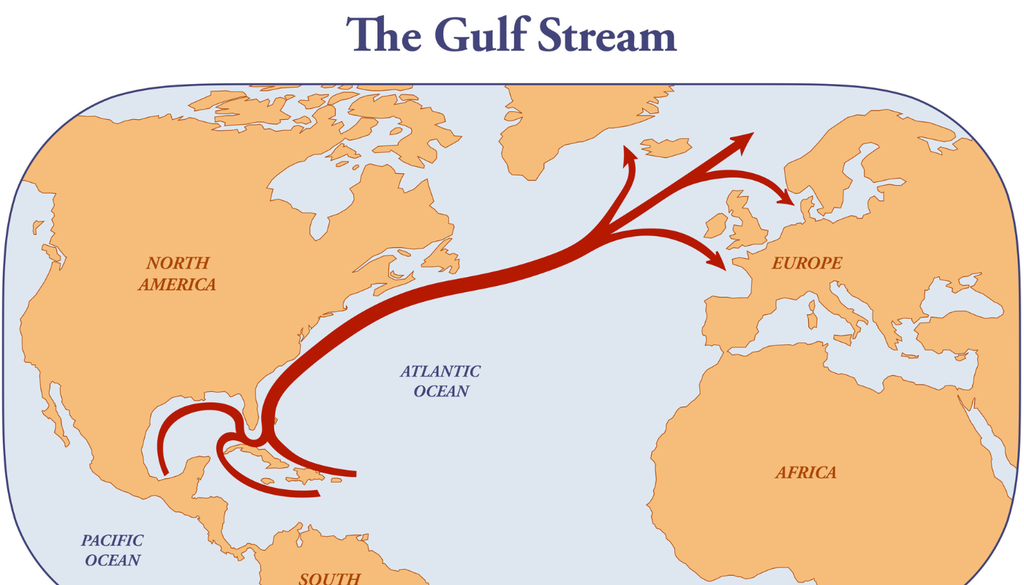
The new study used more than three decades of satellite observations to examine changes in the Gulf Stream. Researchers found a prolonged weaker period between around 2005 and 2014, followed by a rapid intensification from 2014 onwards.
Importantly, they caution that this observed strengthening cannot be directly interpreted as a strengthening of the AMOC.
Different parts of the Atlantic circulation are influenced by different factors, meaning one component can intensify while the wider system behaves differently.
Could the AMOC still weaken?
Yes. The new findings do not remove concerns about longer-term AMOC weakening.
The AMOC is influenced by changes in temperature, salinity and the density of seawater. As the planet warms, increasing freshwater entering the North Atlantic and changes in ocean temperatures could affect the circulation.
Climate models generally project that the AMOC will weaken during the 21st century as greenhouse gas concentrations increase. However, scientists continue to study how quickly this could happen and how large the eventual change might be.
A complete and abrupt collapse is a much more extreme scenario than gradual weakening, and there remains considerable uncertainty over exactly how the system will respond.
For the UK, this matters because the AMOC helps transport heat towards the North Atlantic, contributing to the relatively mild climate experienced across Britain and western Europe.
A substantial weakening could alter temperatures, rainfall patterns and atmospheric circulation over the region. However, it would not simply mean that the UK suddenly enters a permanently cold climate.
The latest Gulf Stream findings therefore do not mean that fears of AMOC weakening have disappeared, nor do they prove that a collapse is approaching.
Instead, they provide scientists with a valuable new observation of how one important part of the Atlantic circulation has changed.
The key message is that a stronger Gulf Stream and a potentially weakening AMOC are not necessarily contradictory. The Gulf Stream is one component of a much larger and more complicated system, and understanding how those components interact remains an important area of climate research.
For now, the new satellite data adds another piece to the puzzle rather than providing a definitive answer about the AMOC's future.
News reference
Shenfu Dong, Marlos Goes, Denis Volkov, Sang-Ki Lee, Hosmay Lopez. (2026). Rapid Surface Intensification of the Gulf Stream Since 2014.