
Magma temperature changes drive differences in volcanic explosions
Why do some volcanoes erupt violently, while others are much less explosive? New research from the University of Manchester may have the answer.
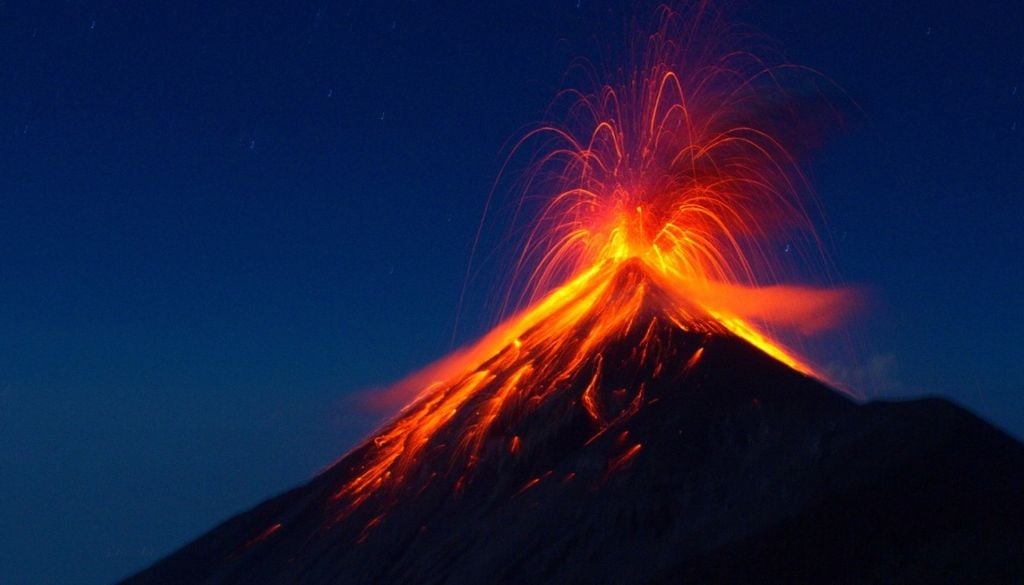
Why do some volcanoes that look similar have very different eruptive behaviours? The answer may lie in the thermal processes in magma, according to new research led by the University of Manchester.
The findings help resolve a long-running debate over how magma’s thermal history affects crystallisation before and during eruptions.
Delayed crystal formation
By studying magma from the 2021 Tajogaite eruption on La Palma, Spain, researchers found that “superheating” can strongly delay the formation of crystals as magma rises towards the Earth's surface.
During superheating, magma is heated above the temperature at which crystals are stable. The study shows that high temperatures can dissolve small pre-existing crystal ‘seeds’ that usually help crystals start forming.
Superheating also changes the internal structure of the magma. It becomes more uniform and less able to support nucleation, or the growth of new crystals. This affects how quickly magma rises and how easily volcanic gases can escape; both have an important role in determining how explosive the eruption will be.
“Until now, we did not fully understand the dynamics of crystal growth for magmas that received an injection of superheat just before ascent. But using our exciting and newly developed X-ray transparent pressure vessel combined with synchrotron X-ray microtomography we can actually observe these processes ‘in situ’.”
Lab-based volcanic conditions
In the lab, researchers recreated volcanic conditions using magma from the Tajogaite eruption; this magma may have experienced some superheating prior to eruption and during ascent.
They were able to observe crystallisation in real time using synchrotron X-ray microtomography at Diamond Light Source. Combining this with data from ex-situ experiments in Prague that allowed longer observation times, the team tracked the crystallisation processes under controlled conditions of high temperature and pressure.
Experiments revealed that magma which hadn’t been exposed to superheating began crystallising within around 20 minutes. Magma which had been superheated didn’t begin to crystalise for over eight hours.
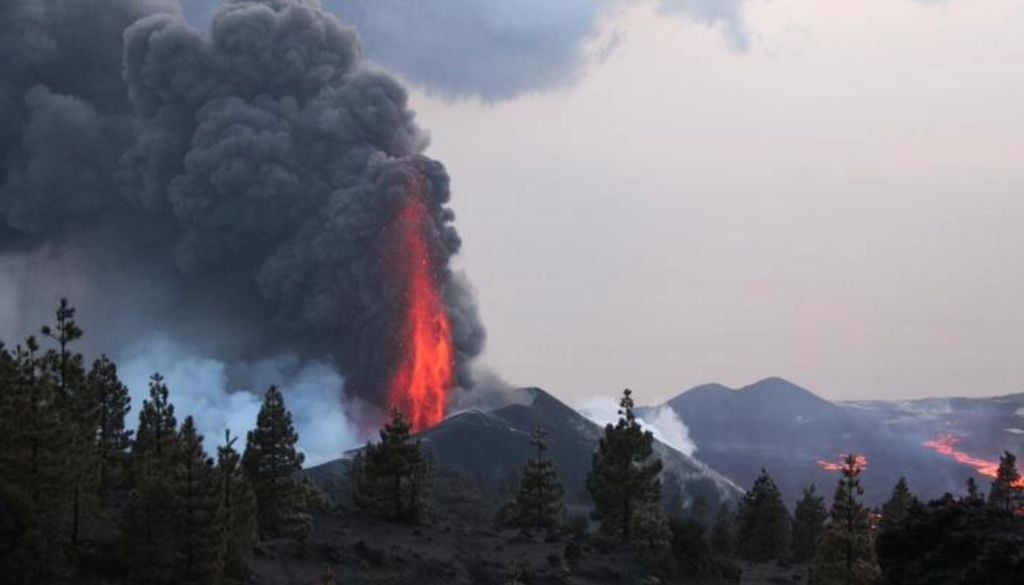
Researchers included the experimentally measured nucleation delays into numerical models of magma ascent; these simulations predict how magma moves and evolves as it travels through the Earth’s crust.
Long pauses in crystallisation can allow magma to quickly rise while still remaining relatively fluid, potentially promoting dramatic lava fountaining behaviour. By comparison, magma that crystallises earlier is more viscous and ascends more slowly, allowing more time for gases to escape leading to more gentle effusive behaviour.
“Current volcanic hazard models typically focus on magma chemistry, gas content and pressure changes,” says Dr Margherita Polacci, Senior Lecturer in Volcanology at Manchester.
“This work suggests that pre-eruptive thermal history and crystallisation kinetics may also play an important role in controlling magma ascent and eruptive behaviour, with implications for volcanic hazard assessment.”
News reference
Bonechi, B., et al. (2026). Superheating in mafic magmas controls clinopyroxene nucleation delay and magma ascent dynamics.