
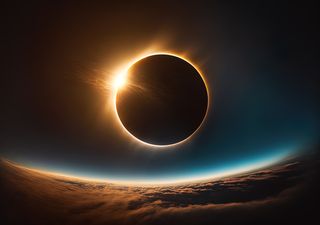
Total solar eclipses, like the one that will occur on April 8th, occur at reliable times that we can calculate back to the past. This information helps researchers date events considered mysterious in ancient history.

Total solar eclipses, like the one that will occur on April 8th, occur at reliable times that we can calculate back to the past. This information helps researchers date events considered mysterious in ancient history.

It is possible for us to learn to be happy. However, we only obtain lasting benefits if we continue to practice, revealed a new, unprecedented study, carried out by scientists at the University of Bristol.
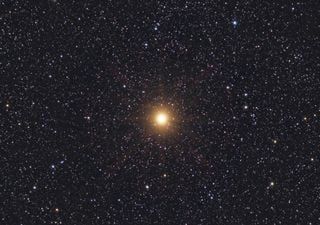
Betelgeuse has gained a lot of attention recently, not only because variations in its brightness have led to speculation that an explosion could be imminent, but also because observations indicate that it is rotating much faster than expected.

Researchers at the University of Michigan have identified the protein that allows mammals to feel cold, filling a long-standing knowledge gap in sensory biology. Find out more here!
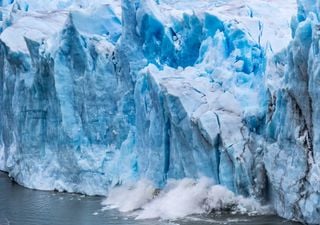
What will happen to the glaciers of Greenland and Antarctica in the coming decades is the biggest unknown in the future of sea level rise, in part because the physics of glacier fracture is not yet fully understood.

A recent Harvard Business Review report exposes a huge hidden problem with offshore wind: the lifetime and decommissioning costs outweigh the benefits. Find out more here!

A new study could resolve a long-standing scientific debate and completely change the way we think about the evolution of Earth's climate. Find out more here!
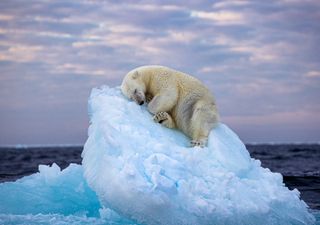
Nima Sarikhani's stunning image of a polar bear sleeping on a small piece of iceberg won the Wildlife Photographer of the Year People's Choice Award. See the image here!

A team of scientists from the University of Padova, in Italy, and the University of Lausanne, in Switzerland, have created a model capable of making sub-hourly precipitation predictions. Find out more here!
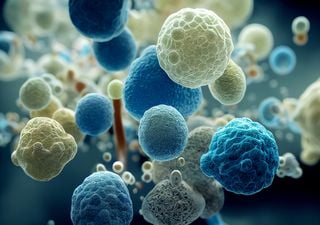
In 2023, scientists estimated that there would be around 8.7 million species of plants and animals on our planet. Among this vast number of species, which one is considered the most abundant? Find out here!

Pink snow is more common than previously thought. One study suggests that this phenomenon can be found on all glaciers in North America. Find out more here!
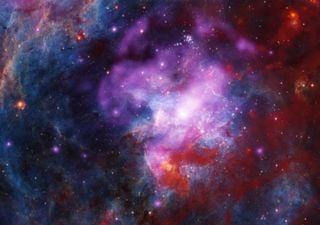
A festive, colourful image shows different types of light that contain the remains of not one, but at least two exploded stars. Find out more here!
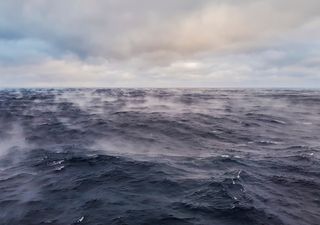
An international team of scientists has discovered the first direct evidence linking seemingly random weather systems in the ocean to global climate. Find out more here!

A study provides a new look at the strategies that plants have developed to survive in difficult places. Find out more here!
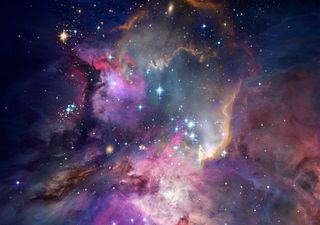
The expansion rate of the Universe has two different but very precise values that are not compatible. This problem, known as the Hubble tension, joins other questions, such as the origin of dark energy and the flatness problem.

On January 3, 2019, China's Chang'e-4 lander landed on the far side of the Moon and sent out the Yutu rover. Find out more here!

The cryovolcanic comet 12P/Pons-Brooks, which will make its closest approach to Earth next year, once again showed its characteristic 'horns' after its second major eruption in four months.

Scientists using the H.E.S.S. observatory in Namibia have detected the highest-energy gamma rays ever emitted by a dead star called a "pulsar." Find out more here!
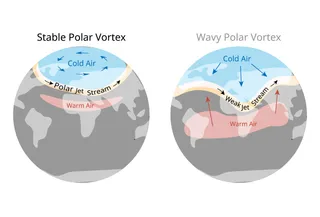
Although the Earth is warming, a new study suggests that the atmosphere could cause long periods of extreme cold or rain in winter in some regions. Find out more here!
The planet 8 Ursae Minoris b orbits a star about 530 light years away that is dying and should have already swallowed the planet. Why hasn't it?