
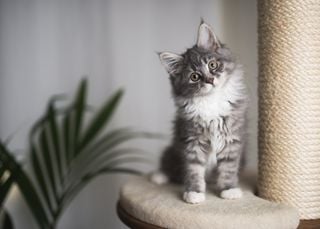
A groundbreaking study shows that cats can rapidly connect words to images, a skill once thought unique to humans and dogs.More information: Why do dogs lick people? The surprising reasons behind this behavior

A groundbreaking study shows that cats can rapidly connect words to images, a skill once thought unique to humans and dogs.More information: Why do dogs lick people? The surprising reasons behind this behavior
MIT engineers unveiled DrivAerNet++, a public dataset of over 8,000 car designs with aerodynamic details. This groundbreaking resource aims to speed up eco-friendly car innovation and AI-driven automotive design.More information: Researchers develop low-cost battery material that could make electric cars cheaper than ever

A USC study found that exposure to air pollution, especially ammonium nitrate, affects memory and learning in children, suggesting potential long-term cognitive risks, including Alzheimer's and dementia.
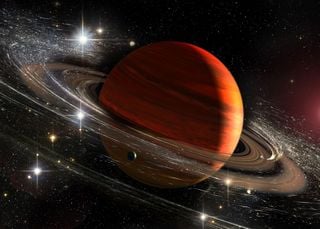
New research suggests Earth had a Saturn-like ring 466 million years ago, formed by a near-miss asteroid breakup, influencing ancient climates and triggering significant biodiversity events.
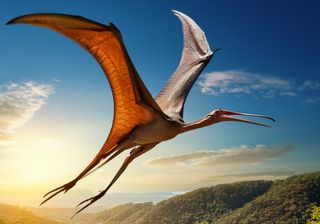
A groundbreaking fossil discovery in southern Germany sheds light on the evolution of flying reptiles, revealing key transitional features in a newly discovered species, Skiphosoura bavarica.
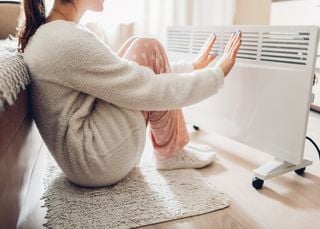
Freezing temperatures can bring sky-high heating bills. Stay cozy and save money this winter with practical tips for sealing windows, maintaining your heating system, and upgrading your energy efficiency.
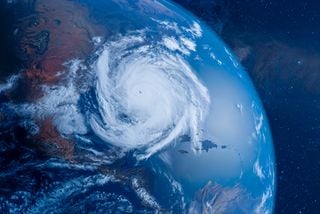
NASA’s Atmospheric Waves Experiment (AWE) captured stunning images of gravity waves generated by Hurricane Helene on September 26, 2024. These waves extend high into Earth's atmosphere and offer valuable insights into how storms impact space weather.
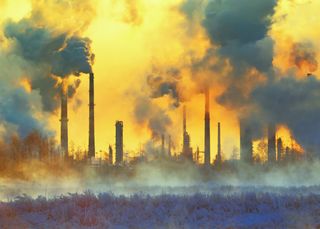
Researchers at the University of Virginia have developed an AI-powered system that detects toxic gases in real-time, using sensors that mimic human smell to identify pollutants with precision.
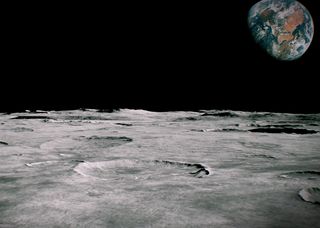
Apollo 16 moon samples reveal billions of years of lunar history, from ancient asteroid impacts to valuable resources, aiding plans for future lunar missions.
A recent Harvard study uncovers how individual neurons in the brain's prefrontal cortex encode the meanings of words in real-time. This research offers new insights into language comprehension and the brain's language centers.
A University of Hawaii study suggests that Titan’s surface hides a thick crust of methane ice, potentially warming its interior and shaping its surface.
A new study suggests that primitive asteroids played a vital role in delivering essential volatiles, such as water, to Earth, forming the basis for life.
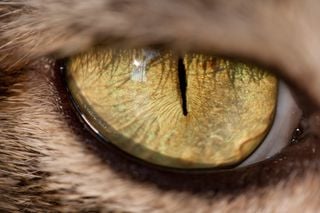
New research traces the vibrant and varied eye colors of wild cats back to a gray-eyed ancestor, unlocking insights into their evolution.
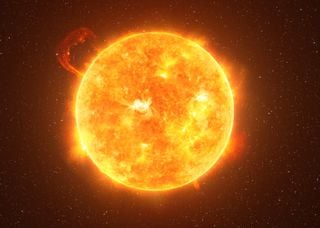
New research from the Daniel K. Inouye Solar Telescope reveals surprising interactions between solar flares and the Sun’s lower atmosphere, uncovering small-scale magnetic shifts that challenge previous assumptions.
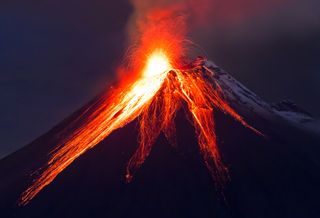
New research reveals that volcanic eruptions can indirectly raise stratospheric moisture levels. This indirect effect can be as significant as direct injections observed after the 2022 Hunga eruptions.
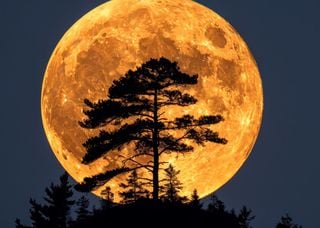
The Harvest Supermoon on September 17 will light up the night sky with a partial eclipse, visible across North America, Europe, and Africa.
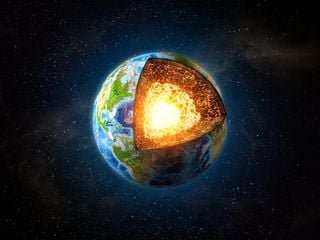
A unique doughnut-shaped zone inside Earth's outer core reveals new insights into our planet's magnetic field, prompting fresh research on its formation and future.

As students return to classrooms, ensuring clean indoor air is crucial. Schools can protect against viruses, pollutants, and allergens with proper ventilation and air filtration systems.
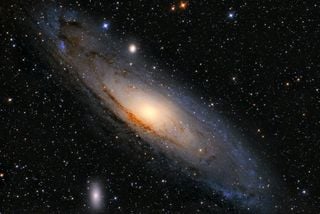
NASA's Hubble Space Telescope has captured a glimmering image of the Pegasus Dwarf spheroidal galaxy, a mini-galaxy orbiting Andromeda, the nearest spiral galaxy to our Milky Way, providing fresh insights into galactic evolution.
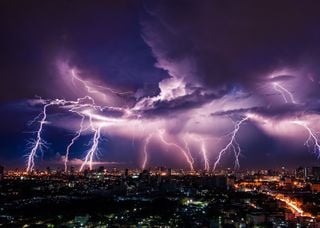
Research from James Madison University indicates that pollution enhances the severity of thunderstorms, increasing lightning activity in urban areas like Washington, D.C., and Kansas City.