
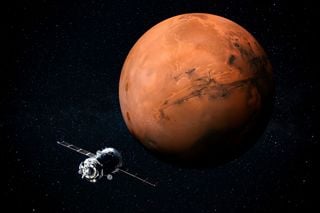
NASA may be searching for Martian life the wrong way—and may even have inadvertently killed some, a new study suggests.

NASA may be searching for Martian life the wrong way—and may even have inadvertently killed some, a new study suggests.
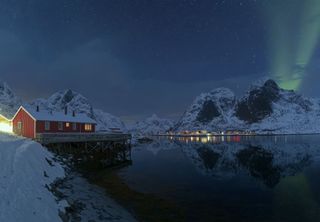
Residents of the Alaskan town of Utqiagvik will not see the sun rise until January 22. They will live in darkness for more than 2 months - it's the polar night. Let's find out together why this happens.
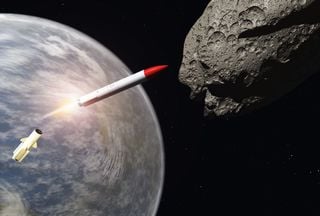
At the moment there are no asteroids expected to be dangerous for our planet, but in the future the possibility of a minor body heading straight for us cannot be ruled out. What can we do at that point?
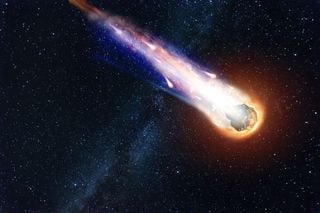
Soon the Comet of the Century, C/2023 A3, will reach its closest approach to the Sun. If it survives this close passage, it could reach a brightness even similar to that of Venus.
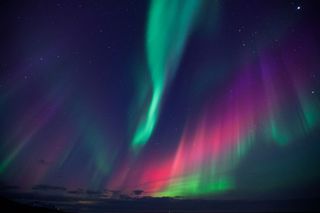
During yesterday's day the alert level in our planet increased due to the reinforcement of the geomagnetic storm that reached level G4, causing problems with technological devices and also incredible auroras.
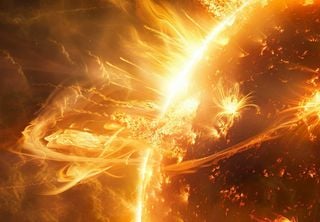
The Sun has now reached the maximum of its activity. Its surface is a boiling of plasma flows that on some occasions, like the one that will interest us shortly, can also reach our planet.
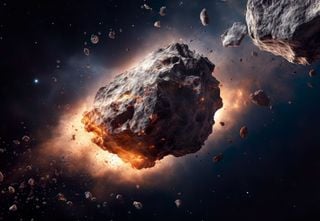
Within just over 48 hours, five asteroids will have whizzed past our planet, the largest of which will be the size of a stadium but will not pose a threat to our planet.
If initially the space agencies were almost terrified by the asteroid 99942 Apophis, now they are almost bewitched by it and many can't wait for April 2029 to arrive when this asteroid will graze our planet.
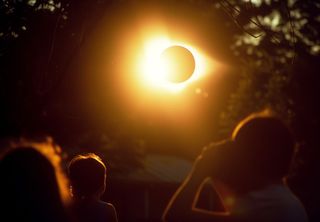
On Monday morning we will be able to witness a rare phenomenon called PHEMU, which is a mutual phenomenon between two satellites of the same planet. Let's find out together how to observe it.
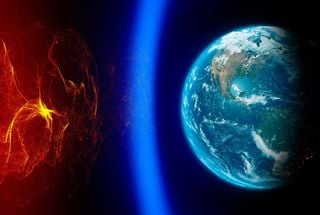
Solar magnetic activity continues to increase and in recent days flares and CMEs have occurred right in the direction of our planet. A train of solar storms is therefore expected.

The solar cycle is approaching its peak, expected by the end of this year, we therefore expect an increase in solar activity which could also have consequences on Earth.
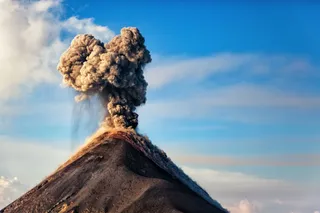
In Tanzania there is a very particular volcano with the temperature of the lava much lower than other volcanoes and furthermore this is dark in colour, almost black.
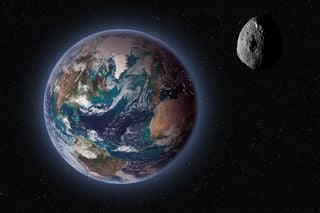
After a few months of analysis, NASA decides to offer part of the samples from the asteroid Bennu to the scientific community around the world. It will be enough to present a proposal for scientific use and wait hopefully.
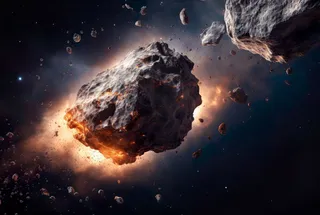
The discovery of the 17th Trojan asteroid of Mars actually dates back to last year, but thanks to the observations made by the Gran Telescopio Canarias, confirmation has finally arrived.
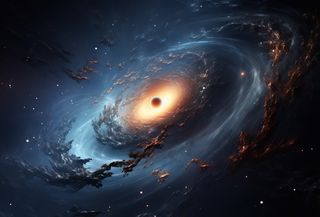
A group of researchers has carefully analyzed a very particular pair of supermassive black holes: not only are they incredibly close to each other but they are also the heaviest ever observed so far.
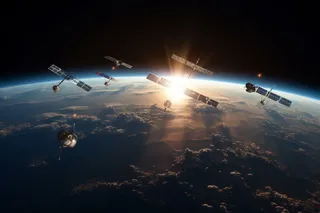
ERS-2 has returned home after almost 30 years and during its activity it has shocked our knowledge of the Earth and the changes that are affecting it. So let's find out something more about this incredible satellite.
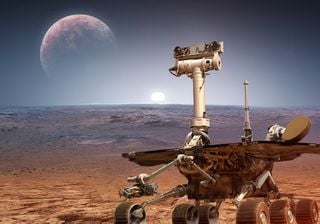
The Martian rover Perseverance has been exploring the red planet for years, meticulously scrutinizing every part of the Martian soil it travels through and also collecting some samples to bring back to Earth. Now the data collected confirms the existence of an ancient lake.
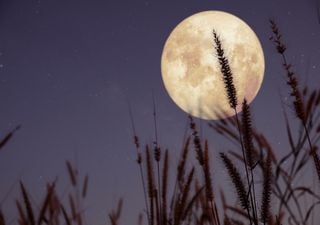
Our planet, unlike others, only has one natural satellite: the Moon. Its different appearance during orbital movement has fascinated man since ancient times. Over the years, it has been studied extensively and we now know a lot about it.
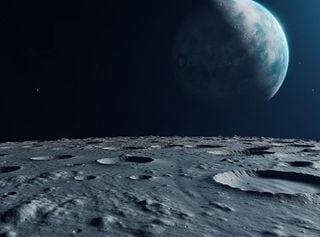
Not many people know that a man was "buried" on our satellite about 25 years ago: Eugene Shoemaker. Let's find out together who he was and why this privilege was reserved for him.
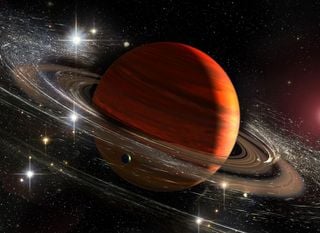
We already knew that on Enceladus there were various molecules that on our planet are believed to be the basis of the origin of life as we know it but now further evidence has arrived in favour of the potential habitability of this satellite.