
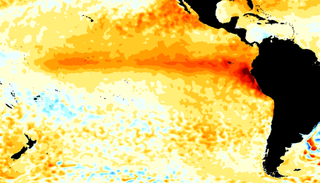
NOAA's July update from the Climate Prediction Center confirms that El Niño continues to strengthen across the equatorial Pacific. Forecast models indicate the event will intensify through 2026 and could rank among the strongest since 1950.

From an early age she showed a love for science, which she pursued by studying Meteorology at the University of Valparaíso, Chile.
She has developed her career by contributing to different social and private projects, with the objective for meteorology to be understood by a large number of people, combining concepts and phenomena with environmental contingency.
She has an Automatic Meteorological Station (EMA) in Placilla de Peñuelas, Valparaíso, in order to provide and record updated data for that location. She has worked as a forecaster for more than 15 years, generating forecasts and advising different media such as the Valparaíso Ciudadano Program of Radio Portales, Radio Vistamar and the online program F.TV.
She is a founding member of the Placilla de Peñuelas Urban Recycling Company, dedicated to recycling household waste, where she is in charge of disseminating scientific and meteorological information to the community. She also advises the Emergency Team of the Illustrious Municipality of Valparaíso and is a member of the network of meteorology amateurs, Vigías del Tiempo Chile, where she is linked to this chain, her EMA.
Pamela has the conviction that only by informing and educating we can achieve real changes in humanity and meteorology.
NOAA's July update from the Climate Prediction Center confirms that El Niño continues to strengthen across the equatorial Pacific. Forecast models indicate the event will intensify through 2026 and could rank among the strongest since 1950.
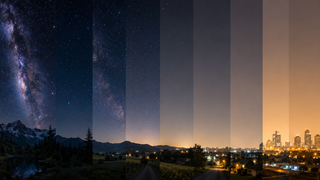
Not all skies allow you to see the Milky Way. The Bortle scale classifies the darkness of the night sky from 1 to 9 and helps determine whether your city has suitable conditions for observing stars, galaxies, and astronomical phenomena.
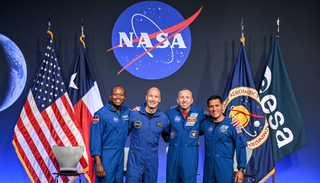
NASA has responded to the controversy surrounding the absence of women on Artemis III, the mission intended to return humans to the Moon. The agency defended the experience of the selected crew and stated that the decision was based on technical criteria.
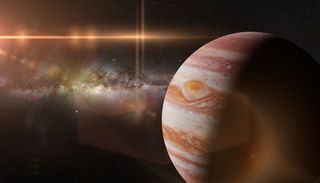
A new study suggests that Jupiter did not directly deliver the ingredients for life to Earth, but it may have prevented them from being lost to space. Its early formation could have been crucial in helping our planet retain water and other essential compounds.
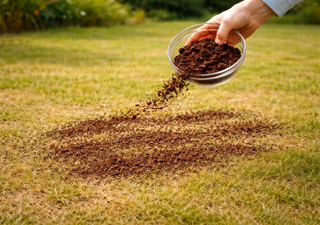
Your lawn can go flat and yellow for loads of reasons, but the fix isn’t always an expensive bottle. One everyday leftover has quietly become a go-to tweak for greener grass
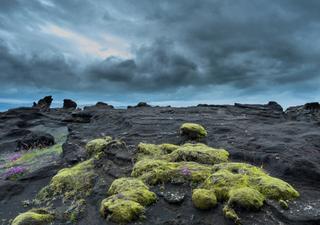
After a volcanic eruption, life does not give up. Mosses, lichens, and pioneer herbs colonize the bare land, stabilize the soil, and pave the way for other ecosystems to flourish again, demonstrating the incredible resilience of nature.
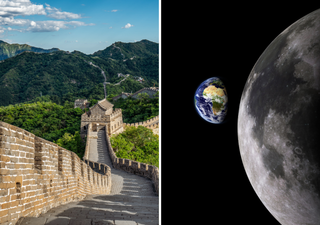
In the era of giant telescopes and missions to Mars, space myths still persist and are repeated as truths. From the “visible” Great Wall of China to the famous 10% of the brain, here are five popular ideas that science has already left behind.
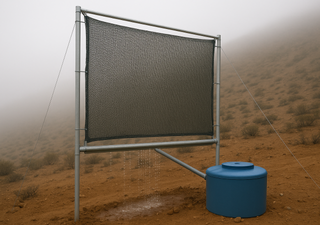
In northern Chile, where rainfall is almost non-existent, a simple yet brilliant invention is changing the story. Fog catchers allow water to be collected directly from clouds, turning the mist into a sustainable source of water for communities and ecosystems.
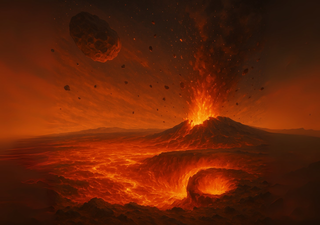
New seismic data from NASA's InSight mission reveal that Mars's mantle is riddled with mysterious rocky clumps, remnants of cosmic impacts that occurred more than 4.5 billion years ago. What else does the red planet hide?
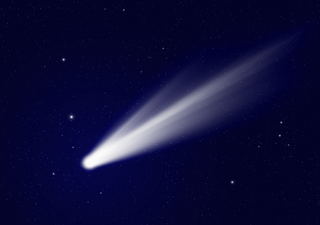
Astronomers have confirmed the detection of 3I/ATLAS, an interstellar comet speeding through the solar system. It will pass between the orbits of Mars and Earth in October, offering a unique opportunity to study distant cosmic visitors.

A team from the University of Florida discovered two neural pathways from the amygdala to the ventral striatum that determine whether an odor is perceived as a threat or a reminder. The discovery reveals key mechanisms of olfactory avoidance.
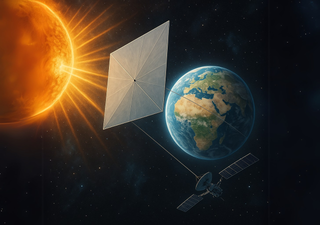
A recent study presents a preliminary design for a “planetary sunshield” at the L1 Lagrange point, sparking debate about a pilot mission. Discover how such a sunshield would work, its technical challenges and its environmental implications, explained in a clear and accessible way.
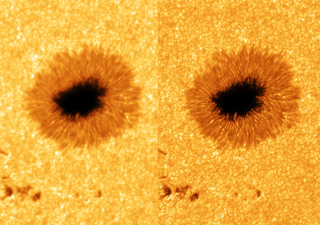
Thanks to a new camera installed on a solar telescope in Tenerife, scientists have captured images of the Sun with such precise resolution that they can observe details on its surface equivalent to a scale of just 100 kilometres.

A groundbreaking scientific advancement proves that electricity can be generated from rainwater. This technology unlocks new possibilities for producing clean and renewable energy, harnessing a resource that is abundant and widely accessible across much of the world.

A historic blackout left Spain, Portugal, and parts of France without power on Monday. While work continues to restore power, questions are growing: Was it a technical failure or a large-scale cyberattack?
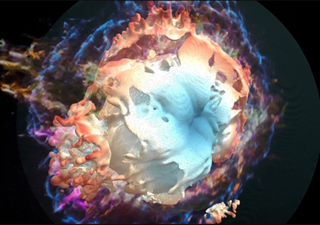
NASA is transforming the way we explore the universe. You can now see and even 3D print stars, supernova remnants, and galaxies, thanks to models created with real data from space observatories.
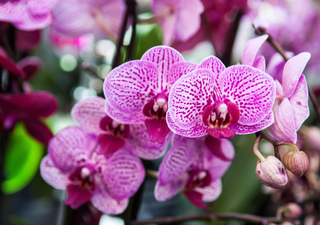
Caring for orchids may seem tricky at first, but once you understand their basic needs - like the right balance of light, humidity, and watering - they can thrive and bloom for years. With consistent attention and proper techniques, these tropical plants add lasting elegance and natural beauty to any indoor space.

A study in the U.S. indicates that polyethylene (PE) packaging can have 70% lower global warming potential (GWP) than other materials. The findings suggest caution when replacing plastics, as alternatives could lead to higher environmental costs throughout their lifecycle.
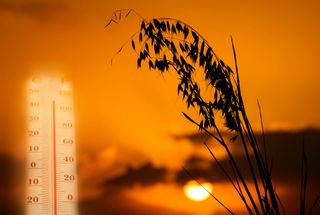
Each December, Climate Central reviews the year’s extreme weather events. The 2024 report highlights key findings and new analysis on dangerous heat days, proposing global resolutions for a safer and more sustainable 2025.
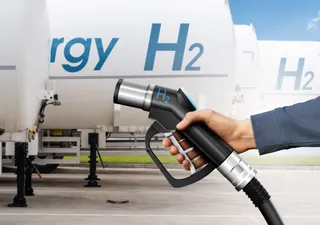
A team of scientists investigating the subsoil of northeastern France in search of fossil fuels made a surprising discovery that could have a significant impact on the fight against climate change.