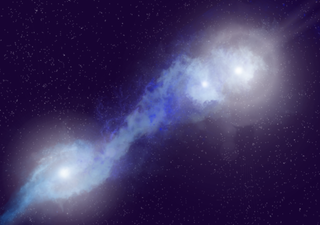
Thanks to ultraviolet light observations by the Hubble Space Telescope, astronomers have discovered that a massive white dwarf, located just 130 light-years away, is actually the remnant of a stellar collision.
Researchers have captured an unprecedented image of the galaxy OJ 287 that could forever change our understanding of supermassive black holes. They discovered a spectacular plasma jet inside the galaxy, providing insight into the nature of black holes within the galaxy.
A team of Japanese physicists has managed to accurately calculate the vibrations of black holes after a collision, revealing hidden structures and mathematical spirals that had never been measured before.
Neither the sun nor the sky are exactly as we think they are. Behind those warm tones lies a surprising and beautiful explanation.
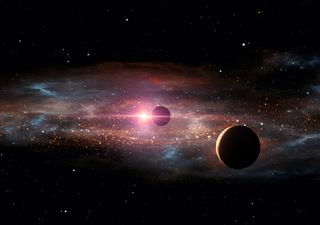
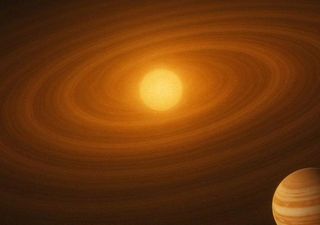
New research from the University of St Andrews is answering one of the most important questions in astrophysics; can planets form without a star?
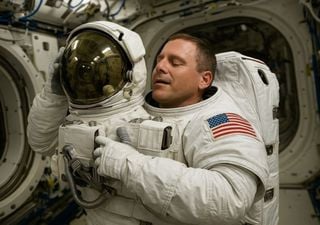
The 12 human beings who walked on the Moon faced great challenges. One of them was the low gravity on our natural satellite, which made walking up there a challenge.
A new study shows that isolated planets and giants can create their own planetary systems far from their stars.
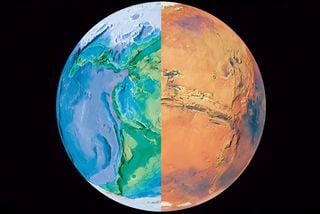
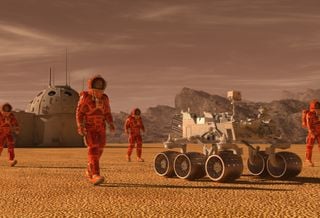
A recent study is reigniting hopes that the Red Planet may still harbor, or may once have supported, the ingredients for life.
James Webb has recorded an event that could explain how supermassive black holes appeared in the universe.
New research shows that ancient moonquakes, not meteorite impacts, were responsible for altering the landscape at the Apollo 17 landing site. The finding poses key risks for future human missions.
The starry sky is perhaps the first book in which, using the language of the constellations, the ancients wrote mythological tales, passing them on to subsequent generations. In this series of articles, we propose a reading of this celestial book, beginning with the constellation of Cepheus.
A team of geophysicists and geologists has developed a high-fidelity Martian soil simulator, called UPRS-1, that almost perfectly reproduces the regolith of Utopia Planitia on the Red Planet.