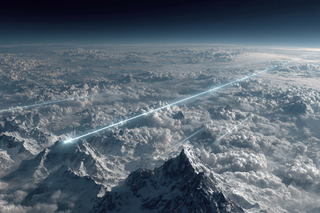
In a new article, researchers show the possibility of studying dark matter using quantum sensors to analyze its distribution.

In a new article, researchers show the possibility of studying dark matter using quantum sensors to analyze its distribution.
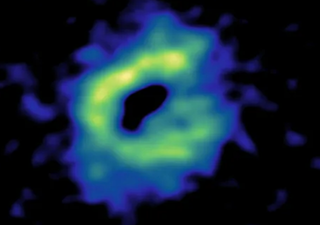
An international team observed the red giant W Hydrae, located about 320 light-years away, with unprecedented clarity. By simultaneously capturing 57 molecules, ALMA revealed 57 “faces” (corresponding to different layers) of its turbulent atmosphere.
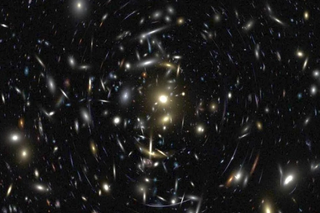
Chinese researchers have developed an artificial intelligence model capable of identifying patterns in astronomical data, offering new insight into how dark matter behaves in galaxy clusters
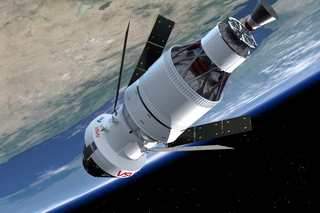
The year 2026 will have many astronomical events ahead, and it will also be the year when humanity returns to the Moon with the Artemis mission.
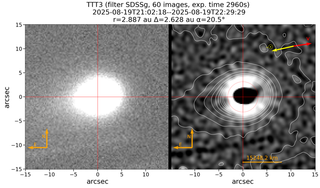
Astronomers have detected a narrow jet of material emerging from the sunlit side of interstellar comet 3I/ATLAS, behaving differently from its dust tail and revealing new clues about how the comet rotates
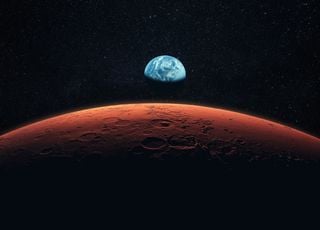
Some of Earth’s climate cycles are directly dependent on the orbital parameters of the planet Mars, particularly its mass, according to a recent scientific study.

How stars die and forge the building blocks of Earth: Betelgeuse and the Crab Nebula reveal the secret of our cosmic origins.

A nearby stellar explosion may have played a crucial role in the formation of Earth. New research shows why the cosmic radiation from a supernova was more than merely destructive.

Using data from the James Webb Space Telescope, astronomers have discovered something unprecedented: a supermassive black hole that was expelled from the galaxy it inhabited.
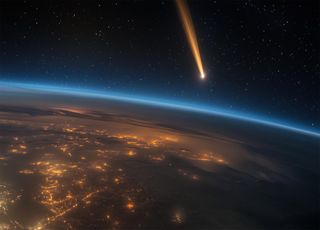
Although not as impressive as Comet Lemmon, several comets will become visible again from Earth in the coming months, especially with binoculars or a small, simple telescope.
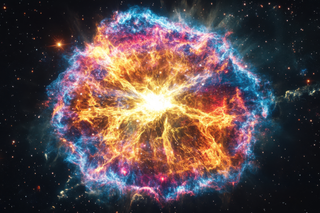
New data from the James Webb have shown a supernova that occurred when the universe was less than one billion years old.
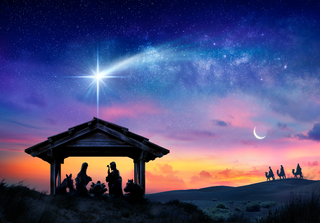
Today, December 25th, we celebrate Christmas. It's a date that speaks not only to an important event for Christianity, but also to the interesting history of calendars and the effort throughout the centuries to measure time with ever greater precision.