
Earth’s global network of seismometers can detect subtle ground vibrations created when space junk re-enters the atmosphere, offering scientists a surprising new way to track falling debris from orbit.

Earth’s global network of seismometers can detect subtle ground vibrations created when space junk re-enters the atmosphere, offering scientists a surprising new way to track falling debris from orbit.
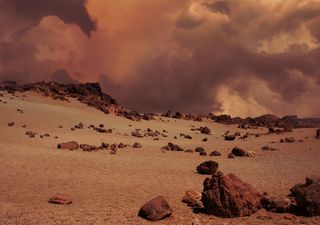
A new study proposes that electrical discharges generated during Martian dust storms could explain mysterious chemical and isotopic imbalances. The finding rewrites the story of how key—and dangerous—substances form on Mars.
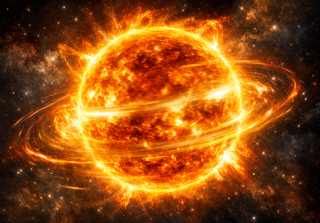
Who would have thought that our Sun rotates so fast, completing a rotation in just 16 hours? The story of the Sun's rotation is fascinating and allows us to understand much about its current behavior.
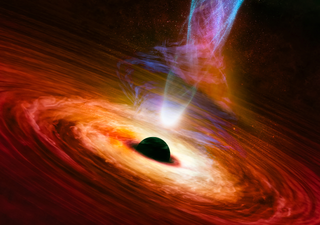
A scientific team detects how a distant galaxy begins spewing cosmic fire again after being dormant for millions of years. The discovery reveals the cyclical behavior of these dark colossi of the deep universe.
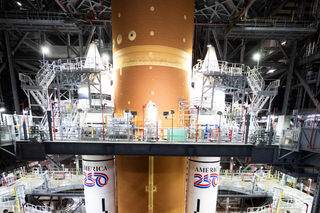
Humanity is once again ready to return to the Moon with the Artemis II mission, which is already being prepared for launch.
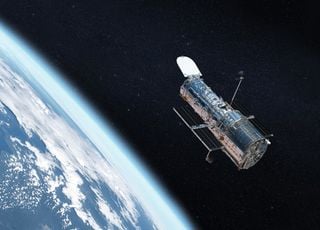
The Hubble telescope is expected to fall toward Earth’s surface in the coming years, making it important to know where and when this will happen.
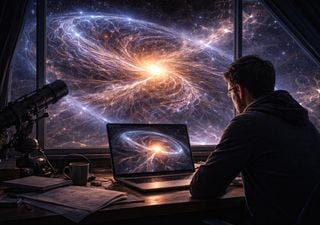
Physicists have built a new simulation to test self-interacting dark matter, where particles collide with each other. It has let researchers model halo ‘core collapse’ accurately, from the comfort of a laptop
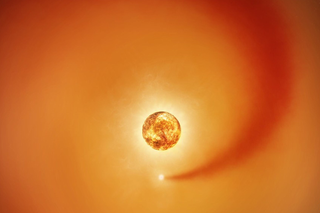
A star that became famous in recent years for being at the end of its life has a confirmed companion in a new study.
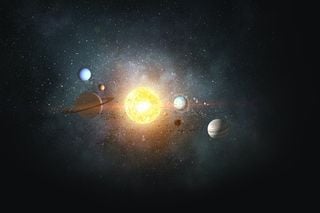
Is there a turtle holding four elephants on which the Earth rests? Or perhaps it is a huge Titan carrying the entire planet on his shoulders? Here we explain it.
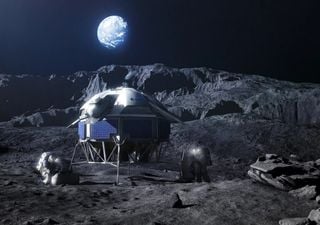
A new study warns that lunar landings could contaminate the Moon’s oldest ice. Methane from rockets disperses quickly and accumulates in regions that are key for science.
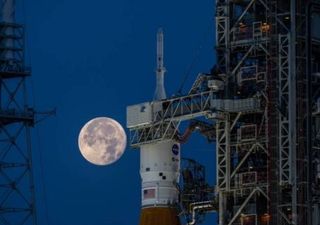
NASA’s Artemis programme has faced further delays, pushing back plans to return astronauts to the Moon, while China is accelerating its own lunar ambitions, including long term plans to establish a permanent base on the Moon, intensifying the global space race.
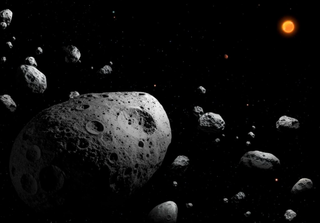
Operational for just a few months, the new Vera Rubin Telescope in Chile has officially begun its scientific operations with the exceptional discovery of an asteroid the size of eight football fields that rotates on its axis in just over 100 seconds.