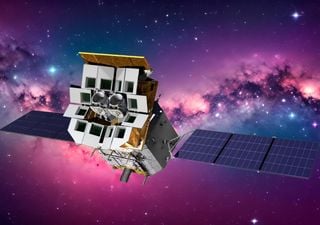
The space telescope led by China detected an unprecedented X-ray explosion. Scientists believe it could be the first direct evidence of an intermediate-mass black hole devouring a white dwarf star.

The space telescope led by China detected an unprecedented X-ray explosion. Scientists believe it could be the first direct evidence of an intermediate-mass black hole devouring a white dwarf star.
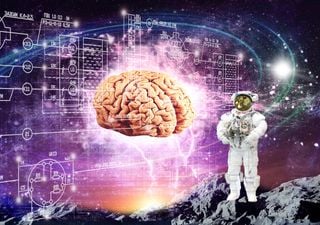
A study involving 26 astronauts reveals that the brain shifts upward and backward after spending time in microgravity. The changes depend on the duration of the mission and, in most cases, reverse after returning to Earth.

The universe is an ocean of silence. Despite billions of galaxies, the Stern-Gerya study suggests that intelligent life is a remarkably rare “geological accident.” Without active plate tectonics and the Moon, intelligence as we know it might never have arisen. We are not the culmination of biology, but an exception.

Have you ever tuned into an empty channel on your old television and seen static? That eerie noise contains ancient photons that reveal the violent birth of our Universe.
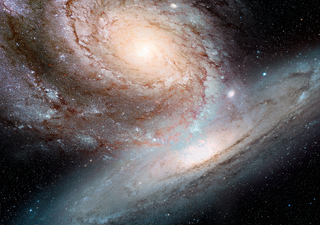
The universe is in continuous expansion, so galaxies should be moving away from one another. However, Andromeda is an exception, and after several decades, experts have come to understand why.
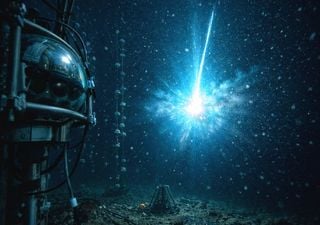
A powerful energy trail detected on the seafloor of the Mediterranean baffles physicists. It could be the posthumous signature of a cosmic object predicted fifty years ago.
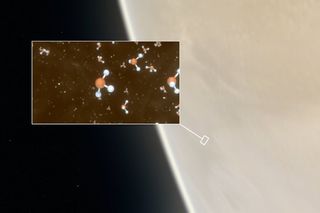
Despite its extreme temperatures and inhospitable surface, Venus holds fascinating secrets. Recent studies of its clouds suggest that life could find an unexpected refuge there
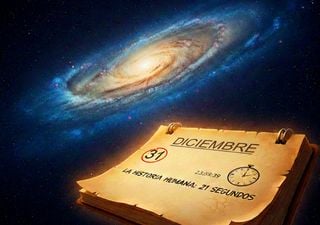
Do you feel like the center of the world? Carl Sagan showed that humanity is a simple 21-second breath in a galactic year, a fact that shakes our current reality.
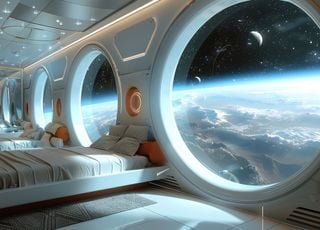
The hotel can accommodate up to four people for five nights with complete safety.
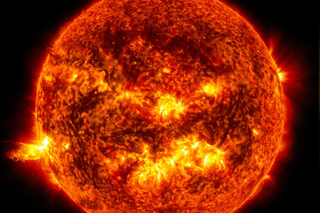
A new technique reveals the three-dimensional structure of the Sun’s magnetic field, allowing scientists to anticipate solar eruptions and reduce risks to satellites.
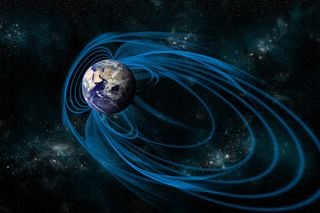
Around Earth, there is an invisible region where energetic particles are trapped by the magnetic field—a natural shield that is essential for life and space exploration.
Why doesn’t the night sky appear as a blanket of bright light? It all has to do with cosmic expansion and the finite lifetimes of the most distant stars.