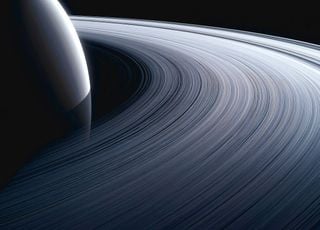
Saturn’s rings may be the result of a succession of collisions between the planet’s moons, at least according to a simulation conducted by researchers at the SETI Institute.

Saturn’s rings may be the result of a succession of collisions between the planet’s moons, at least according to a simulation conducted by researchers at the SETI Institute.
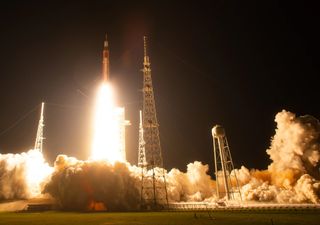
After the reentry of Falcon 9, a team of scientists was able to detect and quantify for the first time the chemical pollution left by the rocket as it disintegrated in the upper atmosphere. These data are essential for assessing the climate impact of space exploration.
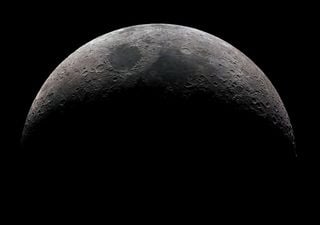
A team of scientists created the first global map of small ridges in the lunar seas. The finding confirms that the Moon continues to contract and raises new questions about the seismic activity future missions may face.
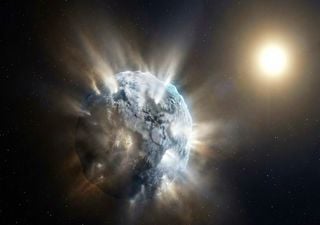
An unexpected change in pace in comet 41P has left experts astonished. This icy object abruptly slowed its rotation, challenging the physical laws known to date.
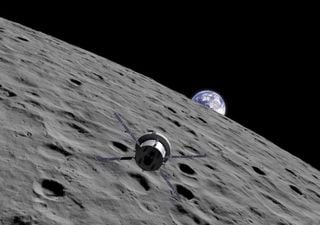
Four astronauts will travel back to the Moon aboard Artemis II, a historic mission that will mark humanity’s return to deep space. But a recent technical change has once again forced a shift in its schedule.
Is dark matter a cluster of primordial black holes? A discovery about the early universe explains how these objects avoided evaporating by absorbing radiation from the Big Bang.
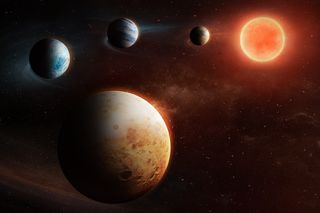
Scientists have discovered a system with four planets that defy traditional rules of stellar formation. The finding reveals rocky worlds born without gas, transforming our understanding of planetary formation.
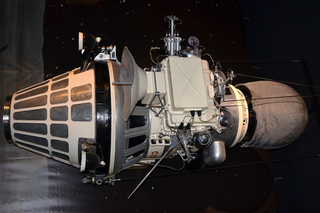
The landing site of the Soviet Luna 9 probe, which had never been identified, may finally have been found thanks to a certain type of technology
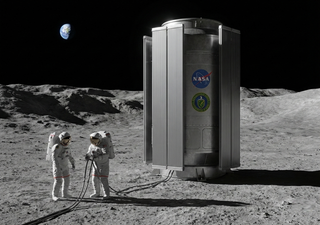
NASA and the U.S. Department of Energy plan to build a nuclear fission power plant on the Moon by 2030.
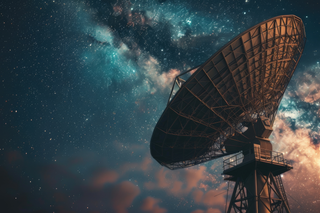
Limitations and unusual signals could be preventing the detection of potential extraterrestrial transmissions that have already arrived.
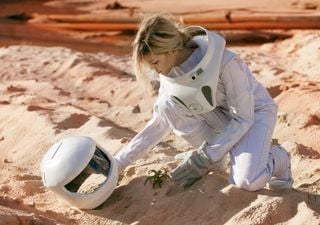
Plants will play a key part in sustaining human life on the Moon, Mars and beyond, but there is still much to do before we establish space greenhouses, researchers say.
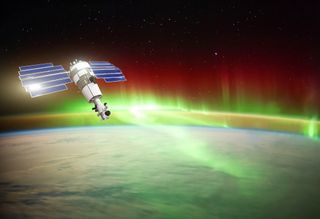
NASA launched three rockets into Alaska’s aurora to map hidden electrical currents, revealing how the northern lights connect space and Earth in a powerful, dynamic circuit.