
After Earth, the Moon is the most studied celestial body, but there is still no definitive explanation for its origin. A giant impact or multiple impacts? Without a doubt, its origin was violent.

After Earth, the Moon is the most studied celestial body, but there is still no definitive explanation for its origin. A giant impact or multiple impacts? Without a doubt, its origin was violent.
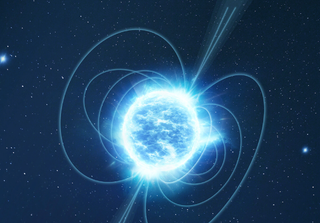
When talking about extreme objects in the universe, it is impossible not to think of neutron stars. The gravitational collapse of an entire star has fused protons with electrons, creating unimaginable densities.
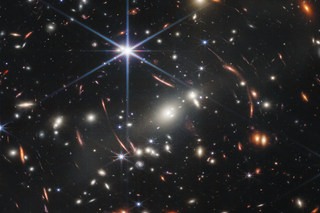
A new study proposes addressing the Hubble tension by comparing estimates of the age of the universe derived from some of the oldest stars in the galaxy.

A study shows that Martian regolith reduces the activity of tardigrades, but the use of water lessens the toxic effects on life.
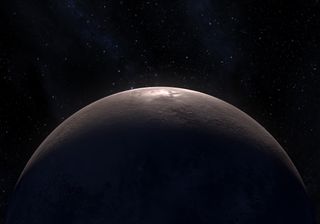
A team of astrophysicists has detected a strange distortion in the plane of the Kuiper Belt, suggesting that an invisible planet may be lurking in the cold depths of our solar system.
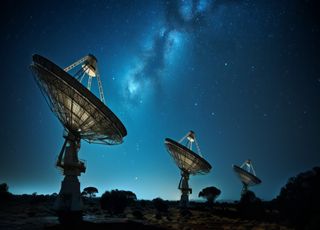
A recent study has highlighted the fact that we might not currently be able to detect radio signals emitted from the far reaches of the cosmos.

A scientific article analyzes the hypothesis that cold stars could be alien structures and identifies which stars would be the most likely candidates.

The launch of the Artemis II mission has been postponed again due to an interruption in the helium flow of the SLS rocket.You May Be Interested In | NASA's Artemis II Spacecraft Prepares to Carry Astronauts to the Moon
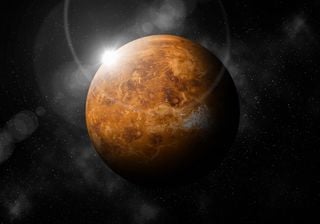
Venus, our closest neighbor, is a stark reminder of the dangers of global warming. Its extreme climate shows us how a habitable world can transform into an inferno.
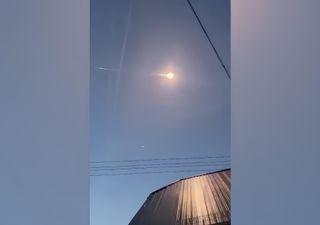
The brilliant fireball was seen in central and western Germany and produced a thunderous sound that prompted numerous emergency calls. Experts have recovered fragments of chondrite, an ancient type of space rock.
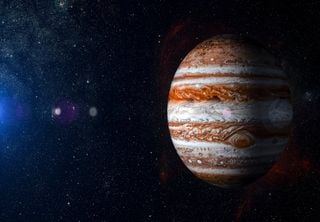
Through scans by the James Webb Space Telescope and its near-infrared spectrograph, a team of scientists collected data around Jupiter that yielded several surprising results, including several cold spots and regions of highly variable densities.
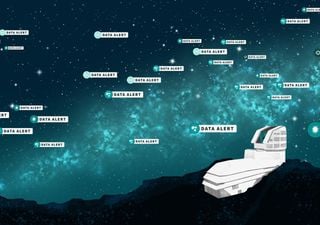
The Rubin Observatory has just taken a giant step in astronomy: in a single night, it issued 800,000 alerts about changes in the sky. The system, which promises to revolutionize how we observe the universe, is expected to be fully operational before the end of the year.