
For some, Reflect Orbital is a visionary project: illuminating areas of Earth during the hours of darkness with orbital mirrors. For others, the negative consequences of placing 50,000 mirrors in orbit outweigh the benefits.

For some, Reflect Orbital is a visionary project: illuminating areas of Earth during the hours of darkness with orbital mirrors. For others, the negative consequences of placing 50,000 mirrors in orbit outweigh the benefits.
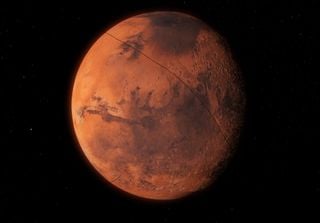
Space agencies such as NASA and private companies like SpaceX are working intensely to achieve the goal of sending humans to Mars. But behind all this excitement lies an uncomfortable truth.
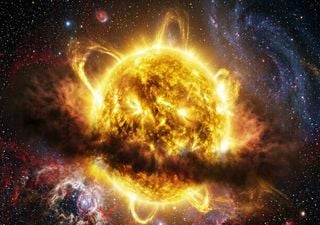
The recent discovery about the transformation of WOH G64 in the Large Magellanic Cloud is shaking up astronomy, showing how a red giant turns yellow just before its death.

Experts from Northumbria University have created an unprecedented 3D map that reveals how Uranus’s magnetic field batters its upper atmosphere, offering details previously unknown.
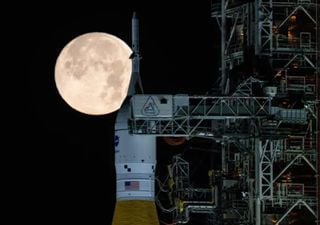
Nasa has reshuffled its Artemis schedule by adding a new mission in 2027 to practise docking in low-Earth orbit, before it attempts to land astronauts on the Moon again

Although the DART mission to deflect an asteroid was a success, experts warn that the lack of early detection poses critical challenges for planetary defense.
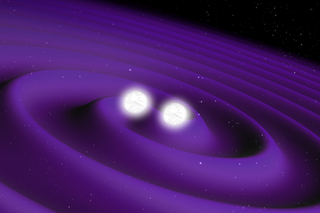
A study shows that gravitational waves preserve a permanent imprint of the neutron stars that merged.
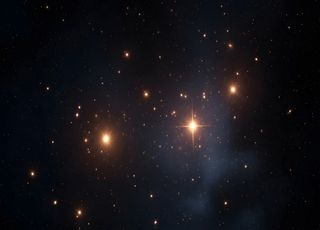
The star M31-2014-DS1 appears to have mysteriously disappeared without producing a supernova between 2014 and 2024, according to observations from the NEOWISE telescope, which would confirm a hypothesis proposed by astrophysicists.

The speed of light changed our way of understanding the universe: from the ether to Einstein, from just around the corner to light-years away.
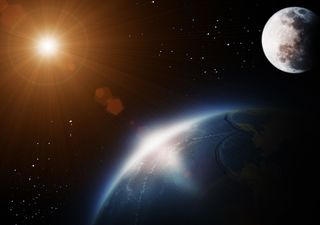
A new rocky world has just been added to the nearest cosmic map. The IAC has detected a super-Earth that expands our understanding of how planetary systems form and evolve.
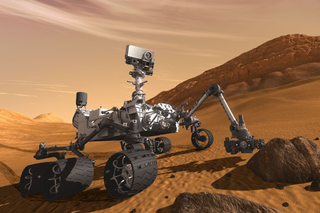
A study indicates that abiotic sources do not fully explain the organic compounds detected by the Curiosity rover. You may be interested in | Mars Had a Magnetic Field, but Only in One Hemisphere: This New Theory Explains It
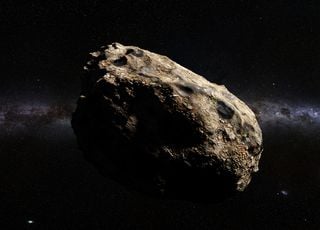
Will we soon be extracting the minerals that make up asteroids from space? Investors and private companies are interested, but how can this mining be legally regulated?