
Astronomers from the University of Warwick and Durham University have detected an unusual shockwave surrounding a dead star, prompting new questions about what powerful event or process could have triggered this dramatic structure in deep space.

Astronomers from the University of Warwick and Durham University have detected an unusual shockwave surrounding a dead star, prompting new questions about what powerful event or process could have triggered this dramatic structure in deep space.
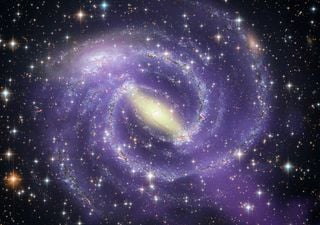
A group of astronomers has discovered that young galaxies already contain more heavy elements than previously thought, such as carbon and oxygen. In addition, their structure appears to be more advanced than was assumed in the early stages.
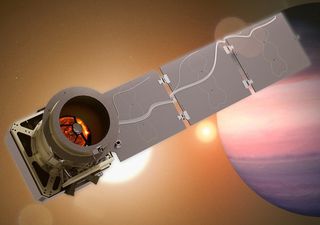
The mission was successfully launched this Sunday, January 11. NASA’s high-precision Pandora space telescope satellite will make it possible to study exoplanets and search for life beyond the solar system.
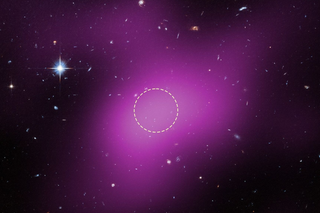
In new data obtained by the Hubble Space Telescope, an object that appears to be a relic of an ancient galaxy has been discovered.
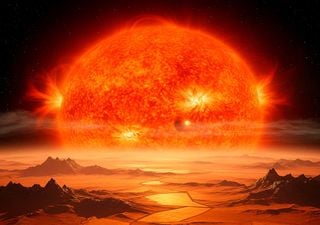
For centuries we treated the Sun as a permanent fixture in the sky. Modern astrophysics disagrees, mapping out when it will die – and how Earth will fade long before.

After reaching an incredible speed of 109,000 km/h at perihelion—its closest approach to the Sun—on January 3, Earth is now slowing down over the next six months, before starting the race all over again.
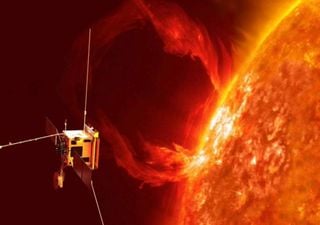
At one time, scientists couldn’t see the far side of the sun, but a solar orbiter broadened perspectives and observed one of the strongest magnetic storms in 20 years.
This 2026 will be an unforgettable year for observing the sky, highlighted by total eclipses, blood moons, and historic space missions that will allow us to connect deeply with the universe.
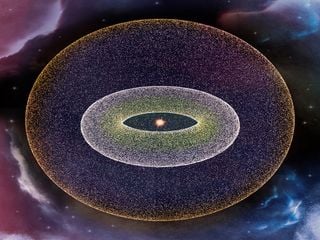
This theoretical spherical region, which envelops the entire Solar System at astonishing distances, is the vast reservoir of billions of long-period comets.

The James Webb telescope has detected an exoplanet with an atmosphere dominated by carbon and helium, an unexpected finding that challenges current theories about how planets form.

A minor oversight, such as using the wrong units, ended the Mars Climate Orbiter mission and cost over $100 million. Learn how NASA lost its spacecraft on Mars due to an error no one saw coming.

Between science, adventure, and big money, the search for meteorites is growing worldwide, driven by collectors, multimillion-dollar auctions, and debates over scientific heritage and legality.