Thanks to a new camera installed on a solar telescope in Tenerife, scientists have captured images of the Sun with such precise resolution that they can observe details on its surface equivalent to a scale of just 100 kilometres.
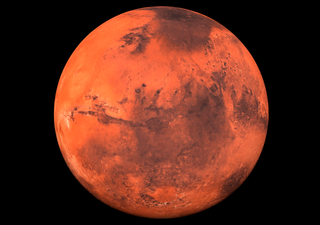
The intense UV radiation on Mars poses significant challenges for the survival of life. However, studies have shown that some microorganisms can survive prolonged exposure to UV-C radiation.More information: Could We Drink Water On Mars? A Project Seeks To Extract And Convert The Red Planet's Water Into a Source Of Life
Using gravity and without the need for landing, scientists discover key structural contrasts that challenge previous theories and open up new possibilities for space exploration to understand other bodies in the Solar System.
New research suggests that everything that exists could vanish much sooner than previously thought. Even the most enduring stars will evaporate, along with planets and human bodies, in a phenomenon previously thought to be exclusive to black holes.
Is this a revolution for space exploration? Researchers have found seismic evidence of the existence of underground liquid water on the Red Planet.
Stellar collapse could be the secret to where many samples of gold, silver and heavy elements in the galaxy come from.
A giant sunspot has appeared on our star and is pointing toward Earth. Astronomers are constantly monitoring it because it could significantly disrupt our planet.
The entry angle of fireballs and space debris affects the accuracy of infrasound analysis. Understanding this geometry is vital to improving planetary defense and orbital management.
The observation of a high-speed gas cloud indicates the presence of a possible dark galaxy in the vicinity of the Milky Way.
Massive stars, those weighing between 10 and 100 times the mass of our Sun, are the universe's heavyweights, playing pivotal roles in shaping galaxies and influencing cosmic evolution.
After more than 50 years, a Soviet satellite is about to re-enter Earth's atmosphere. The impact is expected in the coming days, between this Friday and Sunday, at a still unknown point on our planet.
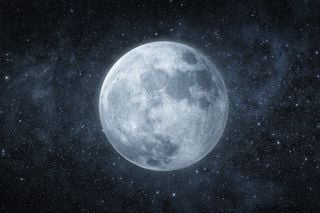
Regardless of their size, composition, or position in the Universe, all planets adopt a spherical shape, a phenomenon that can be explained "simply" by physics.