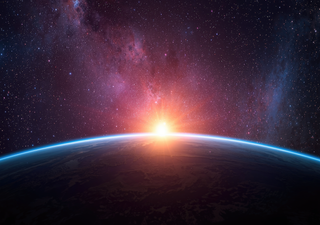
A new analysis of 6,594 solar twins reveals that the Sun migrated from the galactic center between 4 and 6 billion years ago, ultimately making Earth habitable.

A new analysis of 6,594 solar twins reveals that the Sun migrated from the galactic center between 4 and 6 billion years ago, ultimately making Earth habitable.
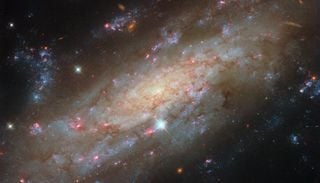
The space telescope revealed a new image of NGC 3137, a galaxy similar to the Milky Way that allows scientists to study the birth and evolution of stars in extraordinary detail.
NASA’s SPHEREx space observatory has created a detailed map of interstellar ice in the Milky Way, revealing the mysterious chemical origins of water as we know it.

Anna Fisher’s story shows how motherhood and space exploration can coexist, breaking stereotypes and paving the way for generations of women who dream of going farther with freedom.
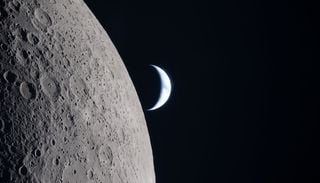
With Artemis II, the world has once again ventured closer to space and the Moon. From the 12,000 previously unseen photographs released by NASA, a breathtaking beauty of the Moon and Earth emerges, so captivating that it crashed the agency's website.
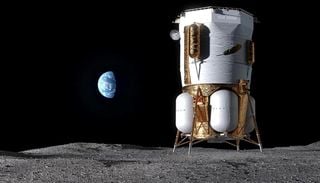
Missions to transport heavy cargo and take astronauts to the Moon are being led by billionaire Jeff Bezos, the fourth richest person in the world.
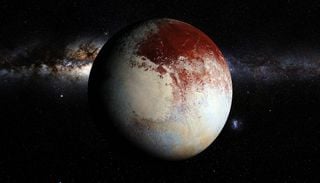
The U.S. space agency is reopening a historic debate about Pluto that could change what has been taught in schools in recent years about the solar system.
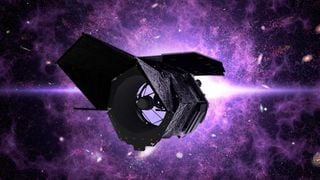
Neutron stars exist under some of the most extreme conditions in the universe. The instrumentation aboard the still-to-be-deployed Nancy Grace Roman Space Telescope paves the way for a key technique in neutron star detection.
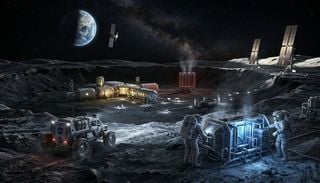
The success of a permanent base at the lunar South Pole depends on a technological race against extreme cold to store vital energy. NASA’s strategy lies between nuclear fission and subzero lithium.
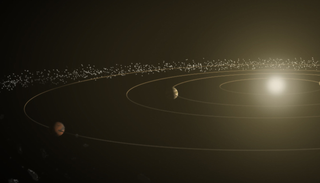
The search for dark energy is advancing toward smaller scales, with proposals that use the Solar System as a natural laboratory.
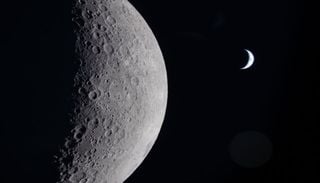
The high resolution photos highlight an historic mission and bring the sights of human space travel to personal devices around the globe. Earthsets, a lunar eclipse, and the scarred lunar surface are among the deep image cache.
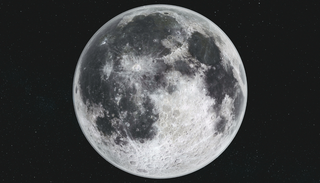
Two new minerals discovered on the Moon reveal previously unknown chemistry and mark a new stage in lunar exploration after more than 40 years of pause. Are we returning to stay?