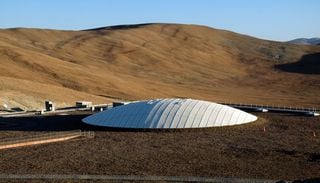
In the middle of the driest desert on Earth lies a refuge with trees, a swimming pool and humid air, designed for those who spend their nights observing the universe.

In the middle of the driest desert on Earth lies a refuge with trees, a swimming pool and humid air, designed for those who spend their nights observing the universe.
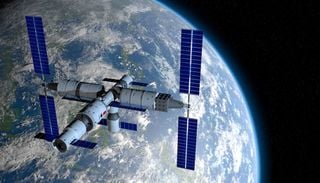
China launched the Shenzhou 23 mission to the Tiangong space station, where one astronaut will spend a year. The mission is also part of the country's effort to unify its space programs as it pushes ahead in the new race to the Moon.

Understanding extreme temperatures helps reveal the fundamental properties of matter and how particles behave.
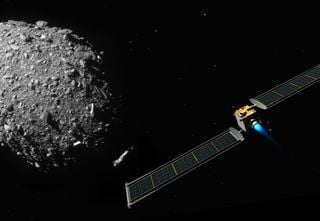
In recent weeks, numerous fireballs or meteors have streaked across our skies, so it is natural to wonder if these phenomena really pose a danger to our planet and if there are programs to protect it.
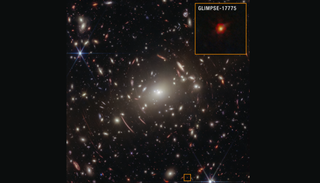
The result obtained reinforces the idea that massive black holes emerged very early in the history of the universe.
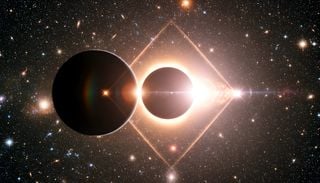
For decades, certain periodic radio signals puzzled astronomers. Today we know that some of them originate from white dwarfs that steal matter from companion stars, generating strange and extreme emissions.
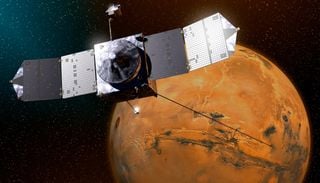
A discovery made by NASA's MAVEN mission shows that Mars possesses a defense mechanism against the solar wind that was previously thought to exist only on planets with a magnetosphere.
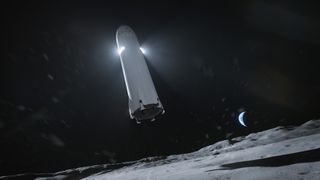
NASA’s Artemis programme is defining the path forward. With Artemis III and IV now scheduled between 2027 and 2028, lunar exploration faces new deadlines and complex technological challenges, including the development of commercial landers by SpaceX and Blue Origin and the introduction of new spacesuits.
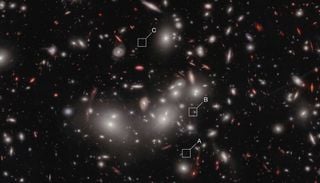
Thanks to observations from the James Webb Space Telescope, a team of researchers was able to directly determine the mass of a supermassive black hole in the early universe, something never accomplished before.
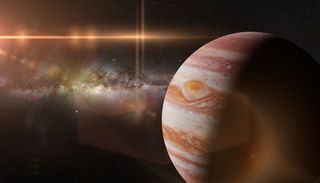
A new study suggests that Jupiter did not directly deliver the ingredients for life to Earth, but it may have prevented them from being lost to space. Its early formation could have been crucial in helping our planet retain water and other essential compounds.
The recent military declassification of aerial phenomena has sparked the imagination, yet the Universe itself imposes physical limits that challenge any attempt to cross the stars and reach our planet.
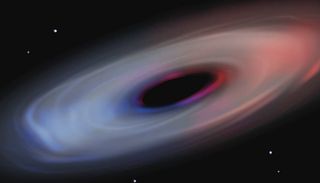
An unprecedented measurement made with the James Webb Space Telescope has revealed that a supermassive black hole completely dominated its galaxy more than 13 billion years ago, calling into question classical models of cosmic evolution.