
We know that hummingbirds are nifty little flyers, but what particular sensory strategies do they employ to navigate their surroundings?

We know that hummingbirds are nifty little flyers, but what particular sensory strategies do they employ to navigate their surroundings?

These data suggest that the inner core may even be reversing its rotation. If so, that means something is going on with the magnetic and gravitational forces that cause the Earth's core to rotate.

In 2015, a video that apparently showed the meeting point between the Atlantic and Pacific oceans went viral on social media. Where were these images captured? How can this phenomenon be explained? What are its consequences?
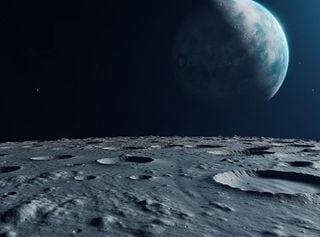
Not many people know that a man was "buried" on our satellite about 25 years ago: Eugene Shoemaker. Let's find out together who he was and why this privilege was reserved for him.

A study by the University of Maine reveals that human evolution, once a driving force, now poses challenges in addressing environmental crises. Cultural adaptation, global governance, and sustainability are at the forefront of research.
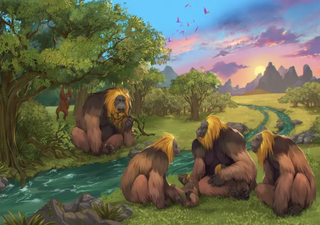
Giant apes once roamed the plains of southern China, but went extinct long before humans arrived in the region. Now, the cause of this extinction has been revealed.

This island has a name, a history and even very specific coordinates. We're talking about a strip of land about the size of Manhattan that should emerge into the Pacific.

Researchers have discovered a secret ecosystem in the Atacama Puna region of Argentina that may reveal a clue about the first forms of life on planet Earth.

The largest climate change-induced reductions in snowpack have occurred in central and eastern Europe, along with the south-western and north-eastern United States.

Stress has always been talked about as a fundamental factor in physical health. The way we perceive time also plays a role, opening up new relationships between mind and body.

A newly found fossil "giant worm" from the Cambrian revelas a "world of worms" eating other marine lifeforms in the ancient ocean.
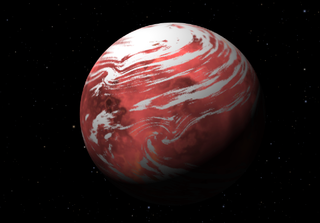
Like children born at the stroke of midnight on the new year, the exoplanet TOI 700 is, in chronological order, the first rocky planet discovered in 2023. We are waiting to find out which one will be the first of 2024. Stay tuned.