
Starting in 2006, the dwarf planet classification began to be used. Pluto was considered, until that moment, the ninth planet in the Solar System: what happened to remove it from our planetary group?

Starting in 2006, the dwarf planet classification began to be used. Pluto was considered, until that moment, the ninth planet in the Solar System: what happened to remove it from our planetary group?
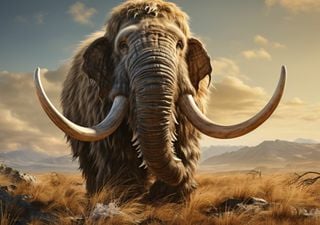
Colossal, a biotechnology company whose investors include the CIA (yes, that one of the spies), aims to "resurrect" extinct species before the end of the decade.

A new scientific study dives into the little-known realm of nanoplastics, the generation of microplastics that have been further subdivided. They detected between 10 and 100 times more particles than previous estimates.

In the middle of the Tasman Sea there is an islet that has a peculiar shape, the Ball Pyramid. A rare insect that was believed to be extinct was found on this rocky islet.
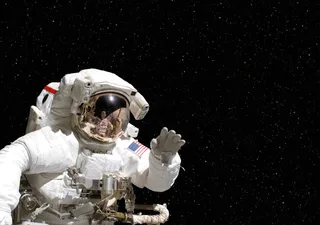
Outer space is a profoundly dark place even though it is close to the Sun and many questions arise about why the Sun's light does not illuminate space if it illuminates the Earth. Astronauts answer this question that even entered the minds of children.
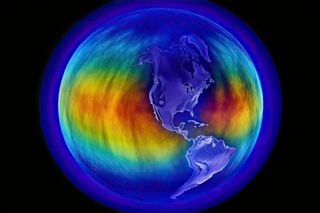
Climate models simulate the Earth's climate system. Unlike weather models, the goal is not to predict the weather for the next few days, but rather to estimate the future climate for the next few decades. But how do these climate models really work?

Mirabilite is a temperamental mineral and requires a specific temperature and humidity to preserve. It is difficult to preserve the substance, because under unfavourable conditions the crystals quickly transform into a gaseous state.
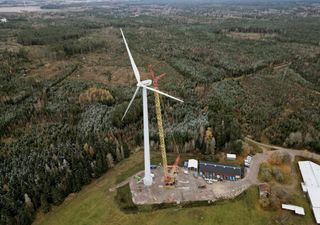
The future of wind energy appears to be a combination of wood and glue, completely clean and with no carbon footprint.

Displaying behaviour previously undocumented for their species, American kestrels have been recorded venturing away from their current homes to scout out future territories.

This desert is one of the areas of the planet with the widest seasonal temperature range, so much so that in some Mongolian locations it can very well go from values of over +42°C in midsummer to -40°C in winter.
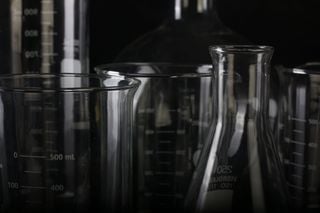
Coscientist AI revolutionises chemistry by autonomously mastering Nobel-winning reactions in minutes. Bridging the gap between vast scientific potential and human limitations, it accelerates discovery and democratises research processes.

In space, in the middle of an incredibly energetic galactic nucleus, it is possible to observe "forbidden" light that cannot be reproduced in the laboratory and appears to violate the known laws of Physics.