
An international research team have completed a new study comparing human hearts to non-human great apes, revealing a new insight into human evolution.

An international research team have completed a new study comparing human hearts to non-human great apes, revealing a new insight into human evolution.

A new study confirms that synthetic ‘forever chemicals’ can permeate human skin and reach the body’s bloodstream.

Carbon sequestration is a key component of many environmental targets. Plants don’t sequester carbon for as long as was previously thought, how might this impact our strategies to achieve net zero targets?

How many insects migrate through the Pyrenees each year? What species comprise these winged travelers and why are they important?
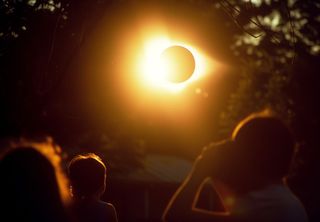
On Monday morning we will be able to witness a rare phenomenon called PHEMU, which is a mutual phenomenon between two satellites of the same planet. Let's find out together how to observe it.
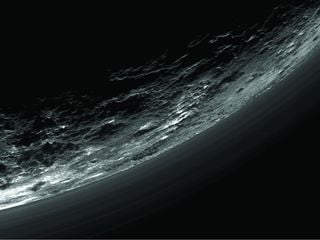
On July 14, 2015, the New Horizons spacecraft made a historic flight over Pluto, the space probe approached the mysterious dwarf planet like never before. What secrets did he reveal? Find out here!
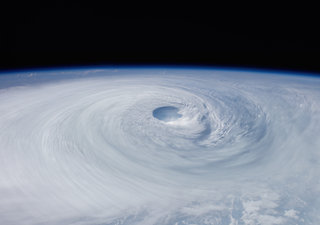
Tropical cyclones are one of the most fascinating weather phenomena. Despite the scientific knowledge that exists today, myths persist about its trajectory.

Large predator reintroduction has been a great success in parts of the US. Similar projects have been under discussion in the UK for several years, so what’s stopping it from going ahead?
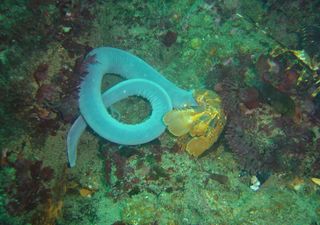
Hagfish are strange, somewhat scary creatures with a skull and no spine. Scientists have done something quite unique to peer into the "home" burrows of hagfish in seafloor sediments, by creating a transparent tank made out of gelatine.
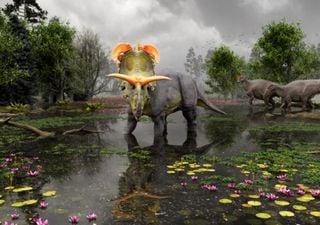
A new species of dinosaur has been identified and named by Colorado State University affiliate faculty member Joseph Sertich and University of Utah Professor Mark Loewen. The new dinosaur was announced in the journal PeerJ, and translates roughly to “Loki’s horned face that looks like a caribou”.

The United States says it is possible that Russia violates the outer space treaty and carries nuclear weapons on its ships. What would happen if they used them outside of Earth?
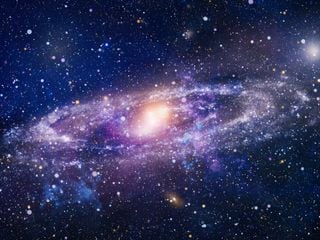
Astronomers are advancing toward solving the enigma of fast radio bursts (FRBs), mysterious, powerful blasts of radio waves from beyond our galaxy. Despite their immense energy, the origins of these cosmic signals remain elusive.