
Scientists devise a solution for advancing non-destructive phenotyping of plants, opening up further research into agricultural crop development.

Scientists devise a solution for advancing non-destructive phenotyping of plants, opening up further research into agricultural crop development.

New report finds human induced global warming is at an all-time high while the remaining carbon budget is lower than predicted.
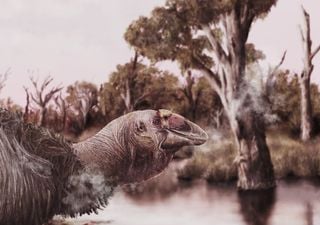
Researchers reclassify a group of extinct, large, flightless birds endemic to Australia based on recently unearthed fossilised skull remains.

A cutting-edge research project will sample environmental DNA in the air to help researchers learn more about the hidden biodiversity around us.
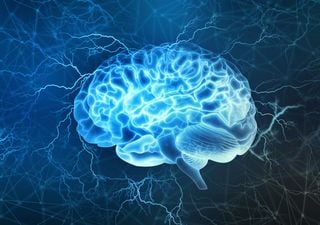
Swiss startup FinalSpark uses an approach known as wetware computing, using lab-grown human brain cells. This type of bioprocessor consumes a million times less energy than traditional digital processors.
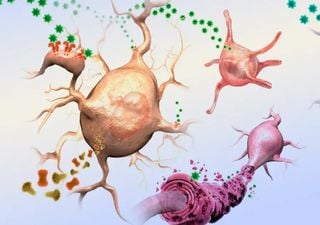
Ancient DNA fragments are encrypted within the modern human genome. This activates some genes that are related to psychiatric disorders such as bipolar disorder, depression and schizophrenia.
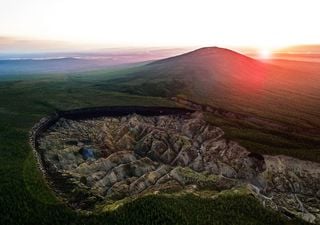
As a sign of the times and at a disturbing rate of one million cubic metres per year, this depression is growing in the permafrost of northwest Russia.
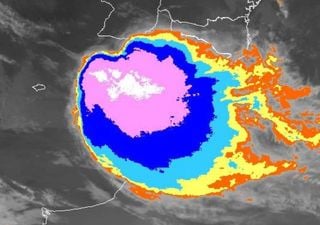
These are very complex convective systems, rare in our country, as they develop in very particular situations, in contexts of high instability in the various layers of the troposphere. They can produce flood events and degenerate into depression circulations.

According to new research, one third of the world's ocean surface is increasingly vulnerable to climate change, especially the loss of oxygen and its acidification.

During an intense solar storm on May 20, NASA's Curiosity rover captured mesmerizing images of Mars illuminated by energetic particles, creating a dazzling display of "snow" on its navigation cameras.
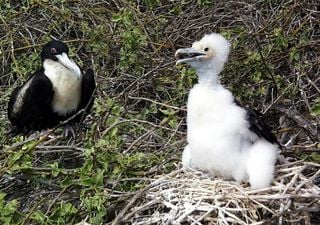
Seabirds play a vital role in ecosystem health but face many threats induced by climate change. With bird flu already wreaking havoc on seabird populations, intensified and more frequent cyclones add yet more pressure to these recovering populations.

The powerful geomagnetic storms that have hit the Earth in recent weeks have had important repercussions on the Earth's magnetosphere. According to the Ocean Networks Canada survey, these very intense events caused significant disturbances in the Earth's magnetic field.