
A recent study highlights how Earth's atmosphere protects life from the potentially devastating effects of nearby supernovae, mitigating gamma rays and cosmic radiation impacts.

A recent study highlights how Earth's atmosphere protects life from the potentially devastating effects of nearby supernovae, mitigating gamma rays and cosmic radiation impacts.

A new PhD research project will explore the link between climate change and microplastics from ageing plastics.

In 2022, 2.2 billion people lived without access to drinking water supplies and 3.5 billion without wastewater managed safely. At the same time, global warming is causing water to become increasingly scarce in all regions of the world.

Athletes could be affected by extreme heat caused by a warming climate warn scientists ahead of this year's Paris Olympic Games.

Leading cause of anthropogenic nitrous oxide emissions is agriculture, namely fertiliser. Emissions must decrease, say scientists.
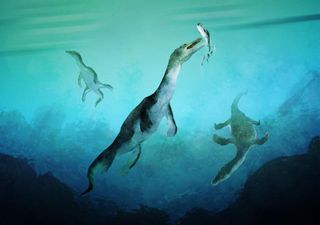
An international research team has identified the oldest fossil of a sea reptile from the Southern Hemisphere, a Nothosaur vertebra from South Island, New Zealand.

Biomimicry, or the art of applying principles from nature to human challenges, opens a new chapter for wind energy generation.

Climate change is having detrimental impacts on both crop and livestock farming, threatening food security. Cattle are vulnerable to heat stress – however new research indicates how we might be able to selectively breed cattle more tolerant of rising temperatures.

Decade-long study reveals untapped genetic potential of modern wheat varieties could help sustainable feed the global population.

The last strong earthquake occurred only last year, when between 5 and 6 February 2023 a strong earthquake, 7.8 Richter, devastated the south-east of Turkey and the north of Syria, causing a real disaster: we are talking about around 60,000 victims, more than 121,000 injured and more than 5 million displaced people.
Are CO2 emissions really responsible for climate change? Some scientists question this long-held belief, suggesting reverse causality. Check out this controversial perspective.

Whether looking for other perspectives or seeking advice, millions of people turn to TikTok for content on issues or concerns they are having in their life. Misinformation is common on the app, as researchers find where it comes from.