
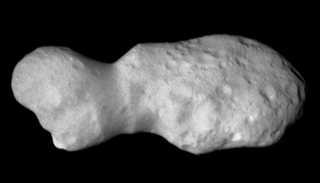
The flyby offers a close look at how a small asteroid can record collision, reassembly, water-driven mineral change, and later surface movement.

Mackenzie White is a multimedia science journalist and geophysicist based in Cambridge, Massachusetts. She holds a PhD in Geophysics and a master’s from MIT’s Graduate Program in Science Writing, as well as undergraduate degrees in Geology and Plan II Honors from The University of Texas. Her reporting covers topics like climate, environmental justice, biodiversity, astronomy, and planetary science, with stories featured in MIT Technology Review, Astronomy, Inside Climate News, NOVA, and Science Friday, among other outlets. As a researcher, she focuses on planetary heat flow using data from planetary missions, such as NASA’s Mars 2020. When she isn’t writing, producing, or studying space rocks, she enjoys spending time outdoors with her dog, Rocky.
The flyby offers a close look at how a small asteroid can record collision, reassembly, water-driven mineral change, and later surface movement.

The fungus causes severe skin infections in cats and people, and health officials say surveillance will be critical as the disease reaches new areas.

Animal time perception may depend on multiple windows that shape how species process motion, sound, and attention.
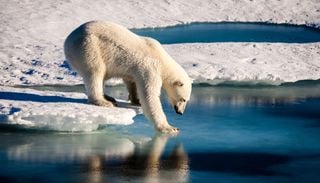
Researchers have linked the unusual Atlantic “cold blob” to reduced ocean heat transport, providing further evidence of changes in a major ocean circulation system.
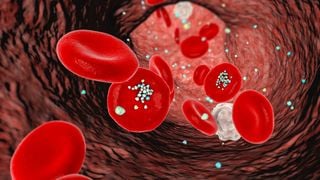
A new study finds that tiny plastic particles can accumulate inside immune cells, interfering with their ability to remove dying cells and maintain healthy tissues.
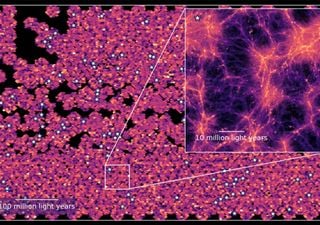
By tracing subtle hydrogen radiation across deep space, astronomers have measured the collective light from galaxies too faint to see individually, revealing previously hidden structure in the early universe.

A growing body of research shows that plastic particles circulate through the atmosphere before precipitation returns them to land and water.
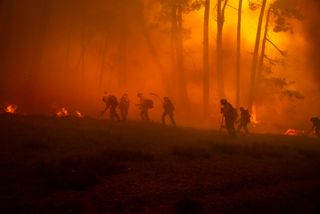
A new global analysis finds that the rising number of extreme fire weather days since 1980 carries a clear human-caused climate signal.
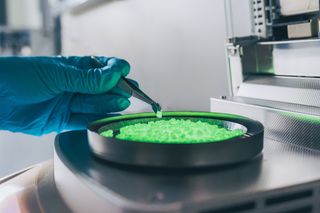
A new strategy could help researchers track micro- and nanoplastics within living organisms, addressing a major gap in understanding how these particles move, transform, and cause harm.

New chemical measurements from a distant star system shed light on how massive gas giants form.
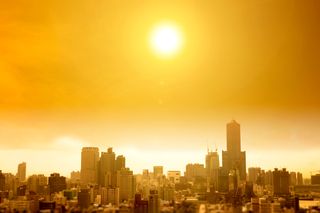
New global data show cooling demand rises fastest at lower warming levels under a mid-range scenario.

Evidence from millions of research papers suggests AI boosts individual output while concentrating research in data-rich fields.

Microscopic growth markers preserved in fossil bone suggest the predator continued adding mass well into adulthood.
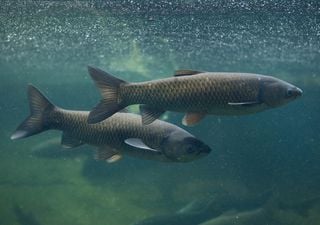
New research shows that long-term, low-dose exposure accelerates biological aging without causing obvious toxicity, reducing survival in exposed fish populations.
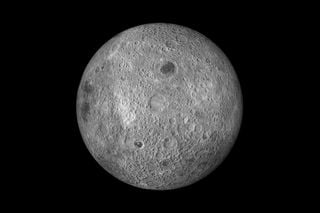
Rocks returned from the Moon’s far side trace back to an ancient collision so powerful that it reshaped the interior and sent its two hemispheres down different evolutionary paths.

Subtle differences in DNA may help explain why floppy ears grow to dramatically different lengths across dog breeds, according to new research.

Dogs diverged from wolves thousands of years ago, but new evidence suggests that the two lineages continued to exchange genes long after domestication.
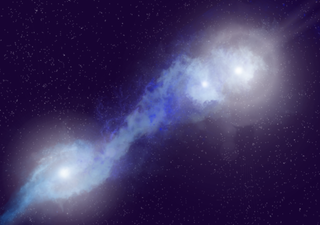
Astronomers have identified a rare cosmic three-for-one: three interacting galaxies, each showing signs of an actively feeding supermassive black hole that emits radio waves offering new insight into how galaxy mergers can trigger black-hole activity.